5
AL QAEDA AIMS AT THE AMERICAN HOMELAND
5.1 TERRORIST ENTREPRENEURS
By early 1999, al Qaeda was already a potent adversary of the United States. Bin Ladin and his chief of operations, Abu Hafs al Masri, also known as Mohammed Atef, occupied undisputed leadership positions atop al Qaeda's organizational structure. Within this structure, al Qaeda's worldwide terrorist operations relied heavily on the ideas and work of enterprising and strong-willed field commanders who enjoyed considerable autonomy. To understand how the organization actually worked and to introduce the origins of the 9/11 plot, we briefly examine three of these subordinate commanders: Khalid Sheikh Mohammed (KSM), Riduan Isamuddin (better known as Hambali), and Abd al Rahim al Nashiri. We will devote the most attention to Khalid Sheikh Mohammed, the chief manager of the "planes operation."
Khalid Sheikh Mohammed
No one exemplifies the model of the terrorist entrepreneur more clearly than Khalid Sheikh Mohammed, the principal architect of the 9/11 attacks. KSM followed a rather tortuous path to his eventual membership in al Qaeda.1 Highly educated and equally comfortable in a government office or a terrorist safehouse, KSM applied his imagination, technical aptitude, and managerial skills to hatching and planning an extraordinary array of terrorist schemes. These ideas included conventional car bombing, political assassination, aircraft bombing, hijacking, reservoir poisoning, and, ultimately, the use of aircraft as missiles guided by suicide operatives.Like his nephew Ramzi Yousef (three years KSM's junior), KSM grew up in Kuwait but traces his ethnic lineage to the Baluchistan region straddling Iran and Pakistan. Raised in a religious family, KSM claims to have joined the Muslim Brotherhood at age 16 and to have become enamored of violent jihad at youth camps in the desert. In 1983, following his graduation from secondary
Detainee Interrogation Reports
Chapters 5 and 7 rely heavily on information obtained from captured al Qaeda members. A number of these "detainees" have firsthand knowledge of the 9/11 plot.Assessing the truth of statements by these witnesses--sworn enemies of the United States--is challenging. Our access to them has been limited to the review of intelligence reports based on communications received from the locations where the actual interrogations take place. We submitted questions for use in the interrogations, but had no control over whether, when, or how questions of particular interest would be asked. Nor were we allowed to talk to the interrogators so that we could better judge the credibility of the detainees and clarify ambiguities in the reporting. We were told that our requests might disrupt the sensitive interrogation process.
We have nonetheless decided to include information from captured 9/11 conspirators and al Qaeda members in our report. We have evaluated their statements carefully and have attempted to corroborate them with documents and statements of others. In this report, we indicate where such statements provide the foundation for our narrative. We have been authorized to identify by name only ten detainees whose custody has been confirmed officially by the U.S. government.2
school, KSM left Kuwait to enroll at Chowan College, a small Baptist school in Murfreesboro, North Carolina. After a semester at Chowan, KSM transferred to North Carolina Agricultural and Technical State University in Greensboro, which he attended with Yousef's brother, another future al Qaeda member. KSM earned a degree in mechanical engineering in December 1986.3
Although he apparently did not attract attention for extreme Islamist beliefs or activities while in the United States, KSM plunged into the anti-Soviet Afghan jihad soon after graduating from college. Visiting Pakistan for the first time in early 1987, he traveled to Peshawar, where his brother Zahid introduced him to the famous Afghan mujahid Abdul Rasul Sayyaf, head of the Hizbul-Ittihad El-Islami (Islamic Union Party). Sayyaf became KSM's mentor and provided KSM with military training at Sayyaf's Sada camp. KSM claims he then fought the Soviets and remained at the front for three months before being summoned to perform administrative duties for Abdullah Azzam. KSM next took a job working for an electronics firm that catered to the communications needs of Afghan groups, where he learned about drills used to excavate caves in Afghanistan.4
Between 1988 and 1992, KSM helped run a nongovernmental organization
(NGO) in Peshawar and Jalalabad; sponsored by Sayyaf, it was designed to aid young Afghan mujahideen. In 1992, KSM spent some time fighting alongside the mujahideen in Bosnia and supporting that effort with financial donations. After returning briefly to Pakistan, he moved his family to Qatar at the suggestion of the former minister of Islamic affairs of Qatar, Sheikh Abdallah bin Khalid bin Hamad al Thani. KSM took a position in Qatar as project engineer with the Qatari Ministry of Electricity and Water. Although he engaged in extensive international travel during his tenure at the ministry--much of it in furtherance of terrorist activity--KSM would hold his position there until early 1996, when he fled to Pakistan to avoid capture by U.S. authorities.5
KSM first came to the attention of U.S. law enforcement as a result of his cameo role in the first World Trade Center bombing. According to KSM, he learned of Ramzi Yousef's intention to launch an attack inside the United States in 1991 or 1992, when Yousef was receiving explosives training in Afghanistan. During the fall of 1992, while Yousef was building the bomb he would use in that attack, KSM and Yousef had numerous telephone conversations during which Yousef discussed his progress and sought additional funding. On November 3, 1992, KSM wired $660 from Qatar to the bank account of Yousef's co-conspirator, Mohammed Salameh. KSM does not appear to have contributed any more substantially to this operation.6
Yousef's instant notoriety as the mastermind of the 1993 World Trade Center bombing inspired KSM to become involved in planning attacks against the United States. By his own account, KSM's animus toward the United States stemmed not from his experiences there as a student, but rather from his violent disagreement with U.S. foreign policy favoring Israel. In 1994, KSM accompanied Yousef to the Philippines, and the two of them began planning what is now known as the Manila air or "Bojinka" plot--the intended bombing of 12 U.S. commercial jumbo jets over the Pacific during a two-day span. This marked the first time KSM took part in the actual planning of a terrorist operation. While sharing an apartment in Manila during the summer of 1994, he and Yousef acquired chemicals and other materials necessary to construct bombs and timers. They also cased target flights to Hong Kong and Seoul that would have onward legs to the United States. During this same period, KSM and Yousef also developed plans to assassinate President Clinton during his November 1994 trip to Manila, and to bomb U.S.-bound cargo carriers by smuggling jackets containing nitrocellulose on board.7
KSM left the Philippines in September 1994 and met up with Yousef in Karachi following their casing flights. There they enlisted Wali Khan Amin Shah, also known as Usama Asmurai, in the Manila air plot. During the fall of 1994, Yousef returned to Manila and successfully tested the digital watch timer he had invented, bombing a movie theater and a Philippine Airlines flight en route to Tokyo. The plot unraveled after the Philippine authorities discovered Yousef's bomb-making operation in Manila; but by that time, KSM was safely
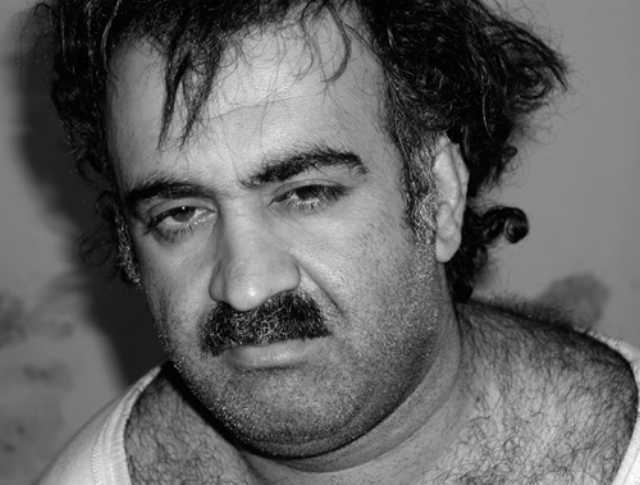
Khalid Sheikh Mohammed, mastermind of the 9/11 plot, at the time of his capture in 2003back at his government job in Qatar. Yousef attempted to follow through on the cargo carriers plan, but he was arrested in Islamabad by Pakistani authorities on February 7, 1995, after an accomplice turned him in.8
KSM continued to travel among the worldwide jihadist community after Yousef's arrest, visiting the Sudan, Yemen, Malaysia, and Brazil in 1995. No clear evidence connects him to terrorist activities in those locations. While in Sudan, he reportedly failed in his attempt to meet with Bin Ladin. But KSM did see Atef, who gave him a contact in Brazil. In January 1996, well aware that U.S. authorities were chasing him, he left Qatar for good and fled to Afghanistan, where he renewed his relationship with Rasul Sayyaf.9
Just as KSM was reestablishing himself in Afghanistan in mid-1996, Bin Ladin and his colleagues were also completing their migration from Sudan. Through Atef, KSM arranged a meeting with Bin Ladin in Tora Bora, a mountainous redoubt from the Afghan war days. At the meeting, KSM presented the al Qaeda leader with a menu of ideas for terrorist operations. According to KSM, this meeting was the first time he had seen Bin Ladin since 1989. Although they had fought together in 1987, Bin Ladin and KSM did not yet enjoy an especially close working relationship. Indeed, KSM has acknowledged
that Bin Ladin likely agreed to meet with him because of the renown of his nephew, Yousef.10
At the meeting, KSM briefed Bin Ladin and Atef on the first World Trade Center bombing, the Manila air plot, the cargo carriers plan, and other activities pursued by KSM and his colleagues in the Philippines. KSM also presented a proposal for an operation that would involve training pilots who would crash planes into buildings in the United States. This proposal eventually would become the 9/11 operation.11
KSM knew that the successful staging of such an attack would require personnel, money, and logistical support that only an extensive and well-funded organization like al Qaeda could provide. He thought the operation might appeal to Bin Ladin, who had a long record of denouncing the United States.12
From KSM's perspective, Bin Ladin was in the process of consolidating his new position in Afghanistan while hearing out others' ideas, and had not yet settled on an agenda for future anti-U.S. operations. At the meeting, Bin Ladin listened to KSM's ideas without much comment, but did ask KSM formally to join al Qaeda and move his family to Afghanistan.13
KSM declined. He preferred to remain independent and retain the option of working with other mujahideen groups still operating in Afghanistan, including the group led by his old mentor, Sayyaf. Sayyaf was close to Ahmed Shah Massoud, the leader of the Northern Alliance. Therefore working with him might be a problem for KSM because Bin Ladin was building ties to the rival Taliban.
After meeting with Bin Ladin, KSM says he journeyed onward to India, Indonesia, and Malaysia, where he met with Jemaah Islamiah's Hambali. Hambali was an Indonesian veteran of the Afghan war looking to expand the jihad into Southeast Asia. In Iran, KSM rejoined his family and arranged to move them to Karachi; he claims to have relocated by January 1997.14
After settling his family in Karachi, KSM tried to join the mujahid leader Ibn al Khattab in Chechnya. Unable to travel through Azerbaijan, KSM returned to Karachi and then to Afghanistan to renew contacts with Bin Ladin and his colleagues. Though KSM may not have been a member of al Qaeda at this time, he admits traveling frequently between Pakistan and Afghanistan in 1997 and the first half of 1998, visiting Bin Ladin and cultivating relationships with his lieutenants, Atef and Sayf al Adl, by assisting them with computer and media projects.15
According to KSM, the 1998 bombings of the U.S. embassies in Nairobi and Dar es Salaam marked a watershed in the evolution of the 9/11 plot. KSM claims these bombings convinced him that Bin Ladin was truly committed to attacking the United States. He continued to make himself useful, collecting news articles and helping other al Qaeda members with their outdated computer equipment. Bin Ladin, apparently at Atef's urging, finally decided to give KSM the green light for the 9/11 operation sometime in late 1998 or early 1999.16
KSM then accepted Bin Ladin's standing invitation to move to Kandahar and work directly with al Qaeda. In addition to supervising the planning and preparations for the 9/11 operation, KSM worked with and eventually led al Qaeda's media committee. But KSM states he refused to swear a formal oath of allegiance to Bin Ladin, thereby retaining a last vestige of his cherished autonomy.17
At this point, late 1998 to early 1999, planning for the 9/11 operation began in earnest. Yet while the 9/11 project occupied the bulk of KSM's attention, he continued to consider other possibilities for terrorist attacks. For example, he sent al Qaeda operative Issa al Britani to Kuala Lumpur, Malaysia, to learn about the jihad in Southeast Asia from Hambali. Thereafter, KSM claims, at Bin Ladin's direction in early 2001, he sent Britani to the United States to case potential economic and "Jewish" targets in New York City. Furthermore, during the summer of 2001, KSM approached Bin Ladin with the idea of recruiting a Saudi Arabian air force pilot to commandeer a Saudi fighter jet and attack the Israeli city of Eilat. Bin Ladin reportedly liked this proposal, but he instructed KSM to concentrate on the 9/11 operation first. Similarly, KSM's proposals to Atef around this same time for attacks in Thailand, Singapore, Indonesia, and the Maldives were never executed, although Hambali's Jemaah Islamiah operatives did some casing of possible targets.18
KSM appears to have been popular among the al Qaeda rank and file. He was reportedly regarded as an effective leader, especially after the 9/11 attacks. Co-workers describe him as an intelligent, efficient, and even-tempered manager who approached his projects with a single-minded dedication that he expected his colleagues to share. Al Qaeda associate Abu Zubaydah has expressed more qualified admiration for KSM's innate creativity, emphasizing instead his ability to incorporate the improvements suggested by others. Nashiri has been similarly measured, observing that although KSM floated many general ideas for attacks, he rarely conceived a specific operation himself.19 Perhaps these estimates reflect a touch of jealousy; in any case, KSM was plainly a capable coordinator, having had years to hone his skills and build relationships.
Hambali
Al Qaeda's success in fostering terrorism in Southeast Asia stems largely from its close relationship with Jemaah Islamiah (JI). In that relationship, Hambali became the key coordinator. Born and educated in Indonesia, Hambali moved to Malaysia in the early 1980s to find work. There he claims to have become a follower of the Islamist extremist teachings of various clerics, including one named Abdullah Sungkar. Sungkar first inspired Hambali to share the vision of establishing a radical Islamist regime in Southeast Asia, then furthered Hambali's instruction in jihad by sending him to Afghanistan in 1986. After undergoing training at Rasul Sayyaf's Sada camp (where KSM would later train), Hambali fought against the Soviets; he eventually returned to Malaysia after 18
months in Afghanistan. By 1998, Hambali would assume responsibility for the Malaysia/Singapore region within Sungkar's newly formed terrorist organization, the JI.20
Also by 1998, Sungkar and JI spiritual leader Abu Bakar Bashir had accepted Bin Ladin's offer to ally JI with al Qaeda in waging war against Christians and Jews.21 Hambali met with KSM in Karachi to arrange for JI members to receive training in Afghanistan at al Qaeda's camps. In addition to his close working relationship with KSM, Hambali soon began dealing with Atef as well. Al Qaeda began funding JI's increasingly ambitious terrorist plans, which Atef and KSM sought to expand. Under this arrangement, JI would perform the necessary casing activities and locate bomb-making materials and other supplies. Al Qaeda would underwrite operations, provide bomb-making expertise, and deliver suicide operatives.22
The al Qaeda-JI partnership yielded a number of proposals that would marry al Qaeda's financial and technical strengths with JI's access to materials and local operatives. Here, Hambali played the critical role of coordinator, as he distributed al Qaeda funds earmarked for the joint operations. In one especially notable example, Atef turned to Hambali when al Qaeda needed a scientist to take over its biological weapons program. Hambali obliged by introducing a U.S.-educated JI member, Yazid Sufaat, to Ayman al Zawahiri in Kandahar. In 2001, Sufaat would spend several months attempting to cultivate anthrax for al Qaeda in a laboratory he helped set up near the Kandahar airport.23
Hambali did not originally orient JI's operations toward attacking the United States, but his involvement with al Qaeda appears to have inspired him to pursue American targets. KSM, in his post-capture interrogations, has taken credit for this shift, claiming to have urged the JI operations chief to concentrate on attacks designed to hurt the U.S. economy.24 Hambali's newfound interest in striking against the United States manifested itself in a spate of terrorist plans. Fortunately, none came to fruition.
In addition to staging actual terrorist attacks in partnership with al Qaeda, Hambali and JI assisted al Qaeda operatives passing through Kuala Lumpur. One important occasion was in December 1999-January 2000. Hambali accommodated KSM's requests to help several veterans whom KSM had just finished training in Karachi. They included Tawfiq bin Attash, also known as Khallad, who later would help bomb the USS Cole, and future 9/11 hijackers Nawaf al Hazmi and Khalid al Mihdhar. Hambali arranged lodging for them and helped them purchase airline tickets for their onward travel. Later that year, Hambali and his crew would provide accommodations and other assistance (including information on flight schools and help in acquiring ammonium nitrate) for Zacarias Moussaoui, an al Qaeda operative sent to Malaysia by Atef and KSM.25
Hambali used Bin Ladin's Afghan facilities as a training ground for JI recruits. Though he had a close relationship with Atef and KSM, he maintained JI's institutional independence from al Qaeda. Hambali insists that he did not
discuss operations with Bin Ladin or swear allegiance to him, having already given such a pledge of loyalty to Bashir, Sungkar's successor as JI leader. Thus, like any powerful bureaucrat defending his domain, Hambali objected when al Qaeda leadership tried to assign JI members to terrorist projects without notifying him.26
Abd al Rahim al Nashiri
KSM and Hambali both decided to join forces with al Qaeda because their terrorist aspirations required the money and manpower that only a robust organization like al Qaeda could supply. On the other hand, Abd al Rahim al Nashiri--the mastermind of the Cole bombing and the eventual head of al Qaeda operations in the Arabian Peninsula--appears to have originally been recruited to his career as a terrorist by Bin Ladin himself.Having already participated in the Afghan jihad, Nashiri accompanied a group of some 30 mujahideen in pursuit of jihad in Tajikistan in 1996. When serious fighting failed to materialize, the group traveled to Jalalabad and encountered Bin Ladin, who had recently returned from Sudan. Bin Ladin addressed them at length, urging the group to join him in a "jihad against the Americans." Although all were urged to swear loyalty to Bin Ladin, many, including Nashiri, found the notion distasteful and refused. After several days of indoctrination that included a barrage of news clippings and television documentaries, Nashiri left Afghanistan, first returning to his native Saudi Arabia and then visiting his home in Yemen. There, he says, the idea for his first terrorist operation took shape as he noticed many U.S. and other foreign ships plying the waters along the southwest coast of Yemen.27
Nashiri returned to Afghanistan, probably in 1997, primarily to check on relatives fighting there and also to learn about the Taliban. He again encountered Bin Ladin, still recruiting for "the coming battle with the United States." Nashiri pursued a more conventional military jihad, joining the Taliban forces in their fight against Ahmed Massoud's Northern Alliance and shuttling back and forth between the front and Kandahar, where he would see Bin Ladin and meet with other mujahideen. During this period, Nashiri also led a plot to smuggle four Russian-made antitank missiles into Saudi Arabia from Yemen in early 1998 and helped an embassy bombing operative obtain a Yemeni passport.28
At some point, Nashiri joined al Qaeda. His cousin, Jihad Mohammad Ali al Makki, also known as Azzam, was a suicide bomber for the Nairobi attack. Nashiri traveled between Yemen and Afghanistan. In late 1998, Nashiri proposed mounting an attack against a U.S. vessel. Bin Ladin approved. He directed Nashiri to start the planning and send operatives to Yemen, and he later provided money.29
Nashiri reported directly to Bin Ladin, the only other person who, according to Nashiri, knew all the details of the operation. When Nashiri had difficulty finding U.S. naval vessels to attack along the western coast of Yemen, Bin
Ladin reportedly instructed him to case the Port of Aden, on the southern coast, instead.30 The eventual result was an attempted attack on the USS The Sullivans in January 2000 and the successful attack, in October 2000, on the USS Cole.
Nashiri's success brought him instant status within al Qaeda. He later was recognized as the chief of al Qaeda operations in and around the Arabian Peninsula. While Nashiri continued to consult Bin Ladin on the planning of subsequent terrorist projects, he retained discretion in selecting operatives and devising attacks. In the two years between the Cole bombing and Nashiri's capture, he would supervise several more proposed operations for al Qaeda. The October 6, 2002, bombing of the French tanker Limburg in the Gulf of Aden also was Nashiri's handiwork. Although Bin Ladin urged Nashiri to continue plotting strikes against U.S. interests in the Persian Gulf, Nashiri maintains that he actually delayed one of these projects because of security concerns.31 Those concerns, it seems, were well placed, as Nashiri's November 2002 capture in the United Arab Emirates finally ended his career as a terrorist.
5.2 THE "PLANES OPERATION"
According to KSM, he started to think about attacking the United States after Yousef returned to Pakistan following the 1993 World Trade Center bombing. Like Yousef, KSM reasoned he could best influence U.S. policy by targeting the country's economy. KSM and Yousef reportedly brainstormed together about what drove the U.S. economy. New York, which KSM considered the economic capital of the United States, therefore became the primary target. For similar reasons, California also became a target for KSM.32
KSM claims that the earlier bombing of the World Trade Center taught him that bombs and explosives could be problematic, and that he needed to graduate to a more novel form of attack. He maintains that he and Yousef began thinking about using aircraft as weapons while working on the Manila air/Bojinka plot, and speculated about striking the World Trade Center and CIA headquarters as early as 1995.33
Certainly KSM was not alone in contemplating new kinds of terrorist operations. A study reportedly conducted by Atef, while he and Bin Ladin were still in Sudan, concluded that traditional terrorist hijacking operations did not fit the needs of al Qaeda, because such hijackings were used to negotiate the release of prisoners rather than to inflict mass casualties. The study is said to have considered the feasibility of hijacking planes and blowing them up in flight, paralleling the Bojinka concept. Such a study, if it actually existed, yields significant insight into the thinking of al Qaeda's leaders: (1) they rejected hijackings aimed at gaining the release of imprisoned comrades as too complex, because al Qaeda had no friendly countries in which to land a plane and
then negotiate; (2) they considered the bombing of commercial flights in midair--as carried out against Pan Am Flight 103 over Lockerbie, Scotland--a promising means to inflict massive casualties; and (3) they did not yet consider using hijacked aircraft as weapons against other targets.34
KSM has insisted to his interrogators that he always contemplated hijacking and crashing large commercial aircraft. Indeed, KSM describes a grandiose original plan: a total of ten aircraft to be hijacked, nine of which would crash into targets on both coasts--they included those eventually hit on September 11 plus CIA and FBI headquarters, nuclear power plants, and the tallest buildings in California and the state of Washington. KSM himself was to land the tenth plane at a U.S. airport and, after killing all adult male passengers on board and alerting the media, deliver a speech excoriating U.S. support for Israel, the Philippines, and repressive governments in the Arab world. Beyond KSM's rationalizations about targeting the U.S. economy, this vision gives a better glimpse of his true ambitions. This is theater, a spectacle of destruction with KSM as the self-cast star--the superterrorist.35
KSM concedes that this proposal received a lukewarm response from al Qaeda leaders skeptical of its scale and complexity. Although Bin Ladin listened to KSM's proposal, he was not convinced that it was practical. As mentioned earlier, Bin Ladin was receiving numerous ideas for potential operations--KSM's proposal to attack U.S. targets with commercial airplanes was only one of many.36
KSM presents himself as an entrepreneur seeking venture capital and people. He simply wanted al Qaeda to supply the money and operatives needed for the attack while retaining his independence. It is easy to question such a statement. Money is one thing; supplying a cadre of trained operatives willing to die is much more. Thus, although KSM contends he would have been just as likely to consider working with any comparable terrorist organization, he gives no indication of what other groups he thought could supply such exceptional commodities.37
KSM acknowledges formally joining al Qaeda, in late 1998 or 1999, and states that soon afterward, Bin Ladin also made the decision to support his proposal to attack the United States using commercial airplanes as weapons. Though KSM speculates about how Bin Ladin came to share his preoccupation with attacking America, Bin Ladin in fact had long been an opponent of the United States. KSM thinks that Atef may have persuaded Bin Ladin to approve this specific proposal. Atef's role in the entire operation is unquestionably very significant but tends to fade into the background, in part because Atef himself is not available to describe it. He was killed in November 2001 by an American air strike in Afghanistan.38
Bin Ladin summoned KSM to Kandahar in March or April 1999 to tell him that al Qaeda would support his proposal. The plot was now referred to within al Qaeda as the "planes operation."39
The Plan Evolves
Bin Ladin reportedly discussed the planes operation with KSM and Atef in a series of meetings in the spring of 1999 at the al Matar complex near Kandahar. KSM's original concept of using one of the hijacked planes to make a media statement was scrapped, but Bin Ladin considered the basic idea feasible. Bin Ladin, Atef, and KSM developed an initial list of targets. These included the White House, the U.S. Capitol, the Pentagon, and the World Trade Center. According to KSM, Bin Ladin wanted to destroy the White House and the Pentagon, KSM wanted to strike the World Trade Center, and all of them wanted to hit the Capitol. No one else was involved in the initial selection of targets.40Bin Ladin also soon selected four individuals to serve as suicide operatives: Khalid al Mihdhar, Nawaf al Hazmi, Khallad, and Abu Bara al Yemeni. During the al Matar meetings, Bin Ladin told KSM that Mihdhar and Hazmi were so eager to participate in an operation against the United States that they had already obtained U.S. visas. KSM states that they had done so on their own after the suicide of their friend Azzam (Nashiri's cousin) in carrying out the Nairobi bombing. KSM had not met them. His only guidance from Bin Ladin was that the two should eventually go to the United States for pilot training.41
Hazmi and Mihdhar were Saudi nationals, born in Mecca. Like the others in this initial group of selectees, they were already experienced mujahideen. They had traveled together to fight in Bosnia in a group that journeyed to the Balkans in 1995. By the time Hazmi and Mihdhar were assigned to the planes operation in early 1999, they had visited Afghanistan on several occasions.42
Khallad was another veteran mujahid, like much of his family. His father had been expelled from Yemen because of his extremist views. Khallad had grown up in Saudi Arabia, where his father knew Bin Ladin, Abdullah Azzam, and Omar Abdel Rahman (the "Blind Sheikh"). Khallad departed for Afghanistan in 1994 at the age of 15. Three years later, he lost his lower right leg in a battle with the Northern Alliance, a battle in which one of his brothers died. After this experience, he pledged allegiance to Bin Ladin--whom he had first met as a child in Jeddah--and volunteered to become a suicide operative.43
When Khallad applied for a U.S. visa, however, his application was denied. Earlier in 1999, Bin Ladin had sent Khallad to Yemen to help Nashiri obtain explosives for the planned ship-bombing and to obtain a visa to visit the United States, so that he could participate in an operation there. Khallad applied under another name, using the cover story that he would be visiting a medical clinic to obtain a new prosthesis for his leg. Another al Qaeda operative gave Khallad the name of a person living in the United States whom Khallad could use as a point of contact on a visa application. Khallad contacted this individual to help him get an appointment at a U.S. clinic. While Khallad was waiting for the letter from the clinic confirming the appointment, however, he was arrested by Yemeni authorities. The arrest resulted from mistaken identity: Khallad was driving the car of another conspirator in the ship-bombing plot who was wanted by the Yemeni authorities.44
Khallad was released sometime during the summer of 1999, after his father and Bin Ladin intervened on his behalf. Khallad learned later that the al Qaeda leader, apparently concerned that Khallad might reveal Nashiri's operation while under interrogation, had contacted a Yemeni official to demand Khallad's release, suggesting that Bin Ladin would not confront the Yemenis if they did not confront him. This account has been corroborated by others. Giving up on acquiring a U.S. visa and concerned that the United States might learn of his ties to al Qaeda, Khallad returned to Afghanistan.45
Travel issues thus played a part in al Qaeda's operational planning from the very start. During the spring and summer of 1999, KSM realized that Khallad and Abu Bara, both of whom were Yemenis, would not be able to obtain U.S. visas as easily as Saudi operatives like Mihdhar and Hazmi. Although Khallad had been unable to acquire a U.S. visa, KSM still wanted him and Abu Bara, as well as another Yemeni operative from Bin Ladin's security detail, to participate in the planes operation. Yet because individuals with Saudi passports could travel much more easily than Yemeni, particularly to the United States, there were fewer martyrdom opportunities for Yemenis. To overcome this problem, KSM decided to split the planes operation into two components.46
The first part of the planes operation--crashing hijacked aircraft into U.S. targets--would remain as planned, with Mihdhar and Hazmi playing key roles. The second part, however, would now embrace the idea of using suicide operatives to blow up planes, a refinement of KSM's old Manila air plot. The operatives would hijack U.S.-flagged commercial planes flying Pacific routes across East Asia and destroy them in midair, possibly with shoe bombs, instead of flying them into targets. (An alternate scenario apparently involved flying planes into U.S. targets in Japan, Singapore, or Korea.) This part of the operation has been confirmed by Khallad, who said that they contemplated hijacking several planes, probably originating in Thailand, South Korea, Hong Kong, or Malaysia, and using Yemenis who would not need pilot training because they would simply down the planes. All the planes hijacked in the United States and East Asia were to be crashed or exploded at about the same time to maximize the attack's psychological impact.47
Training and Deployment to Kuala Lumpur
In the fall of 1999, the four operatives selected by Bin Ladin for the planes operation were chosen to attend an elite training course at al Qaeda's Mes Aynak camp in Afghanistan. Bin Ladin personally selected the veteran fighters who received this training, and several of them were destined for important operations. One example is Ibrahim al Thawar, or Nibras, who would participate in the October 12, 2000, suicide attack on the USS Cole. According to KSM, this training was not given specifically in preparation for the planes operation or any other particular al Qaeda venture. Although KSM claims not to have been involved with the training or to have met with the future 9/11 hijackers at Mes
Aynak, he says he did visit the camp while traveling from Kandahar to Kabul with Bin Ladin and others.48
The Mes Aynak training camp was located in an abandoned Russian copper mine near Kabul. The camp opened in 1999, after the United States had destroyed the training camp near Khowst with cruise missiles in August 1998, and before the Taliban granted al Qaeda permission to open the al Faruq camp in Kandahar. Thus, for a brief period in 1999, Mes Aynak was the only al Qaeda camp operating in Afghanistan. It offered a full range of instruction, including an advanced commando course taught by senior al Qaeda member Sayf al Adl. Bin Ladin paid particular attention to the 1999 training session. When Salah al Din, the trainer for the session, complained about the number of trainees and said that no more than 20 could be handled at once, Bin Ladin insisted that everyone he had selected receive the training.49
The special training session at Mes Aynak was rigorous and spared no expense. The course focused on physical fitness, firearms, close quarters combat, shooting from a motorcycle, and night operations. Although the subjects taught differed little from those offered at other camps, the course placed extraordinary physical and mental demands on its participants, who received the best food and other amenities to enhance their strength and morale.50
Upon completing the advanced training at Mes Aynak, Hazmi, Khallad, and Abu Bara went to Karachi, Pakistan. There KSM instructed them on Western culture and travel. Much of his activity in mid-1999 had revolved around the collection of training and informational materials for the participants in the planes operation. For instance, he collected Western aviation magazines; telephone directories for American cities such as San Diego and Long Beach, California; brochures for schools; and airline timetables, and he conducted Internet searches on U.S. flight schools. He also purchased flight simulator software and a few movies depicting hijackings. To house his students, KSM rented a safehouse in Karachi with money provided by Bin Ladin.51
In early December 1999, Khallad and Abu Bara arrived in Karachi. Hazmi joined them there a few days later. On his way to Karachi, Hazmi spent a night in Quetta at a safehouse where, according to KSM, an Egyptian named Mohamed Atta simultaneously stayed on his way to Afghanistan for jihad training.52
Mihdhar did not attend the training in Karachi with the others. KSM says that he never met with Mihdhar in 1999 but assumed that Bin Ladin and Atef had briefed Mihdhar on the planes operation and had excused him from the Karachi training.53
The course in Karachi apparently lasted about one or two weeks. According to KSM, he taught the three operatives basic English words and phrases. He showed them how to read phone books, interpret airline timetables, use the Internet, use code words in communications, make travel reservations, and rent an apartment. Khallad adds that the training involved using flight simulator computer
games, viewing movies that featured hijackings, and reading flight schedules to determine which flights would be in the air at the same time in different parts of the world. They used the game software to increase their familiarity with aircraft models and functions, and to highlight gaps in cabin security. While in Karachi, they also discussed how to case flights in Southeast Asia. KSM told them to watch the cabin doors at takeoff and landing, to observe whether the captain went to the lavatory during the flight, and to note whether the flight attendants brought food into the cockpit. KSM, Khallad, and Hazmi also visited travel agencies to learn the visa requirements for Asian countries.54
The four trainees traveled to Kuala Lumpur: Khallad, Abu Bara, and Hazmi came from Karachi; Mihdhar traveled from Yemen. As discussed in chapter 6, U.S. intelligence would analyze communications associated with Mihdhar, whom they identified during this travel, and Hazmi, whom they could have identified but did not.55
According to KSM, the four operatives were aware that they had volunteered for a suicide operation, either in the United States or in Asia. With different roles, they had different tasks. Hazmi and Mihdhar were sent to Kuala Lumpur before proceeding to their final destination--the United States. According to KSM, they were to use Yemeni documents to fly to Malaysia, then proceed to the United States using their Saudi passports to conceal their prior travels to and from Pakistan. KSM had doctored Hazmi's Saudi passport so it would appear as if Hazmi had traveled to Kuala Lumpur from Saudi Arabia via Dubai. Khallad and Abu Bara went to Kuala Lumpur to study airport security and conduct casing flights. According to Khallad, he and Abu Bara departed for Malaysia in mid-December 1999. Hazmi joined them about ten days later after briefly returning to Afghanistan to attend to some passport issues.56
Khallad had originally scheduled his trip in order to receive a new prosthesis at a Kuala Lumpur clinic called Endolite, and Bin Ladin suggested that he use the opportunity to case flights as well. According to Khallad, Malaysia was an ideal destination because its government did not require citizens of Saudi Arabia or other Gulf states to have a visa. Malaysian security was reputed to be lax when it came to Islamist jihadists. Also, other mujahideen wounded in combat had reportedly received treatment at the Endolite clinic and successfully concealed the origins of their injuries. Khallad said he got the money for the prosthesis from his father, Bin Ladin, and another al Qaeda colleague.57
According to Khallad, when he and Abu Bara arrived in Kuala Lumpur they contacted Hambali to let him know where they were staying, since he was to be kept informed of al Qaeda activities in Southeast Asia. Hambali picked up Khallad and Abu Bara and brought them to his home, enlisting the help of a colleague who spoke better Arabic. Hambali then took them to the clinic.58
On December 31, Khallad flew from Kuala Lumpur to Bangkok; the next day, he flew to Hong Kong aboard a U.S. airliner. He flew in first class, which he realized was a mistake because this seating assignment on that flight did not afford him a view of the cockpit. He claims to have done what he could to case
the flight, testing security by carrying a box cutter in his toiletries kit onto the flight to Hong Kong. Khallad returned to Bangkok the following day. At the airport, the security officials searched his carry-on bag and even opened the toiletries kit, but just glanced at the contents and let him pass. On this flight, Khallad waited until most of the first-class passengers were dozing, then got up and removed the kit from his carry-on. None of the flight attendants took notice.59
After completing his casing mission, Khallad returned to Kuala Lumpur. Hazmi arrived in Kuala Lumpur soon thereafter and may even have stayed briefly with Khallad and Abu Bara at Endolite. Mihdhar arrived on January 5, probably one day after Hazmi. All four operatives stayed at the apartment of Yazid Sufaat, the Malaysian JI member who made his home available at Hambali's request. According to Khallad, he and Hazmi spoke about the possibility of hijacking planes and crashing them or holding passengers as hostages, but only speculatively. Khallad admits being aware at the time that Hazmi and Mihdhar were involved in an operation involving planes in the United States but denies knowing details of the plan.60
While in Kuala Lumpur, Khallad wanted to go to Singapore to meet Nibras and Fahd al Quso, two of the operatives in Nashiri's ship-bombing operation. An attempt to execute that plan by attacking the USS The Sullivans had failed just a few days earlier. Nibras and Quso were bringing Khallad money from Yemen, but were stopped in Bangkok because they lacked visas to continue on to Singapore. Also unable to enter Singapore, Khallad moved the meeting to Bangkok. Hazmi and Mihdhar decided to go there as well, reportedly because they thought it would enhance their cover as tourists to have passport stamps from a popular tourist destination such as Thailand. With Hambali's help, the three obtained tickets for a flight to Bangkok and left Kuala Lumpur together. Abu Bara did not have a visa permitting him to return to Pakistan, so he traveled to Yemen instead.61
In Bangkok, Khallad took Hazmi and Mihdhar to one hotel, then went to another hotel for his meeting on the maritime attack plan. Hazmi and Mihdhar soon moved to that same hotel, but Khallad insists that the two sets of operatives never met with each other or anyone else. After conferring with the ship-bombing operatives, Khallad returned to Karachi and then to Kandahar, where he reported on his casing mission to Bin Ladin.62
Bin Ladin canceled the East Asia part of the planes operation in the spring of 2000. He evidently decided it would be too difficult to coordinate this attack with the operation in the United States. As for Hazmi and Mihdhar, they had left Bangkok a few days before Khallad and arrived in Los Angeles on January 15, 2000.63
Meanwhile, the next group of al Qaeda operatives destined for the planes operation had just surfaced in Afghanistan. As Hazmi and Mihdhar were deploying from Asia to the United States, al Qaeda's leadership was recruiting and training four Western-educated men who had recently arrived in Kandahar. Though they hailed from four different countries--Egypt, the United Arab
Emirates, Lebanon, and Yemen--they had formed a close-knit group as students in Hamburg, Germany. The new recruits had come to Afghanistan aspiring to wage jihad in Chechnya. But al Qaeda quickly recognized their potential and enlisted them in its anti-U.S. jihad.
5.3 THE HAMBURG CONTINGENT
Although Bin Ladin, Atef, and KSM initially contemplated using established al Qaeda members to execute the planes operation, the late 1999 arrival in Kandahar of four aspiring jihadists from Germany suddenly presented a more attractive alternative. The Hamburg group shared the anti-U.S. fervor of the other candidates for the operation, but added the enormous advantages of fluency in English and familiarity with life in the West, based on years that each member of the group had spent living in Germany. Not surprisingly, Mohamed Atta, Ramzi Binalshibh, Marwan al Shehhi, and Ziad Jarrah would all become key players in the 9/11 conspiracy.
Mohamed Atta
Mohamed Atta was born on September 1, 1968, in Kafr el Sheikh, Egypt, to a middle-class family headed by his father, an attorney. After graduating from Cairo University with a degree in architectural engineering in 1990, Atta worked as an urban planner in Cairo for a couple of years. In the fall of 1991, he asked a German family he had met in Cairo to help him continue his education in Germany. They suggested he come to Hamburg and invited him to live with them there, at least initially. After completing a course in German, Atta traveled to Germany for the first time in July 1992. He resided briefly in Stuttgart and then, in the fall of 1992, moved to Hamburg to live with his host family. After enrolling at the University of Hamburg, he promptly transferred into the city engineering and planning course at the Technical University of Hamburg-Harburg, where he would remain registered as a student until the fall of 1999. He appears to have applied himself fairly seriously to his studies (at least in comparison to his jihadist friends) and actually received his degree shortly before traveling to Afghanistan. In school, Atta came across as very intelligent and reasonably pleasant, with an excellent command of the German language.64When Atta arrived in Germany, he appeared religious, but not fanatically so. This would change, especially as his tendency to assert leadership became increasingly pronounced. According to Binalshibh, as early as 1995 Atta sought to organize a Muslim student association in Hamburg. In the fall of 1997, he joined a working group at the Quds mosque in Hamburg, a group designed to bridge the gap between Muslims and Christians. Atta proved a poor bridge, however, because of his abrasive and increasingly dogmatic personality. But
among those who shared his beliefs, Atta stood out as a decisionmaker. Atta's friends during this period remember him as charismatic, intelligent, and persuasive, albeit intolerant of dissent.65
In his interactions with other students, Atta voiced virulently anti-Semitic and anti-American opinions, ranging from condemnations of what he described as a global Jewish movement centered in New York City that supposedly controlled the financial world and the media, to polemics against governments of the Arab world. To him, Saddam Hussein was an American stooge set up to give Washington an excuse to intervene in the Middle East. Within his circle, Atta advocated violent jihad. He reportedly asked one individual close to the group if he was "ready to fight for [his] belief" and dismissed him as too weak for jihad when the person declined. On a visit home to Egypt in 1998, Atta met one of his college friends. According to this friend, Atta had changed a great deal, had grown a beard, and had "obviously adopted fundamentalism" by that time.66
Ramzi Binalshibh
Ramzi Binalshibh was born on May 1,1972, in Ghayl Bawazir, Yemen. There does not seem to be anything remarkable about his family or early background. A friend who knew Binalshibh in Yemen remembers him as "religious, but not too religious." From 1987 to 1995, Binalshibh worked as a clerk for the International Bank of Yemen. He first attempted to leave Yemen in 1995, when he applied for a U.S. visa. After his application was rejected, he went to Germany and applied for asylum under the name Ramzi Omar, claiming to be a Sudanese citizen seeking asylum. While his asylum petition was pending, Binalshibh lived in Hamburg and associated with individuals from several mosques there. In 1997, after his asylum application was denied, Binalshibh went home to Yemen but returned to Germany shortly thereafter under his true name, this time registering as a student in Hamburg. Binalshibh continually had academic problems, failing tests and cutting classes; he was expelled from one school in September 1998.67According to Binalshibh, he and Atta first met at a mosque in Hamburg in 1995. The two men became close friends and became identified with their shared extremist outlook. Like Atta, by the late 1990s Binalshibh was decrying what he perceived to be a "Jewish world conspiracy." He proclaimed that the highest duty of every Muslim was to pursue jihad, and that the highest honor was to die during the jihad. Despite his rhetoric, however, Binalshibh presented a more amiable figure than the austere Atta, and was known within the community as being sociable, extroverted, polite, and adventuresome.68
In 1998, Binalshibh and Atta began sharing an apartment in the Harburg section of Hamburg, together with a young student from the United Arab Emirates named Marwan al Shehhi.69
Marwan al Shehhi
Marwan al Shehhi was born on May 9, 1978, in Ras al Khaimah, the United Arab Emirates. His father, who died in 1997, was a prayer leader at the local mosque. After graduating from high school in 1995, Shehhi joined the Emirati military and received half a year of basic training before gaining admission to a military scholarship program that would fund his continued study in Germany.70Shehhi first entered Germany in April 1996. After sharing an apartment in Bonn for two months with three other scholarship students, Shehhi moved in with a German family, with whom he resided for several months before moving into his own apartment. During this period, he came across as very religious, praying five times a day. Friends also remember him as convivial and "a regular guy," wearing Western clothes and occasionally renting cars for trips to Berlin, France, and the Netherlands.71
As a student, Shehhi was less than a success. Upon completing a course in German, he enrolled at the University of Bonn in a program for technical, mathematical, and scientific studies. In June 1997, he requested a leave from his studies, citing the need to attend to unspecified "problems" in his home country. Although the university denied his request, Shehhi left anyway, and consequently was compelled to repeat the first semester of his studies. In addition to having academic difficulties at this time, Shehhi appeared to become more extreme in the practice of his faith; for example, he specifically avoided restaurants that cooked with or served alcohol. In late 1997, he applied for permission to complete his course work in Hamburg, a request apparently motivated by his desire to join Atta and Binalshibh. Just how and when the three of them first met remains unclear, although they seemed to know each other already when Shehhi relocated to Hamburg in early 1998. Atta and Binalshibh moved into his apartment in April.72
The transfer to Hamburg did not help Shehhi's academic progress; he was directed by the scholarship program administrators at the Emirati embassy to repeat his second semester starting in August 1998, but back in Bonn. Shehhi initially flouted this directive, however, and did not reenroll at the University of Bonn until the following January, barely passing his course there. By the end of July 1999, he had returned to Hamburg, applying to study shipbuilding at the Technical University and, more significantly, residing once again with Atta and Binalshibh, in an apartment at 54 Marienstrasse.73
After Shehhi moved in with Atta and Binalshibh, his evolution toward Islamic fundamentalism became more pronounced. A fellow Emirati student who came to Hamburg to visit Shehhi noticed he no longer lived as comfortably as before. Shehhi now occupied an old apartment with a roommate, had no television, and wore inexpensive clothes. When asked why he was living so frugally, Shehhi responded that he was living the way the Prophet had lived.74 Similarly, when someone asked why he and Atta never laughed, Shehhi retorted, "How can you laugh when people are dying in Palestine?"75
Ziad Jarrah
Born on May 11, 1975, in Mazraa, Lebanon, Ziad Jarrah came from an affluent family and attended private, Christian schools. Like Atta, Binalshibh, and Shehhi, Jarrah aspired to pursue higher education in Germany. In April 1996, he and a cousin enrolled at a junior college in Greifswald, in northeastern Germany. There Jarrah met and became intimate with Aysel Senguen, the daughter of Turkish immigrants, who was preparing to study dentistry.76Even with the benefit of hindsight, Jarrah hardly seems a likely candidate for becoming an Islamic extremist. Far from displaying radical beliefs when he first moved to Germany, he arrived with a reputation for knowing where to find the best discos and beaches in Beirut, and in Greifswald was known to enjoy student parties and drinking beer. Although he continued to share an apartment in Greifswald with his cousin, Jarrah was mostly at Senguen's apartment. Witnesses interviewed by German authorities after 9/11, however, recall that Jarrah started showing signs of radicalization as early as the end of 1996. After returning from a trip home to Lebanon, Jarrah started living more strictly according to the Koran. He read brochures in Arabic about jihad, held forth to friends on the subject of holy war, and professed disaffection with his previous life and a desire not to leave the world "in a natural way."77
In September 1997, Jarrah abruptly switched his intended course of study from dentistry to aircraft engineering--at the Technical University of Hamburg-Harburg. His motivation for this decision remains unclear. The rationale he expressed to Senguen--that he had been interested in aviation since playing with toy airplanes as a child--rings somewhat hollow. In any event, Jarrah appears already to have had Hamburg contacts by this time, some of whom may have played a role in steering him toward Islamic extremism.78
Following his move to Hamburg that fall, he began visiting Senguen in Greifswald on weekends, until she moved to the German city of Bochum one year later to enroll in dental school. Around the same time, he began speaking increasingly about religion, and his visits to Senguen became less and less frequent. He began criticizing her for not being religious enough and for dressing too provocatively. He grew a full beard and started praying regularly. He refused to introduce her to his Hamburg friends because, he told her, they were religious Muslims and her refusal to become more observant embarrassed him. At some point in 1999, Jarrah told Senguen that he was planning to wage a jihad because there was no greater honor than to die for Allah. Although Jarrah's transformation generated numerous quarrels, their breakups invariably were followed by reconciliation.79
Forming a Cell
In Hamburg, Jarrah had a succession of living accommodations, but he apparently never resided with his future co-conspirators. It is not clear how and when he became part of Atta's circle. He became particularly friendly with Binalshibh after meeting him at the Quds mosque in Hamburg, which Jarrah
began attending regularly in late 1997. The worshippers at this mosque featured an outspoken, flamboyant Islamist named Mohammed Haydar Zammar. A well-known figure in the Muslim community (and to German and U.S. intelligence agencies by the late 1990s), Zammar had fought in Afghanistan and relished any opportunity to extol the virtues of violent jihad. Indeed, a witness has reported hearing Zammar press Binalshibh to fulfill his duty to wage jihad. Moreover, after 9/11, Zammar reportedly took credit for influencing not just Binalshibh but the rest of the Hamburg group. In 1998, Zammar encouraged them to participate in jihad and even convinced them to go to Afghanistan.80
Owing to Zammar's persuasion or some other source of inspiration, Atta, Binalshibh, Shehhi, and Jarrah eventually prepared themselves to translate their extremist beliefs into action. By late 1999, they were ready to abandon their student lives in Germany in favor of violent jihad. This final stage in their evolution toward embracing Islamist extremism did not entirely escape the notice of the people around them. The foursome became core members of a group of radical Muslims, often hosting sessions at their Marienstrasse apartment that involved extremely anti-American discussions. Meeting three to four times a week, the group became something of a "sect" whose members, according to one participant in the meetings, tended to deal only with each other.81 Atta's rent checks for the apartment provide evidence of the importance that the apartment assumed as a center for the group, as he would write on them the notation "Dar el Ansar," or "house of the followers."82
In addition to Atta, Binalshibh, Shehhi, and Jarrah, the group included other extremists, some of whom also would attend al Qaeda training camps and, in some instances, would help the 9/11 hijackers as they executed the plot:
Said Bahaji, son of a Moroccan immigrant, was the only German citizen in the group. Educated in Morocco, Bahaji returned to Germany to study electrical engineering at the Technical University of Hamburg-Harburg. He spent five months in the German army before obtaining a medical discharge, and lived with Atta and Binalshibh at 54 Marienstrasse for eight months between November 1998 and July 1999. Described as an insecure follower with no personality and with limited knowledge of Islam, Bahaji nonetheless professed his readiness to engage in violence. Atta and Binalshibh used Bahaji's computer for Internet research, as evidenced by documents and diskettes seized by German authorities after 9/11.83
Zakariya Essabar, a Moroccan citizen, moved to Germany in February 1997 and to Hamburg in 1998, where he studied medical technology. Soon after moving to Hamburg, Essabar met Binalshibh and the others through a Turkish mosque. Essabar turned extremist fairly suddenly, probably in 1999, and reportedly pressured one acquaintance with physical force to become more religious, grow a beard, and
compel his wife to convert to Islam. Essabar's parents were said to have made repeated but unsuccessful efforts to sway him from this lifestyle. Shortly before the 9/11 attacks, he would travel to Afghanistan to communicate the date for the attacks to the al Qaeda leadership.84
Mounir el Motassadeq, another Moroccan, came to Germany in 1993, moving to Hamburg two years later to study electrical engineering at the Technical University. A witness has recalled Motassadeq saying that he would kill his entire family if his religious beliefs demanded it. One of Motassadeq's roommates recalls him referring to Hitler as a "good man" and organizing film sessions that included speeches by Bin Ladin. Motassadeq would help conceal the Hamburg group's trip to Afghanistan in late 1999.85
Abdelghani Mzoudi, also a Moroccan, arrived in Germany in the summer of 1993, after completing university courses in physics and chemistry. Mzoudi studied in Dortmund, Bochum, and Muenster before moving to Hamburg in 1995. Mzoudi described himself as a weak Muslim when he was home in Morocco, but much more devout when he was back in Hamburg. In April 1996, Mzoudi and Motassadeq witnessed the execution of Atta's will.86
During the course of 1999, Atta and his group became ever more extreme and secretive, speaking only in Arabic to conceal the content of their conversations.87 When the four core members of the Hamburg cell left Germany to journey to Afghanistan late that year, it seems unlikely that they already knew about the planes operation; no evidence connects them to al Qaeda before that time. Witnesses have attested, however, that their pronouncements reflected ample predisposition toward taking some action against the United States.88 In short, they fit the bill for Bin Ladin, Atef, and KSM.
Going to Afghanistan
The available evidence indicates that in 1999, Atta, Binalshibh, Shehhi, and Jarrah decided to fight in Chechnya against the Russians. According to Binalshibh, a chance meeting on a train in Germany caused the group to travel to Afghanistan instead. An individual named Khalid al Masri approached Binalshibh and Shehhi (because they were Arabs with beards, Binalshibh thinks) and struck up a conversation about jihad in Chechnya. When they later called Masri and expressed interest in going to Chechnya, he told them to contact Abu Musab in Duisburg, Germany. Abu Musab turned out to be Mohamedou Ould Slahi, a significant al Qaeda operative who, even then, was well known to U.S. and German intelligence, though neither government apparently knew he was operating in Germany in late 1999. When telephoned by Binalshibh and Shehhi, Slahi reportedly invited these promising recruits to come see him in Duisburg.89Binalshibh, Shehhi, and Jarrah made the trip. When they arrived, Slahi
explained that it was difficult to get to Chechnya at that time because many travelers were being detained in Georgia. He recommended they go to Afghanistan instead, where they could train for jihad before traveling onward to Chechnya. Slahi instructed them to obtain Pakistani visas and then return to him for further directions on how to reach Afghanistan. Although Atta did not attend the meeting, he joined in the plan with the other three. After obtaining the necessary visas, they received Slahi's final instructions on how to travel to Karachi and then Quetta, where they were to contact someone named Umar al Masri at the Taliban office.90
Following Slahi's advice, Atta and Jarrah left Hamburg during the last week of November 1999, bound for Karachi. Shehhi left for Afghanistan around the same time; Binalshibh, about two weeks later. Binalshibh remembers that when he arrived at the Taliban office in Quetta, there was no one named Umar al Masri. The name, apparently, was simply a code; a group of Afghans from the office promptly escorted him to Kandahar. There Binalshibh rejoined Atta and Jarrah, who said they already had pledged loyalty to Bin Ladin and urged him to do the same. They also informed him that Shehhi had pledged as well and had already left for the United Arab Emirates to prepare for the mission. Binalshibh soon met privately with Bin Ladin, accepted the al Qaeda leader's invitation to work under him, and added his own pledge to those of his Hamburg colleagues. By this time, Binalshibh claims, he assumed he was volunteering for a martyrdom operation.91
Atta, Jarrah, and Binalshibh then met with Atef, who told them they were about to undertake a highly secret mission. As Binalshibh tells it, Atef instructed the three to return to Germany and enroll in flight training. Atta--whom Bin Ladin chose to lead the group--met with Bin Ladin several times to receive additional instructions, including a preliminary list of approved targets: the World Trade Center, the Pentagon, and the U.S. Capitol.92 The new recruits also learned that an individual named Rabia al Makki (Nawaf al Hazmi) would be part of the operation.93
In retrospect, the speed with which Atta, Shehhi, Jarrah, and Binalshibh became core members of the 9/11 plot--with Atta designated its operational leader--is remarkable. They had not yet met with KSM when all this occurred. It is clear, then, that Bin Ladin and Atef were very much in charge of the operation. That these candidates were selected so quickly--before comprehensive testing in the training camps or in operations--demonstrates that Bin Ladin and Atef probably already understood the deficiencies of their initial team, Hazmi and Mihdhar. The new recruits from Germany possessed an ideal combination of technical skill and knowledge that the original 9/11 operatives, veteran fighters though they were, lacked. Bin Ladin and Atef wasted no time in assigning the Hamburg group to the most ambitious operation yet planned by al Qaeda.
Bin Ladin and Atef also plainly judged that Atta was best suited to be the
tactical commander of the operation. Such a quick and critical judgment invites speculation about whether they had already taken Atta's measure at some earlier meeting. To be sure, some gaps do appear in the record of Atta's known whereabouts during the preceding years. One such gap is February-March 1998, a period for which there is no evidence of his presence in Germany and when he conceivably could have been in Afghanistan.94 Yet to date, neither KSM, Binalshibh, nor any other al Qaeda figure interrogated about the 9/11 plot has claimed that Atta or any other member of the Hamburg group traveled to Afghanistan before the trip in late 1999.
While the four core Hamburg cell members were in Afghanistan, their associates back in Hamburg handled their affairs so that their trip could be kept secret. Motassadeq appears to have done the most. He terminated Shehhi's apartment lease, telling the landlord that Shehhi had returned to the UAE for family reasons, and used a power of attorney to pay bills from Shehhi's bank account.95 Motassadeq also assisted Jarrah, offering to look after Aysel Senguen in Jarrah's absence. Said Bahaji attended to similar routine matters for Atta and Binalshibh, thereby helping them remain abroad without drawing attention to their absence.96
Preparing for the Operation
In early 2000, Atta, Jarrah, and Binalshibh returned to Hamburg. Jarrah arrived first, on January 31, 2000.97 According to Binalshibh, he and Atta left Kandahar together and proceeded first to Karachi, where they met KSM and were instructed by him on security and on living in the United States. Shehhi apparently had already met with KSM before returning to the UAE. Atta returned to Hamburg in late February, and Binalshibh arrived shortly thereafter. Shehhi's travels took him to the UAE (where he acquired a new passport and a U.S. visa), Saudi Arabia, Bahrain, and one or more other destinations. Shehhi also returned to Germany, possibly sometime in March.98After leaving Afghanistan, the hijackers made clear efforts to avoid appearing radical. Once back in Hamburg, they distanced themselves from conspicuous extremists like Zammar, whom they knew attracted unwanted attention from the authorities.99 They also changed their appearance and behavior. Atta wore Western clothing, shaved his beard, and no longer attended extremist mosques. Jarrah also no longer wore a full beard and, according to Senguen, acted much more the way he had when she first met him. And when Shehhi, while still in the UAE in January 2000, held a belated wedding celebration (he actually had been married in 1999), a friend of his was surprised to see that he had shaved off his beard and was acting like his old self again.100
But Jarrah's apparent efforts to appear less radical did not completely conceal his transformation from his Lebanese family, which grew increasingly concerned about his fanaticism. Soon after Jarrah returned to Germany, his father asked Jarrah's cousin--a close companion from boyhood--to intercede. The
cousin's ensuing effort to persuade Jarrah to depart from "the path he was taking" proved unavailing.101 Yet Jarrah clearly differed from the other hijackers in that he maintained much closer contact with his family and continued his intimate relationship with Senguen. These ties may well have caused him to harbor some doubts about going through with the plot, even as late as the summer of 2001, as discussed in chapter 7.
After leaving Afghanistan, the four began researching flight schools and aviation training. In early January 2000, Ali Abdul Aziz Ali--a nephew of KSM living in the UAE who would become an important facilitator in the plot--used Shehhi's credit card to order a Boeing 747-400 flight simulator program and a Boeing 767 flight deck video, together with attendant literature; Ali had all these items shipped to his employer's address. Jarrah soon decided that the schools in Germany were not acceptable and that he would have to learn to fly in the United States. Binalshibh also researched flight schools in Europe, and in the Netherlands he met a flight school director who recommended flight schools in the United States because they were less expensive and required shorter training periods.102
In March 2000, Atta emailed 31 different U.S. flight schools on behalf of a small group of men from various Arab countries studying in Germany who, while lacking prior training, were interested in learning to fly in the United States. Atta requested information about the cost of the training, potential financing, and accommodations.103
Before seeking visas to enter the United States, Atta, Shehhi, and Jarrah obtained new passports, each claiming that his old passport had been lost. Presumably they were concerned that the Pakistani visas in their old passports would raise suspicions about possible travel to Afghanistan. Shehhi obtained his visa on January 18, 2000; Atta, on May 18; and Jarrah, on May 25.104 Binalshibh's visa request was rejected, however, as were his three subsequent applications.105 Binalshibh proved unable to obtain a visa, a victim of the generalized suspicion that visa applicants from Yemen--especially young men applying in another country (Binalshibh first applied in Berlin)--might join the ranks of undocumented aliens seeking work in the United States. Before 9/11, security concerns were not a major factor in visa issuance unless the applicant already was on a terrorist watchlist, and none of these four men was. Concerns that Binalshibh intended to immigrate to the United States doomed his chances to participate firsthand in the 9/11 attacks. Although Binalshibh had to remain behind, he would provide critical assistance from abroad to his co-conspirators.
Once again, the need for travel documents dictated al Qaeda's plans.
Travel
It should by now be apparent how significant travel was in the planning undertaken by a terrorist organization as far-flung as al Qaeda. The story of the plot includes references to dozens of international trips. Operations required travel,
as did basic communications and the movement of money. Where electronic communications were regarded as insecure, al Qaeda relied even more heavily on couriers.
KSM and Abu Zubaydah each played key roles in facilitating travel for al Qaeda operatives. In addition, al Qaeda had an office of passports and host country issues under its security committee. The office was located at the Kandahar airport and was managed by Atef. The committee altered papers, including passports, visas, and identification cards.106
Moreover, certain al Qaeda members were charged with organizing passport collection schemes to keep the pipeline of fraudulent documents flowing. To this end, al Qaeda required jihadists to turn in their passports before going to the front lines in Afghanistan. If they were killed, their passports were recycled for use.107 The operational mission training course taught operatives how to forge documents. Certain passport alteration methods, which included substituting photos and erasing and adding travel cachets, were also taught. Manuals demonstrating the technique for "cleaning" visas were reportedly circulated among operatives. Mohamed Atta and Zakariya Essabar were reported to have been trained in passport alteration.108
The purpose of all this training was twofold: to develop an institutional capacity for document forgery and to enable operatives to make necessary adjustments in the field. It was well-known, for example, that if a Saudi traveled to Afghanistan via Pakistan, then on his return to Saudi Arabia his passport, bearing a Pakistani stamp, would be confiscated. So operatives either erased the Pakistani visas from their passports or traveled through Iran, which did not stamp visas directly into passports.109
5.4 A MONEY TRAIL?
Bin Ladin and his aides did not need a very large sum to finance their planned attack on America. The 9/11 plotters eventually spent somewhere between $400,000 and $500,000 to plan and conduct their attack. Consistent with the importance of the project, al Qaeda funded the plotters. KSM provided his operatives with nearly all the money they needed to travel to the United States, train, and live. The plotters' tradecraft was not especially sophisticated, but it was good enough. They moved, stored, and spent their money in ordinary ways, easily defeating the detection mechanisms in place at the time.110 The origin of the funds remains unknown, although we have a general idea of how al Qaeda financed itself during the period leading up to 9/11.
General Financing
As we explained in chapter 2, Bin Ladin did not fund al Qaeda through a personal fortune and a network of businesses in Sudan. Instead, al Qaeda relied primarily on a fund-raising network developed over time. The CIA
now estimates that it cost al Qaeda about $30 million per year to sustain its activities before 9/11 and that this money was raised almost entirely through donations.111
For many years, the United States thought Bin Ladin financed al Qaeda's expenses through a vast personal inheritance. Bin Ladin purportedly inherited approximately $300 million when his father died, and was rumored to have had access to these funds to wage jihad while in Sudan and Afghanistan and to secure his leadership position in al Qaeda. In early 2000, the U.S. government discovered a different reality: roughly from 1970 through 1994, Bin Ladin received about $1 million per year--a significant sum, to be sure, but not a $300 million fortune that could be used to fund jihad.112 Then, as part of a Saudi government crackdown early in the 1990s, the Bin Ladin family was forced to find a buyer for Usama's share of the family company in 1994. The Saudi government subsequently froze the proceeds of the sale. This action had the effect of divesting Bin Ladin of what otherwise might indeed have been a large fortune.113
Nor were Bin Ladin's assets in Sudan a source of money for al Qaeda. When Bin Ladin lived in Sudan from 1991 to 1996, he owned a number of businesses and other assets. These could not have provided significant income, as most were small or not economically viable. When Bin Ladin left in 1996, it appears that the Sudanese government expropriated all his assets: he left Sudan with practically nothing. When Bin Ladin arrived in Afghanistan, he relied on the Taliban until he was able to reinvigorate his fund-raising efforts by drawing on ties to wealthy Saudi individuals that he had established during the Afghan war in the 1980s.114
Al Qaeda appears to have relied on a core group of financial facilitators who raised money from a variety of donors and other fund-raisers, primarily in the Gulf countries and particularly in Saudi Arabia.115 Some individual donors surely knew, and others did not, the ultimate destination of their donations. Al Qaeda and its friends took advantage of Islam's strong calls for charitable giving, zakat. These financial facilitators also appeared to rely heavily on certain imams at mosques who were willing to divert zakat donations to al Qaeda's cause.116
Al Qaeda also collected money from employees of corrupt charities.117 It took two approaches to using charities for fund-raising. One was to rely on al Qaeda sympathizers in specific foreign branch offices of large, international charities--particularly those with lax external oversight and ineffective internal controls, such as the Saudi-based al Haramain Islamic Foundation.118 Smaller charities in various parts of the globe were funded by these large Gulf charities and had employees who would siphon the money to al Qaeda.119
In addition, entire charities, such as the al Wafa organization, may have wittingly participated in funneling money to al Qaeda. In those cases, al Qaeda operatives controlled the entire organization, including access to bank
accounts.120 Charities were a source of money and also provided significant cover, which enabled operatives to travel undetected under the guise of working for a humanitarian organization.
It does not appear that any government other than the Taliban financially supported al Qaeda before 9/11, although some governments may have contained al Qaeda sympathizers who turned a blind eye to al Qaeda's fund-raising activities.121 Saudi Arabia has long been considered the primary source of al Qaeda funding, but we have found no evidence that the Saudi government as an institution or senior Saudi officials individually funded the organization. (This conclusion does not exclude the likelihood that charities with significant Saudi government sponsorship diverted funds to al Qaeda.)122
Still, al Qaeda found fertile fund-raising ground in Saudi Arabia, where extreme religious views are common and charitable giving was both essential to the culture and subject to very limited oversight.123 Al Qaeda also sought money from wealthy donors in other Gulf states.
Al Qaeda frequently moved the money it raised by hawala, an informal and ancient trust-based system for transferring funds.124 In some ways, al Qaeda had no choice after its move to Afghanistan in 1996: first, the banking system there was antiquated and undependable; and second, formal banking was risky due to the scrutiny that al Qaeda received after the August 1998 East Africa embassy bombings, including UN resolutions against it and the Taliban.125 Bin Ladin relied on the established hawala networks operating in Pakistan, in Dubai, and throughout the Middle East to transfer funds efficiently. Hawaladars associated with al Qaeda may have used banks to move and store money, as did various al Qaeda fund-raisers and operatives outside of Afghanistan, but there is little evidence that Bin Ladin or core al Qaeda members used banks while in Afghanistan.126
Before 9/11, al Qaeda spent funds as quickly as it received them. Actual terrorist operations represented a relatively small part of al Qaeda's estimated $30 million annual operating budget. Al Qaeda funded salaries for jihadists, training camps, airfields, vehicles, arms, and the development of training manuals. Bin Ladin provided approximately $10-$20 million per year to the Taliban in return for safe haven. Bin Ladin also may have used money to create alliances with other terrorist organizations, although it is unlikely that al Qaeda was funding an overall jihad program. Rather, Bin Ladin selectively provided startup funds to new groups or money for specific terrorist operations.127
Al Qaeda has been alleged to have used a variety of illegitimate means, particularly drug trafficking and conflict diamonds, to finance itself. While the drug trade was a source of income for the Taliban, it did not serve the same purpose for al Qaeda, and there is no reliable evidence that Bin Ladin was involved in or made his money through drug trafficking.128 Similarly, we have seen no persuasive evidence that al Qaeda funded itself by trading in African conflict diamonds.129 There also have been claims that al Qaeda financed itself through
manipulation of the stock market based on its advance knowledge of the 9/11 attacks. Exhaustive investigations by the Securities and Exchange Commission, FBI, and other agencies have uncovered no evidence that anyone with advance knowledge of the attacks profited through securities transactions.130
To date, the U.S. government has not been able to determine the origin of the money used for the 9/11 attacks. Ultimately the question is of little practical significance. Al Qaeda had many avenues of funding. If a particular funding source had dried up, al Qaeda could have easily tapped a different source or diverted funds from another project to fund an operation that cost $400,000-$500,000 over nearly two years.
The Funding of the 9/11 Plot
As noted above, the 9/11 plotters spent somewhere between $400,000 and $500,000 to plan and conduct their attack. The available evidence indicates that the 19 operatives were funded by al Qaeda, either through wire transfers or cash provided by KSM, which they carried into the United States or deposited in foreign accounts and accessed from this country. Our investigation has uncovered no credible evidence that any person in the United States gave the hijackers substantial financial assistance. Similarly, we have seen no evidence that any foreign government--or foreign government official--supplied any funding.131We have found no evidence that the Hamburg cell members (Atta, Shehhi, Jarrah, and Binalshibh) received funds from al Qaeda before late 1999. It appears they supported themselves. KSM, Binalshibh, and another plot facilitator, Mustafa al Hawsawi, each received money, in some cases perhaps as much as $10,000, to perform their roles in the plot.132
After the Hamburg recruits joined the 9/11 conspiracy, al Qaeda began giving them money. Our knowledge of the funding during this period, before the operatives entered the United States, remains murky. According to KSM, the Hamburg cell members each received $5,000 to pay for their return to Germany from Afghanistan after they had been selected to join the plot, and they received additional funds for travel from Germany to the United States. Financial transactions of the plotters are discussed in more detail in chapter 7.
Requirements for a Successful Attack
As some of the core operatives prepared to leave for the United States, al Qaeda's leaders could have reflected on what they needed to be able to do in order to organize and conduct a complex international terrorist operation to inflict catastrophic harm. We believe such a list of requirements would have included
leaders able to evaluate, approve, and supervise the planning and direction of the operation;
communications sufficient to enable planning and direction of the operatives and those who would be helping them;
a personnel system that could recruit candidates, vet them, indoctrinate them, and give them necessary training;
an intelligence effort to gather required information and form assessments of enemy strengths and weaknesses;
the ability to move people; and
the ability to raise and move the necessary money.
The information we have presented about the development of the planes operation shows how, by the spring and summer of 2000, al Qaeda was able to meet these requirements.
By late May 2000, two operatives assigned to the planes operation were already in the United States. Three of the four Hamburg cell members would soon arrive.
1. Though KSM and Bin Ladin knew each other from the anti-Soviet campaign of the 1980s, KSM apparently did not begin working with al Qaeda until after the 1998 East Africa embassy bombings. Intelligence reports, interrogations of KSM, Nov. 21, 2003; Jan. 9, 2004; Feb. 19, 2004.
2. Those detainees are Khalid Sheikh Mohammed, Abu Zubaydah, Riduan Isamuddin (also known as Hambali), Abd al Rahim al Nashiri, Tawfiq bin Attash (also known as Khallad), Ramzi Binalshibh, Mohamed al Kahtani, Ahmad Khalil Ibrahim Samir al Ani, Ali Abd al Rahman al Faqasi al Ghamdi (also known as Abu Bakr al Azdi), and Hassan Ghul.
3. On KSM's relationship to Yousef and his ethnicity, see CIA analytic report, Khalid Sheik Muhammad's Nephews, CTC 2003-300013, Jan. 31, 2003. On KSM's biography, see Intelligence report, interrogation of KSM, July 12, 2003; FBI electronic communication, requests for information on KSM colleges/universities, June 10, 2002.
4. In an uncorroborated post-capture claim that may be mere bravado, KSM has stated that he considered assassinating Rabbi Meir Kahane when Kahane lectured in Greensboro at some point between 1984 and 1986. Intelligence report, interrogation of KSM, July 12, 2003. On KSM's connection to Sayyaf, see Intelligence reports, interrogations of KSM, July 3, 2003; July 12, 2003; FBI electronic communication, "Summary of Information . . . with regard to . . . KSM," July 8, 1999. On KSM's battle experience and his electronics work, see Intelligence reports, interrogations of KSM, July 3, 2003; July 12, 2003. On KSM's anti-Soviet activities, see Intelligence report, interrogation of KSM, Feb. 17, 2004 (in which KSM says he apparently met Bin Ladin for the first time when the Sayyaf group and Bin Ladin's Arab mujahideen group were next to each other along the front line).
5. Intelligence report, interrogation of KSM, July 12, 2003 (in which KSM also notes that his group continued fighting in the Jalalabad area, and his brother Abid was killed there). KSM claims that Ramzi Yousef visited the NGO's establishment in Jalalabad while Yousef was undergoing training. KSM adds that between 1993 and 1996, he traveled to China, the Philippines, Pakistan, Bosnia (a second time), Brazil, Sudan, and Malaysia. Most, if not all, of this travel appears to have been related to his abiding interest in carrying out terrorist operations. Although KSM claims that Sheikh Abdallah was not a member, financier, or supporter of al Qaeda, he admits that Abdallah underwrote a 1995 trip KSM took to join the Bosnia jihad. Intelligence report, interrogation of KSM, July 23, 2003.
6. On KSM's learning of Yousef's plans, see Intelligence report, interrogation of KSM, Jan. 9, 2004 (in which KSM also contends that Yousef never divulged to him the intended target of the attack). On KSM/Yousef phone conversations, see Intelligence report, interrogation of KSM, Feb. 17, 2004 (in which KSM also says that most of his phone conversations with Yousef were social in nature, but that Yousef did discuss mixing explosives ingredients once or twice and that on one occasion, Yousef asked him to send the passport Yousef had in his true name, Abdul Basit). On KSM's money transfer, see FBI report, Tradebom investigation, Mar. 20, 1993.
7. Evidence gathered at the time of Yousef's February 1995 arrest included dolls wearing clothes containing nitrocellulose. FBI evidence, Manila air investigation. On KSM's rationale for attacking the United States, see Intelligence report, interrogation of KSM, Sept. 5, 2003 (in this regard, KSM's statements echo those of Yousef, who delivered an extensive polemic against U.S. foreign policy at his January 1998 sentencing). On the Manila air plot, see Intelligence reports, interrogations of KSM, Apr. 17, 2003; July 12, 2003 (in which KSM also says bojinka is not Serbo-Croatian for "big bang," as has been widely reported, but rather a nonsense word he adopted after hearing it on the front lines in Afghanistan). According to KSM, the plot was to receive financing from a variety of sources, including associates of co-conspirator Wali Khan and KSM's own funds. Intelligence reports, interrogations of KSM, Nov. 26, 2003; Jan. 9, 2004; Feb. 19, 2004. On activities during the summer of 1994, see Intelligence reports, interrogations of KSM, May 3, 2003; July 12, 2003; Nov. 10, 2003; Feb. 21, 2004; Feb. 24, 2004.
8. On recruiting Wali Khan in Karachi, see FBI report of investigation, interview of Abdul Hakim Murad, Apr. 13, 1995; Intelligence report, interrogation of KSM, July 12, 2003 (in which KSM recounts how he knew Wali Khan from Afghanistan). On the testing of the timer, see Brief for the United States of America, United States v. Ramzi Ahmed Yousef, No. 98-1041(L) (2d Cir. filed Aug. 25, 2000), pp. 85-86, 88-91. The latter explosion caused the death of a passenger and extensive damage to the aircraft, which was forced to make an emergency landing in Okinawa. In 1996, Yousef was convicted on charges arising out of the Bojinka plot, including the bombing of the Philippine Airlines flight. See ibid., p. 8. On KSM's travels, see generally Intelligence report, interrogation of KSM, July 12, 2003. Yousef managed to escape to Pakistan, but his accomplice, Murad--whom KSM claims to have sent to Yousef with $3,000 to help fund the operation--was arrested and disclosed details of the plot while under interrogation. Contrary to Murad's confession, in which he described his intended role as one of the five operatives who would plant bombs on board the targeted aircraft, KSM has said that Murad's role was limited to carrying the $3,000 from Dubai to Manila. Intelligence reports, interrogations of KSM, Feb. 19, 2004; (two reports); Feb. 24, 2004; Apr. 2, 2004. This aspect of KSM's account is not credible, as it conflicts not just with Murad's confession but also with physical evidence tying Murad to the very core of the plot, and with KSM's own statements elsewhere that Murad was involved in planning and executing the operation. Intelligence reports, interrogations of KSM, Aug. 18, 2003; Jan. 9, 2004; Feb. 24, 2004 (in which KSM also claims that while he was in Qatar in February 1995, he and Yousef consulted by telephone regarding the cargo carrier plan, and Yousef proceeded with the operation despite KSM's advice that he hide instead). We have uncovered no evidence that KSM was present at the guesthouse in Islamabad where Yousef's arrest took place, as has been suggested in the press.
9. Intelligence report, interrogation of KSM, July 12, 2003. KSM's presence in Bosnia coincided with a police station bombing in Zagreb where the timing device of the bomb (a modified Casio watch) resembled those manufactured by KSM and Yousef in the Philippines for the Manila air operation. FBI report, Manila air investigation, May 23, 1999. On the Sudanese trip and Afghanistan, see Intelligence report, interrogation of KSM, July 12, 2003 (in which KSM also claims to have encountered Sayf al Adl while in Yemen; apparently KSM has not divulged the substance of this meeting).
10. Intelligence report, interrogation of KSM, Jan. 9, 2004. In another interrogation report, however, KSM downplays the significance of his relationship to Yousef in enabling him to meet with Bin Ladin. Specifically, KSM notes that Yousef was not a member of al Qaeda and that Yousef never met Bin Ladin. Intelligence report, interrogation of KSM, Feb. 19, 2004.
11. Intelligence reports, interrogations of KSM, July 12, 2003; Jan. 9, 2004; Feb. 19, 2004. With respect to KSM's additional proposal to bomb cargo planes by shipping jackets containing nitrocellulose, KSM states that Bin Ladin expressed interest in changing the operation so that it would involve a suicide operative. Intelligence report, interrogation of KSM, Nov. 10, 2003.
12. Intelligence report, interrogation of KSM, Feb. 19, 2004.
13. Probably inflating his own role, KSM says he and a small group of colleagues, including Yousef and Wali Khan, were among the earliest advocates of attacking the United States. KSM asserts that Bin Ladin and some of the other jihadist leaders concentrated on overthrowing Arab regimes and argued for limiting confrontation with the United States to places like Somalia. On KSM's description of Bin Ladin's agenda, see Intelligence report, interrogation of KSM, Nov. 13, 2003. As discussed in chapter 2, we do not agree with this assessment. On Bin Ladin's reactions to KSM's proposal, see Intelligence reports, interrogations of KSM, July 12, 2003; Jan. 9, 2004; Feb. 19, 2004. On KSM's intent to target the United States and Bin Ladin's interest in Somalia, see Intelligence report, interrogation of KSM, Nov. 13, 2003.
14. On KSM's independence, see Intelligence report, interrogation of KSM, Jan. 9, 2004. Even after he began working with Bin Ladin and al Qaeda, KSM concealed from them his ongoing relationship with Sayyaf. Intelligence report, interrogation of KSM, July 30, 2003. Although KSM says he would have accepted the support of another organization to stage a 9/11-type operation, there is no evidence he ever peddled this idea to any other group. Intelligence report, interrogation of KSM, Feb. 19, 2004. On his travels after meeting Bin Ladin, see Intelligence report, interrogation of KSM, July 12, 2003. Hambali also was one of the founders of Konsojaya, a Malaysian company run by a close associate of Wali Khan. FBI report, Manila air investigation, May 23, 1999. Hambali claims he was asked to serve on the company's board of directors as a formality and insists that he did not recognize the "Arabs" who were to run the company or play any role in its operations. Intelligence report, interrogation of Hambali, Nov. 19, 2003.
15. Intelligence reports, interrogations of KSM, July 12, 2003; Feb. 19, 2004 (two reports). KSM maintains that he provided similar services for other mujahideen groups at this time, including the Libyan Islamic Fighting Group and a group headed by Abu Zubaydah. Intelligence report, interrogation of KSM, Feb. 19, 2004.
16. On KSM's understanding of Bin Ladin's commitment, see Intelligence report, interrogation of KSM, Feb. 19, 2004. On KSMís assistance to al Qaeda, see Intelligence reports, interrogations of KSM, July 12, 2003 (two reports). On Bin Ladinís decision to approve 9/11 operation, see Intelligence report, interrogation of KSM, Jan. 9, 2004. KSM has observed that the East Africa bombings and the subsequent bombing of the USS Cole yielded a recruiting bonanza for al Qaeda, as increasing numbers of Arab youth became enamored of the idea of waging jihad against the United States. Intelligence report, interrogation of KSM, Sept. 5, 2003.
17. On KSMís decision to move to Kandahar, see Intelligence report, interrogation of KSM, Jan. 9, 2004. On the media committee, see Intelligence report, interrogation of KSM, July 12, 2003 (in which KSM also says that as head of the media committee, he would take charge of producing the propaganda video al Qaeda issued following the bombing of the USS Cole). On the oath, see Intelligence report, interrogation of KSM, Nov. 13, 2003 (in which KSM also claims his reluctance stemmed from a concern that he would lose the ability to persevere with the 9/11 operation should Bin Ladin subsequently decide to cancel it).
18. On a possible Southeast Asian operation, see Intelligence report, interrogation of Hambali, Sept. 4, 2003. On a possible U.S. operation, see Intelligence reports, interrogations of KSM, June 27, 2003; July 14, 2003. On a possible Israeli operation, see Intelligence report, interrogation of KSM, June 30, 2003. On other possible targets discussed with Atef, see Intelligence report, interrogation of Hambali, Sept. 4, 2003 (Thailand); Intelligence report, interrogation of KSM, Apr. 4, 2004 (Singapore, Indonesia, Maldives).
19. For an example of KSMís popularity, see Intelligence report, interrogation of al Qaeda facilitator, Oct. 11, 2002. See also Intelligence report, interrogation of Abu Zubaydah, Nov. 7, 2002; Intelligence report, interrogation of Nashiri, Feb. 10, 2003.
20. Intelligence reports, interrogations of Hambali, Jan. 14, 2003; Mar. 5, 2004.
21. Rohan Gunaratna, Inside Al Qaeda: Global Network of Terror (Columbia Univ. Press, 2002), pp. 187, 199.
22. On the trip to Karachi, see Intelligence report, interrogation of Hambali, Sept. 12, 2003. On Hambali's relationship with Atef and receipt of al Qaeda funds, see Intelligence report, interrogation of Hambali, Mar. 5, 2004. Al Qaeda began providing funds to JI for terrorist operations as early as 1999. Intelligence report, interrogation of detainee, Mar. 3, 2004.
23. On Hambali's role as coordinator, see Intelligence report, interrogation of detainee, Mar. 4, 2004. On Sufaat, see Intelligence report, interrogation of KSM, Apr. 12, 2003; Intelligence report, interrogation of detainee, Apr. 30, 2003. In 1987, Sufaat received a bachelor's degree in biological sciences, with a minor in chemistry, from California State University, Sacramento. Sufaat did not start on the al Qaeda biological weapons program until after JI's December 2000 church bombings in Indonesia, in which he was involved. Intelligence report, interrogation of Hambali, Sept. 8, 2003. On Sufaat's schooling, see Intelligence report, interrogation of detainee, Dec. 14, 2001.
24. Intelligence report, interrogation of KSM, June 9, 2003. KSM also maintains that he persuaded Hambali to focus on "soft" targets in Singapore, such as oil tankers, the U.S. and Israeli embassies, and Western airlines. Intelligence report, interrogation of KSM, June 24, 2003.
25. As discussed in greater detail in section 5.2, Khallad was sent by Bin Ladin to Kuala Lumpur to case U.S. airline flights in the Far East for possible future attacks there, whereas Hazmi and Mihdhar were on the first leg of their travel from Karachi to Los Angeles, where they would arrive on January 15, 2000. Intelligence report, interrogation of KSM, July 31, 2003. On Hambali's assistance at KSM's request, see Intelligence report, interrogation of KSM, July 31, 2003; Intelligence report, interrogation of Khallad, Aug. 8, 2003. On assistance to Moussaoui, see Intelligence report, interrogation of KSM, Mar. 24, 2003; Intelligence report, interrogation of detainee, Apr. 9, 2002. According to statements attributed to Hambali and Sufaat, in each of these instances the al Qaeda guests were lodged at Sufaat's condominium, an apartment on the outskirts of Kuala Lumpur. Intelligence report, interrogation of detainee, Jan. 22, 2002; Intelligence reports, interrogations of Hambali, Sept. 8, 2003; Sept. 12, 2003.
26. On Hambali's relationship with Bin Ladin, see Intelligence reports, interrogations of Hambali, Aug. 29, 2003; Sept. 5, 2003 (in which Hambali also explains his relationship with al Qaeda as follows: he received his marching orders from JI, but al Qaeda would lead any joint operation involving members of both organizations). On Hambali's objections, see Intelligence report, interrogation of KSM, July 8, 2003. On KSM's coordination with Hambali, see Intelligence report, interrogation of KSM, Apr. 17, 2003. On KSM's recognition of Hambali's domain, see Intelligence report, interrogation of KSM, Aug. 18, 2003. According to KSM, his close relationship with Hambali prompted criticism from Bashir, the JI leader, who thought Hambali should focus more directly on Indonesia and Malaysia instead of involving himself in al Qaeda's broader terrorist program. Indeed, KSM describes Hambali as an al Qaeda member working in Malaysia. Intelligence report, interrogation of KSM, Aug. 18, 2003. Nashiri observes that al Qaeda's standard security practice dictated that no senior member could manage terrorist activities in a location where another senior member was operating. Intelligence report, interrogation of Nashiri, Jan. 14, 2003. Yet al Qaeda's deference to Hambali's turf apparently had limits. Khallad says he and Hambali never discussed the intended Southeast Asia portion of the original 9/11 plan. Intelligence report, interrogation of Khallad, Apr. 27, 2004.
27. On Nashiri's recruitment, see FBI report of investigation, interview of Nasser Ahmad Naser al Bahri, a.k.a. Abu Jandal, Sept. 17-Oct. 2, 2001. On Nashiri's refusal to swear allegiance, see Intelligence report, interrogation of KSM, Nov. 21, 2003. On Nashiri's idea for his first terrorist operation and his travels, see Intelligence reports, interrogations of Nashiri, Nov. 21, 2002; Dec. 26, 2002.
28. Intelligence report, interrogation of Nashiri, Dec. 26, 2002. Although Nashiri's account of this episode dates his return to Afghanistan in 1996, the 1997 date is likely more accurate. On Nashiri's involvement in the missile-smuggling and embassy-bombing plots, see Intelligence report, seizure of antitank missiles in Saudi Arabia, June 14, 1998; FBI report of investigation, interview of Mohammad Rashed Daoud al Owahli, Sept. 9, 1998, p. 6.
29. For Nashiri's version, which may not be true, see Intelligence report, interrogation of Nashiri, Dec. 26, 2002. On communication between Nashiri and Bin Ladin about attacking U.S. vessels, see Intelligence report, interrogation of Nashiri, Nov. 21, 2002. The reporting of Nashiri's statements on this subject is somewhat inconsistent, especially as to the exact timing of the original proposal. Some corroboration does exist, however, for Nashiri's claim that the original proposal was his. A detainee says that 9/11 hijacker Khalid al Mihdhar told him about the maritime operation sometime in late 1999 and credited Nashiri as its originator. Intelligence report, interrogation of detainee, Dec. 2, 2001.
30. Intelligence report, interrogation of Nashiri, Jan. 27, 2003. Nashiri claims not to have had any telephone or email contact with Bin Ladin while planning the Cole operation; rather, whenever Bin Ladin wanted to meet, he would have an al Qaeda member travel to Pakistan to summon Nashiri by telephone. Ibid.
31. As an example of Nashiri's status, see FBI report of investigation, interview of Abu Jandal, Sept. 17-Oct. 2, 2001 (in which Nashiri is described as widely known to be one of al Qaeda's most committed terrorists and, according to one of his mujahideen colleagues, so extreme in his ferocity in waging jihad that he "would commit a terrorist act 'in Mecca inside the Ka'aba itself ' [the holiest site in Islam] if he believed there was a need to do so"). On Nashiri's role on the Arabian Peninsula, see Intelligence report, interrogation of Khallad, Jan. 14, 2004. Nashiri also enjoyed a reputation as a productive recruiter for al Qaeda. See Intelligence report, interrogation of Abu Zubaydah, Aug. 29, 2002. On Nashiri's discretion, see, e.g., Intelligence report, interrogation of Nashiri, Nov. 20, 2002. On Nashiri seeking Bin Ladin's approval, see Intelligence report, interrogation of KSM, Jan. 14, 2004. On the Limburg operation, see Intelligence report, interrogation of Nashiri, May 21, 2003. On Nashiri's security concerns, see Intelligence report, interrogation of Nashiri, Feb. 20, 2003.
32. See Intelligence reports, interrogations of KSM, July 1, 2003; Sept. 5, 2003.
33. For KSM's learning from the first World Trade Center bombing and his interest in a more novel form of attack, see Intelligence report, interrogation of KSM, July 1, 2003. For KSM's interest in aircraft as weapons and speculation about striking the World Trade Center and CIA, see Intelligence report, interrogation of KSM, Feb. 19, 2004. KSM has stated that he and Yousef at this time never advanced the notion of using aircraft as weapons past the idea stage. Intelligence report, interrogation of KSM, Apr. 2, 2004.
After 9/11, some Philippine government officials claimed that while in Philippine custody in February 1995, KSM's Manila air plot co-conspirator Abdul Hakim Murad had confessed having discussed with Yousef the idea of attacking targets, including the World Trade Center, with hijacked commercial airliners flown by U.S.-trained Middle Eastern pilots. See Peter Lance, 1000 Years for Revenge: International Terrorism and the FBI--the Untold Story (Harper Collins, 2003), pp. 278-280. In Murad's initial taped confession, he referred to an idea of crashing a plane into CIA headquarters. Lance gave us his copy of an apparent 1995 Philippine National Police document on an interrogation of Murad. That document reports Murad describing his idea of crashing a plane into CIA headquarters, but in this report Murad claims he was thinking of hijacking a commercial aircraft to do it, saying the idea had come up in a casual conversation with Yousef with no specific plan for its execution. We have seen no pre-9/11 evidence that Murad referred in interrogations to the training of other pilots, or referred in this casual conversation to targets other than the CIA. According to Lance, the Philippine police officer, who after 9/11 offered the much more elaborate account of Murad's statements reported in Lance's book, claims to have passed this added information to U.S. officials. But Lance states the Philippine officer declined to identify these officials. Peter Lance interview (Mar. 15, 2004). If such information was provided to a U.S. official, we have seen no indication that it was written down or disseminated within the U.S. government. Incidentally, KSM says he never discussed his idea for the planes operation with Murad, a person KSM regarded as a minor figure. Intelligence report, interrogation of KSM, Apr. 2, 2004.
34. Intelligence report, 1996 Atef study on airplane hijacking operations, Sept. 26, 2001.
35. Intelligence reports, interrogations of KSM, July 12, 2003; Nov. 6, 2003. Abu Zubaydah, who worked closely with the al Qaeda leadership, has stated that KSM originally presented Bin Ladin with a scaled-down version of the 9/11 plan, and that Bin Ladin urged KSM to expand the operation with the comment, "Why do you use an axe when you can use a bulldozer?" Intelligence report, interrogation of Abu Zubaydah, May 16, 2003. The only possible corroboration we have found for Abu Zubaydah's statement is Khallad's suggestion that Bin Ladin may have expanded KSM's original idea for an attack using planes. Intelligence report, interrogation of Khallad, Apr. 22, 2004. Neither Abu Zubaydah nor Khallad claims to have been present when KSM says he first pitched his proposal to Bin Ladin in 1996.
36. For the scheme's lukewarm reception, see Intelligence report, interrogation of KSM, Nov. 6, 2003. For Bin Ladin's response, see Intelligence reports, interrogations of KSM, Aug. 18, 2003; Feb. 19, 2004.
37. Intelligence report, interrogation of KSM, Feb. 19, 2004.
38. For KSM's joining al Qaeda, see Intelligence report, interrogation of KSM, Nov. 13, 2003. KSM has provided inconsistent information about whether Bin Ladin first approved his proposal for what became the 9/11 attacks in late 1998 or in early 1999. Compare Intelligence reports, interrogations of KSM, Aug. 18, 2003; Jan. 9, 2004; Feb. 19, 2004; Apr. 3, 2004. For KSM's antipathy to the United States, see Intelligence report, interrogation of KSM, Feb. 19, 2004. For Atef's role, see Intelligence report, interrogation of KSM, Jan. 9, 2004. For Atef's death, see DOS report, "Comprehensive List of Terrorists and Groups Identified Under Executive Order 13224," Dec. 31, 2001.
39. Intelligence report, interrogation of KSM, Aug. 18, 2003.
40. Intelligence reports, interrogations of KSM, Aug. 18, 2003; Feb. 20, 2004; Apr. 30, 2004. An earlier KSM interrogation report, however, states that Bin Ladin preferred the Capitol over the White House as a target. Intelligence report, interrogation of KSM, Apr. 17, 2003. KSM has admitted that his statement in a post-9/11 interview with Al Jazeera reporter Yosri Fouda--that an al Qaeda "reconnaissance committee" had identified 30 potential targets in the United States during the late 1990s--was a lie designed to inflate the perceived scale of the 9/11 operation. Intelligence report, interrogation of KSM, Feb. 23, 2004. For the specific targets, see Intelligence report, selection of 9/11 targets, Aug. 13, 2003 (citing KSM interrogation).
41. For the four individuals, see Intelligence report, interrogation of KSM, Aug. 18, 2003. Abu Bara al Yemeni is also known by the names Abu al Bara al Taizi, Suhail Shurabi, and Barakat. Ibid. KSM has also stated that he did not learn of the selection of Hazmi and Mihdhar for the planes operation until November 1999. Intelligence report, interrogation of KSM, Apr. 2, 2004. For Mihdhar's and Hazmi's eagerness, see Intelligence reports, interrogations of KSM, Jan. 9, 2004; Feb. 20, 2004. For Bin Ladin's instruction, see Intelligence report, interrogation of KSM, Feb. 20, 2004. Hazmi obtained a B-1/B-2 multiple-entry visa issued at Jiddah, Saudi Arabia, on April 3, 1999; Mihdhar obtained the same type of visa at the same location on April 7, 1999. DOS records, NIV applicant details for Hazmi and Mihdhar, Nov. 8, 2001. Hazmi and Mihdhar both obtained new passports shortly before they applied for visas. FBI report, "Summary of Penttbom Investigation," Jan. 31, 2003, p. 9.
42. For Hazmi and Mihdhar's city of birth, see CIA analytic report, "11 September: The Plot and the Plotters," CTC 2003-40044HC, June 1, 2003, pp. 49-50. For their travel to Bosnia, see Intelligence report, interrogation of Saudi al Qaeda member, Oct. 3, 2001. For their visits to Afghanistan, see Intelligence reports, interrogations of detainee, Feb. 5, 2002; Feb. 11, 2002; Intelligence reports, interrogations of Saudi al Qaeda member, Oct. 2, 2001; Oct. 18, 2001.
43. Intelligence reports, interrogations of Khallad, June 25, 2003; Sept. 5, 2003.
44. For Khallad's visa application under a false name and its rejection, see DOS record, visa application of Salah Saeed Mohammed bin Yousaf (alias for Khallad), Apr. 3, 1999; Intelligence report, interrogation of Khallad, Aug. 20, 2003. Khallad's visa denial was based not on terrorism concerns but apparently on his failure to submit sufficient documentation in support of his application. See DOS record, NIV applicant detail, Mar. 31, 2004. For Khallad's 1999 mission to Yemen, see Intelligence report, interrogation of Khallad, Aug. 20, 2003. For the U.S. point of contact, see Intelligence report, interrogation of Khallad, Aug. 22, 2003. Khallad claims he cannot remember his U.S. contact's full name but says it sounded like "Barzan." According to the CIA, "Barzan" is possibly identifiable with Sarbarz Mohammed, the person who resided at the address in Bothell, Washington, that Khallad listed on his visa application as his final destination. Ibid. For his contacts with "Barzan" and his arrest, see ibid.; Intelligence report, interrogation of Khallad, Aug. 20, 2003. Nashiri has confirmed that Khallad had been assigned to help procure explosives for the ship-bombing plot, and that his arrest caused work on the operation to stop temporarily. Intelligence report, interrogation of Nashiri, Feb. 21, 2004.
45. For the interventions, see Intelligence report, interrogation of Khallad, Aug. 20, 2003. Khallad has provided inconsistent information as to his release date. Ibid. (June 1999); Intelligence report, interrogation of Khallad, Jan. 6, 2004 (August 1999). Khallad's brother reportedly has confirmed that Khallad was released from custody only after negotiations with the Yemeni director for political security in which a deal was struck prohibiting Khallad and his associates from conducting operations in Yemen. Intelligence report, interrogation of detainee, Oct. 1, 2002. For his giving up on a visa and his return to Afghanistan, see Intelligence reports, interrogations of Khallad, July 31, 2003; Aug. 22, 2003.
46. For KSM's realization of visa complications, see Intelligence report, interrogation of KSM, Aug. 18, 2003. According to both KSM and Khallad, Abu Bara never applied for a U.S. visa. Intelligence report, interrogation of KSM, Feb. 20, 2004; Intelligence report, interrogation of Khallad, Feb. 17, 2004. KSM has noted that Ramzi Binalshibh, another Yemeni slated early on to participate in the 9/11 attacks, likewise would prove unable to acquire a U.S. visa the following year. Intelligence report, interrogation of KSM, Jan. 7, 2004. For KSM's desire to keep Khallad and Abu Bara involved, see Intelligence report, interrogation of KSM, Aug. 18, 2003. For Saudis being chosen for the planes operation, see Intelligence reports, interrogations of KSM, Jan. 7, 2004; Jan. 23, 2004. For KSM's splitting the operation into two parts, see Intelligence report, interrogation of KSM, Aug. 18, 2003; Intelligence report, interrogation of Khallad, Apr. 27, 2004.
47. For the second part of the operation, see Intelligence report, interrogation of KSM, Aug. 18. 2003. For the alternate scenario, see Intelligence report, interrogation of KSM, Apr. 30, 2004; Intelligence report, interrogation of Khallad, Apr. 21, 2004. Khallad has provided contradictory statements about the number of planes to be destroyed in East Asia. Intelligence reports, interrogations of Khallad, Aug. 13, 2003; Apr. 5, 2004. According to Khallad, Thailand, South Korea, Hong Kong, and Malaysia were likely origins of the flights because Yemenis did not need visas to enter them. Intelligence report, interrogation of Khallad, Aug. 13, 2003. For the importance of simultaneity, see Intelligence report, interrogation of KSM, Aug. 18, 2003.
48. For the four operatives' training, see Intelligence report, interrogation of KSM, Aug. 18, 2003. For the elite nature of the course and Nibras's participation, see Intelligence reports, interrogations of Khallad, Sept. 8, 2003; Sept. 11, 2003; Intelligence report, interrogation of KSM, July 15, 2003. For KSM's view, see ibid.; Intelligence report, interrogation of KSM, Aug. 18, 2003. For KSM's visit, see Intelligence report, interrogation of KSM, Feb. 20, 2004.
49. For a description of the camp and the commando course, see Intelligence report, interrogation of KSM, July 15, 2003. For Bin Ladin's interest and the decision on the number of trainees, see Intelligence report, interrogation of Khallad, Sept. 8, 2003.
50. For the nature of the commando course, see Intelligence report, interrogation of Khallad, Sept. 8, 2003. KSM claims that the course proved so rigorous that Mihdhar quit after a week and returned to his family in Yemen. Intelligence report, interrogation of KSM, Aug. 18, 2003. However, two of Mihdhar's al Qaeda colleagues who were present during the training have provided different accounts. Khallad apparently has stated both that Bin Ladin pulled Mihdhar and Nawaf al Hazmi out of the course early and that Mihdhar actually completed the course. See Intelligence reports, interrogations of Khallad, Sept. 1, 2003; May 21, 2004. See also FBI report of investigation, interview of Abu Jandal, Oct. 2, 2001 (indicating that Mihdhar completed the course).
51. For instruction on Western culture and travel, see Intelligence reports, interrogations of KSM, Mar. 24, 2003; June 15, 2004; Intelligence report, interrogation of Khallad, Aug. 21, 2003. For KSM's mid-1999 activity and Bin Ladin's payment, see Intelligence report, interrogation of KSM, Feb. 20, 2004. According to KSM, he received a total of $10,000 from Bin Ladin for 9/11-related expenses. Intelligence report, interrogation of KSM, Apr. 5, 2004.
52. For Khallad, Abu Bara, and Hazmi's travels, see Intelligence report, interrogation of KSM, May 30, 2003. Khallad has provided a second version, namely that all three traveled together to Karachi. Intelligence report, interrogation of Khallad, July 31, 2003. For Hazmi and Atta's simultaneous presence in Quetta, see Intelligence reports, interrogations of KSM, Feb. 20, 2004; Mar. 31, 2004. KSM maintains it was a coincidence. Ibid.
53. Intelligence report, interrogation of KSM, Mar. 31, 2004. In his initial post-capture statements, KSM claimed that Mihdhar did not have to attend the training because he had previously received similar training from KSM. Intelligence report, interrogation of KSM, Mar. 24, 2003. KSM subsequently expressed uncertainty about why Bin Ladin and Atef excused Mihdhar from the training. Intelligence report, interrogation of KSM, Feb. 20, 2004.
54. For the varying accounts of the course's length, see Intelligence reports, interrogations of KSM, Aug. 18, 2003; Feb. 20, 2004; Intelligence reports, interrogations of Khallad, Nov. 6, 2003; July 31, 2003. For KSM's description, see Intelligence reports, interrogations of KSM, Mar. 24, 2003; Aug. 18, 2003; Feb. 20, 2004. For Khallad's description, see Intelligence report, interrogation of Khallad, Apr. 5, 2004. KSM says that he permitted the trainees to view Hollywood films about hijackings only after he edited the films to cover the female characters. Intelligence report, interrogation of KSM, Nov. 10, 2003. For the use of game software and discussions of casing flights, see Intelligence report, interrogation of Khallad, Nov. 6, 2003. For KSM's instructions regarding casing, see Intelligence report, interrogation of Khallad, July 31, 2003. For visits to travel agencies, see Intelligence report, interrogation of Khallad, Aug. 13, 2003.
55. For the travels of Khallad, Abu Bara, and Hazmi via Karachi, see Intelligence report, interrogation of KSM, Aug. 18, 2003. For Mihdhar's travel from Yemen, see FBI report, "Hijackers Timeline," Nov. 14, 2003 (citing 265A-NY-280350, serial 24808).
56. For the operatives' knowledge, see Intelligence report, interrogation of KSM, Aug. 18, 2003. For Hazmi and Mihdhar being sent to Malaysia, see Intelligence report, interrogation of KSM, July 29, 2003. For passport doctoring, see Intelligence report, interrogation of KSM, Aug. 18, 2003. For casing, see Intelligence report, interrogation of KSM, July 29, 2003. For Khallad and Abu Bara's departure, as well as Hazmi's travel, see Intelligence report, interrogation of KSM, July 31, 2003. Khallad maintains that Abu Bara did not participate in the casing operation and simply traveled to Kuala Lumpur as Khallad's companion. Intelligence report, interrogation of Khallad, May 30, 2003.
57. For the trip's original purpose and Bin Ladin's suggestion, see Intelligence report, interrogation of Khallad, July 31, 2003. On Malaysia, Endolite, and the financing of Khallad's trip, see Intelligence report, interrogation of Khallad, Aug. 22, 2003.
58. On informing Hambali, see Intelligence report, interrogation of KSM, Aug. 18, 2003. For Hambali's assistance, see Intelligence report, interrogation of Khallad, July 31, 2003; Intelligence report, interrogation of Hambali, Sept. 4, 2003. For the colleague who spoke Arabic, see Intelligence report, interrogation of Khallad, May 30, 2003.
59. For the dates of Khallad's travel, his mistake in seating, and his other efforts to case flights, see Intelligence reports, interrogations of Khallad, July 31, 2003; Aug. 21, 2003. Khallad says he put the box cutter alongside tubes of toothpaste and shaving cream with metallic exteriors, so that if the metal detector at the airport was triggered, the inspector would attribute the alarm to the other items. He also carried art supplies, which he hoped would explain the presence of a box cutter if anyone asked. Ibid.
60. For Khallad's return to Kuala Lumpur, see Intelligence report, interrogation of Khallad, May 30, 2003. For Hazmi's arrival and stay at the clinic, see Intelligence report, interrogation of Khallad, July 31, 2003. For Mihdhar's arrival, see FBI report, "Hijackers Timeline," Nov. 14, 2003 (citing 265A-NY-280350, serial 24808). For their stay at Sufaat's apartment, see CIA analytic report, "The Plot and the Plotters," June 1, 2003, p. 11; Intelligence report, interrogation of Khallad, Aug. 22, 2003. For Khallad's discussions with Hazmi and Khallad's knowledge of the operation, see Intelligence report, interrogation of Khallad, July 31, 2003.
61. For the Bangkok meeting, see CIA analytic report, "The Plot and the Plotters," June 1, 2003, pp. 49-50. For relocation of the meeting to Bangkok, see Intelligence reports, interrogations of Khallad, Aug. 18, 2003; Jan. 7, 2004. Fahd al Quso, a close friend of Khallad's, accompanied Nibras on the trip to Bangkok to take money to Khallad. Quso claims that the amount was $36,000. FBI report of investigation, interview of Quso, Jan. 31, 2001. Khallad claims that it was only $10,000 to $12,000. Intelligence reports, interrogations of Khallad, May 30, 2003; Aug. 18, 2003. Khallad has identified contradictory purposes for the money: a donation to charities benefiting amputees, see Intelligence report, interrogation of Khallad, Aug. 8, 2003; and to advance the ship-bombing operation, see Intelligence report, interrogation of Khallad, Jan. 7, 2004. Khallad has explicitly denied giving any of the money he received from Nibras and Quso to Hazmi and Mihdhar. Intelligence reports, interrogations of Khallad, Aug. 8, 2003; Jan. 7, 2004. Given the separate reporting from KSM that he gave Hazmi and Mihdhar $8,000 each before they traveled to the United States, we have insufficient evidence to conclude that the Nibras/Quso money helped finance the planes operation. Intelligence report, interrogation of KSM, June 15, 2004. For Hazmi and Mihdhar's interest in traveling to Bangkok, see Intelligence report, interrogation of Khallad, Jan. 7, 2004. For Hambali's assistance, see Intelligence report, interrogation of Khallad, Aug. 8, 2003. For Abu Bara's return to Yemen, see Intelligence report, interrogation of Khallad, May 30, 2003.
62. For the hotel arrangements, see Intelligence report, interrogation of Khallad, Jan. 7, 2004. For the two groups not meeting with each other, see Intelligence report, interrogation of Khallad, Aug. 18, 2003. For Khallad's subsequent actions, see Intelligence report, interrogation of Khallad, July 31, 2003.
63. For Bin Ladin's cancellation of the East Asian operation, see Intelligence report, interrogation of KSM, Aug. 18, 2003. For Hazmi and Mihdhar's departure, see Intelligence report, interrogation of Khallad, Aug. 8, 2003. For their arrival in Los Angeles, see FBI report, "Hijackers Timeline," Nov. 14, 2003 (citing 265A-NY-280350-CG, serial 4062; 265A-NY-280350-302, serial 7134).
64. On Atta's family background, see FBI report, "Hijackers Timeline," Nov. 14, 2003 (citing FBI electronic communication from Cairo dated Sept. 13, 2001); CIA analytic report, "The Plot and the Plotters," June 1, 2003, p. 23. For details on his study in Germany, see German Bundeskriminalamt (BKA) report, investigative summary re Atta, June 24, 2002; Federal Prosecutor General (Germany), response to Commission letter, June 25, 2004, pp. 3-4. Atta's host family in Hamburg soon asked him to move out. Between 1993 and 1998, Atta shared a one-bedroom apartment in Hamburg with a fellow student, who moved out after having problems with Atta and was succeeded by another roommate. See German BKA report, investigative summary re Atta, June 24, 2002. On Atta's character, see German BKA investigation of Said Bahaji, summary of interrogation of Shahid Nickels on Oct. 30, 2001.
65. On the Muslim student association in Hamburg, see Intelligence report, interrogation of Ramzi Binalshibh, Oct. 2, 2002. On the Muslim-Christian working group and Atta, see German BKA investigation of Bahaji, summary of interrogation of Michael Krause on Oct. 11, 2001; German BKA investigation of Bahaji, summary of interrogation of Nickels on Oct. 30, 2001. Much of the information about Atta and his friends in Hamburg comes from Nickels, a German national who converted to Islam while in high school and spent considerable time with Atta's circle between 1997 and 1999. Nickels testified at the trials in Germany of Mounir el Motassadeq and Abdelghani Mzoudi on 9/11-related charges.
66. German BKA investigation of Bahaji, summary of interrogation of Nickels on Oct. 30, 2001, pp. 8, 15; federal prosecutor's closing argument, Motassadeq trial, Feb. 5, 2003. On Atta's fundamentalism, see FBI electronic communication, "Khaled A. Shoukry," June 17, 2002.
67. German BKA report, investigative summary re Binalshibh, July 4, 2002; Federal Prosecutor General (Germany), response to Commission letter, June 25, 2004, pp. 3-4; FBI report of investigation, interview of Fuad Omar Bazarah, Apr. 9, 2004; Intelligence report, interrogation of Binalshibh, Sept. 24, 2002. Binalshibh used various names, such as Ramzi Omar and Ramzi al Sheiba. In May 1998, months before he was expelled from school, German authorities had issued a warrant to arrest and deport "Ramzi Omar." German BKA report, investigative summary re Binalshibh, July 4, 2002. But Binalshibh was no longer using this alias, so the German authorities did not discover that he and Ramzi Omar were the same person until after the attacks of September 11. Ibid.
68. Intelligence report, interrogation of Binalshibh, Oct. 2, 2002; German BKA investigation of Bahaji, summary of interrogation of Nickels on Oct. 30, 2001; German BKA report, investigative summary re Binalshibh, July 4, 2002.
69. German BKA report, investigative summary re Binalshibh, July 4, 2002.
70. CIA analytic report, "The Plot and the Plotters," June 1, 2003, p. 23; German BKA report, investigative summary re Shehhi, July 9, 2002.
71. German BKA report, investigative summary re Shehhi, July 9, 2002; Federal Prosecutor General (Germany), response to Commission letter, June 25, 2004, pp. 3-4; FBI electronic communication, summary of testimony of Mohamed Abdulla Mohamed Awady on Oct. 24, 2003, at the Mzoudi trial, Dec. 5, 2003.
72. German BKA report, investigative summary re Shehhi, July 9, 2002.
73. Ibid.
74. FBI electronic communication, summary of testimony of Mohamed Abdulla Mohamed Awady on Oct. 24, 2003, at the Mzoudi trial, Dec. 5, 2003.
75. Federal prosecutor's closing argument, Motassadeq trial, Feb. 5, 2003.
76. German BKA report, investigative summary re Jarrah, July 18, 2002; Federal Prosecutor General (Germany), response to Commission letter, June 25, 2004, pp. 3-4. In 1999, Jarrah and Senguen allegedly married in an Islamic ceremony not recognized under German law. Senguen has only acknowledged that she and Jarrah were engaged. German BKA report, investigative summary re Jarrah, July 18, 2002.
77. German BKA report, investigative summary re Jarrah, July 18, 2002.
78. Ibid.
79. Ibid.
80. On Jarrah's accommodations in Hamburg and his meeting with Binalshibh, see ibid. On Jarrah and Zammar, see German BKA investigation of Bahaji, summary of interrogation of Nickels on Oct. 30, 2001; see generally Intelligence report, interrogation of Binalshibh, Nov. 6, 2003; Intelligence report, "Terrorism: Background Information on Usama Bin Ladin Associate Muhammad Haydar Zammar," Jan. 14, 2002. For Zammar encouraging jihad, see Intelligence report, interrogation of detainee, Jan. 14, 2002.
81. Intelligence report, interrogation of Binalshibh, Nov. 6, 2003; German BKA investigation of Bahaji, summary of interrogation of Nickels on Oct. 30, 2001. On one occasion, German authorities intercepted a call in which such a gathering was mentioned. An individual phoning Zammar's house on February 17, 1999, was told that he was away on a trip to a distant, "bad" region, but that "people" at 54 Marienstrasse knew where he was. The same conversation revealed that these "people" included "Said, Mohamed Amir, [and] Omar," likely a reference to the apartment's original occupants, Said Bahaji, Atta, and Binalshibh. Federal Prosecutor General (Germany), response to Commission letter, June 25, 2004, p. 9. Shehhi also appears to have lived there briefly, in November 1998 and again in the summer of 1999. German BKA report, investigative summary re Shehhi, July 9, 2002. The Marienstrasse apartment remained an important location for the group even after Binalshibh, Atta, and Shehhi all moved out, as some of their closest associates, including Zakariya Essabar and Abdelghani Mzoudi, moved in. See German BKA report, investigative summary re Binalshibh, July 4, 2002.
82. German BKA report, investigative summary re Bahaji, Mar. 6, 2002. A document containing a biography of Bin Ladin--seized from the residence of Said Bahaji, a member of Atta's circle--also contains the phrase "Dar el Ansar," which refers to the name of a guesthouse Bin Ladin established in Afghanistan for mujahideen recruits. Ibid.
83. German BKA investigation of Bahaji, summary of interrogation of Nickels on Nov. 7, 2001; German BKA report, investigative summary re Bahaji, Mar. 6, 2002; federal prosecutor's closing argument, Motassadeq trial, Feb. 5, 2003. The diskettes seized from Bahaji's residence also contained bomb-making instructions. Federal Prosecutor General (Germany), response to Commission letter, June 25, 2004, p. 10. A videotape of Bahaji's October 9, 1999, wedding at the Quds mosque, recovered by German authorities after the September 11 attacks, depicts Binalshibh giving a speech denouncing Jews as a problem for all Muslims. On the videotape, Binalshibh also reads a Palestinian war poem, and Shehhi and Mzoudi sing a jihad song. Also shown attending the wedding are Jarrah and Zammar. FBI report, "Hijackers Timeline," Nov. 14, 2003 (citing 265A-NY-280350-BN-415).
84. German BKA report, investigative summary re Essabar; CIA report, interrogation of Binalshibh, May 27, 2003; federal prosecutor's closing argument, Motassadeq trial, Feb. 5, 2003. After arriving in Afghanistan in 2001, he became a member of al Qaeda's media committee. Intelligence report, interrogations of KSM and Binalshibh, May 27, 2003.
85. German BKA report, investigative summary re Motassadeq, Oct. 22, 2001.
86. German BKA report, investigative summary re Mzoudi, Jan. 13, 2003; German BKA report, investigative summary re Motassadeq, Oct. 22, 2001. Mzoudi and Motassadeq were both tried in Germany on charges related to the 9/11 attacks. Mzoudi was acquitted in February 2004, in part because Binalshibh was not produced as a witness. Motassadeq was convicted in 2003 for being an accessory to the attacks and received a 15-year prison sentence, but his conviction was reversed. See Richard Bernstein, "Germans Free Moroccan Convicted of a 9/11 Role," New York Times, Apr. 8, 2004, p. A18.
87. Summary of Judgment and Sentencing Order by Hanseatic Regional High Court, Motassadeq trial, Feb. 19, 2003; German BKA investigation of Bahaji, summary of interrogation of Nickels on Oct. 30, 2001. According to Nickels, who was distancing himself from the group by this time, "Atta was just too strange." Ibid.
88. Shehhi and other members of the group used to frequent a library in Hamburg to use the Internet. According to one of the librarians, in 1999 Shehhi, unprompted, inveighed against America, and boasted that "something was going to happen" and that "there would be thousands of dead people." FBI electronic communication, summary of testimony of Angela Duile on Aug. 28, 2003, at Mzoudi trial, Oct. 27, 2003. Another witness who lived in the same dormitory as Motassadeq testified that in late 1998 or early 1999, he overheard a conversation in which Motassadeq told someone that "we will do something bad again" and that "we will dance on their graves." The conversation also contained a reference to the "burning of people." FBI electronic communication, summary of testimony of Holger Liszkowski on Sept. 9, 2003, at Mzoudi trial, Nov. 17, 2003. On another occasion, according to the same witness, Motassadeq apparently identified Atta as "our pilot." Another witness recalled Atta ominously observing in 1999 that the United States was not omnipotent and that "something can be done." German BKA investigation of Bahaji, summary of interrogation of Nickels on Nov. 20, 2001.
89. Intelligence reports, interrogations of Binalshibh, Oct. 7, 2002; May 20, 2003.
90. Intelligence report, interrogation of Binalshibh, May 20, 2003. A detainee has confirmed Binalshibh's account about being advised to go to Afghanistan rather than trying to travel directly to Chechnya. The detainee dates the Slahi meeting to October 1999. Intelligence report, interrogation of detainee, Oct. 17, 2003. The detainee, however, also suggests that Slahi and Binalshibh may have met earlier in 1999 in Frankfurt, through a mutual acquaintance. Intelligence report, interrogation of detainee, Oct. 27, 2003. The acquaintance apparently tells a different story, claiming that Slahi introduced him to Binalshibh and Jarrah at Slahi's home in 1997 or 1998, and that he later lived with them in Hamburg. Intelligence report, interrogation of detainee, July 2, 2003.
91. FBI report, "Summary of Penttbom Investigation," Feb. 29, 2004, p. 8; Intelligence reports, interrogations of Binalshibh, Sept. 24, 2002; Mar. 4, 2003; May 20, 2003.
92. On meetings with Atef and Bin Ladin, see Intelligence reports, interrogations of Binalshibh, Dec. 10, 2002; Mar. 4, 2003; Mar. 31, 2003; Intelligence report, interrogation of KSM, Feb. 20, 2004. Atta reportedly had between two and five meetings with Bin Ladin before leaving Kandahar and was the only 9/11 hijacker who knew the entire scope of the operation from the outset. Intelligence report, comments of Binalshibh on Atta, Apr. 21, 2003.
93. Intelligence report, interrogation of Binalshibh, Dec. 10, 2002. According to KSM, Bin Ladin designated Hazmi to be Atta's second in command. Intelligence report, interrogation of KSM, Feb. 20, 2004.
94. In addition, Atta obtained a new passport in June 1998, even though his current one was still valid for nearly a year, a sign that he may have been following the al Qaeda practice of concealing travel to Pakistan. Federal Prosecutor General (Germany), response to Commission letter, June 25, 2004, p. 11.
95. German BKA report, investigative summary re Motassadeq, Oct. 22, 2001; Summary of Judgment and Sentencing Order by Hanseatic Regional High Court, Motassadeq trial, Feb. 19, 2003. Motassadeq continued to handle some of Shehhi's affairs even after Shehhi returned to Hamburg. Most importantly, in March 2000, Motassadeq paid Shehhi's semester fees at the university, to ensure Shehhi's continued receipt of scholarship payments from the UAE. Ibid.
96. German BKA report, investigative summary re Motassadeq, Oct. 22, 2001. After 9/11, Motassadeq admitted to German authorities that Shehhi had asked him to handle matters in a way that would conceal Shehhi's absence. Motassadeq also would claim later that he did not know why his friends had gone to Afghanistan, saying he thought they were planning to go fight in Chechnya. For assistance provided by both Motassadeq and Bahaji, see Federal Prosecutor General (Germany), response to Commission letter, June 25, 2004, pp. 13-14.
97. Jarrah encountered a minor problem during his return trip to Hamburg. On January 30, 2000, while transiting Dubai on his way from Karachi to Germany, Jarrah drew questioning from UAE authorities about an overlay of the Qu'ran that appeared on one page of his passport. The officials also noticed the religious tapes and books Jarrah had in his possession, but released him after he pointed out that he had lived in Hamburg for a number of years and was studying aircraft construction there. FBI report, "Summary of Penttbom Investigation," Feb. 29, 2004, p. 13.
98. Intelligence report, interrogation of Binalshibh, Sep. 24, 2002; FBI report, "Summary of Penttbom Investigation," Feb. 29, 2004, pp. 11, 13. According to a KSM interrogation report, Shehhi may have been present for at least some of the training that Atta and Binalshibh received in Karachi. Intelligence report, interrogation of KSM, Mar. 31, 2004.
99. Intelligence report, interrogation of Binalshibh, Nov. 6, 2003. Binalshibh and the others kept their distance from Zammar even before visiting Afghanistan and getting their instructions from Bin Ladin and Atef. Ibid.
100. On Atta, see FBI analytic report, "The 11 September Hijacker Cell Model," Feb. 2003, p. 28. On Jarrah, see German BKA report, investigative summary re Jarrah, July 18, 2002. Note that although Jarrah's attitude was now much more congenial, he told Senguen nothing about being in Afghanistan. On Shehhi's wedding celebration, see German BKA report, investigative summary re Shehhi, July 9, 2002; on his changed appearance and behavior, see FBI electronic communication, summary of testimony of Mohamed Abdulla Mohamed Awady on Oct. 24, 2003, at the Mzoudi trial, Dec. 5, 2003.
101. German BKA report, investigative summary re Jarrah, July 18, 2002.
102. On Ali Abdul Aziz Ali, also known as Ammar al Baluchi, see FBI report, "Summary of Penttbom Investigation," Feb. 29, 2004, p. 78. Ali, in turn, would ship these materials to his uncle, KSM, in Karachi. Intelligence report, interrogation of Ali Abdul Aziz Ali, Feb. 11, 2004. On Jarrah, see German BKA report, investigative summary re Jarrah, July 18, 2002. Following his sudden decision to study aircraft engineering in Hamburg, Jarrah had expressed interest in becoming a pilot around the end of 1998, well before he traveled to Afghanistan. According to Senguen, Jarrah told her about friends of his who had interrupted their studies to join the Germany army so that they could become pilots. Jarrah's pre-Afghanistan interest in aviation also is confirmed by a January 22, 1999, email recovered after the September 11, 2001, attacks, in which Jarrah told a friend from Beirut that he might "come next year and . . . have something to tell about airplanes." Ibid. On Binalshibh, see Intelligence report, interrogation of Binalshibh, Sept. 24, 2002.
103. Summary of Judgment and Sentencing Order by Hanseatic Regional High Court, Motassadeq trial, Feb. 19, 2003, pp. 10-11. Zacarias Moussaoui later would benefit from the results of all this research. Following his August 2001 arrest, the FBI discovered among his possessions a fax copy of an advertisement for U.S. flight schools. According to Binalshibh, notes in the margin of the advertisement were written by Atta. Intelligence report, interrogation of Binalshibh, Dec. 19, 2002.
104. DOS record, NIV applicant detail, Marwan al Shehhi, Mohamed Atta, Ziad Jarrah, Nov. 8, 2001. The visa applications were destroyed by the State Department according to routine document handling practices before their significance was known.
105. DOS records, visa applications of Ramzi Binalshibh, May 17, 2000; June 15, 2000; Oct. 25 2000. CIA analytic report, "The Plot and the Plotters," June 1, 2003, pp. 9-10; German BKA report, investigative summary re Binalshibh, July 4, 2002. Atta had twice explored the possibility of obtaining a U.S. green card shortly before his November 1999 trip to Afghanistan. FBI report, "Summary of Penttbom Investigation," Feb. 29, 2004, p. 8. Both Binalshibh and Jarrah listed the same person as a point of contact in the United States, an Indonesian national who had previously lived in Hamburg. Although this individual knew some members of the Hamburg cell, including Mohamed Atta and Razmi Binalshibh, there is no indication that any of the hijackers actually contacted him while they were in the United States. See German BKA report, investigative summary re Jarrah, July 18, 2002. Binalshibh had applied for a visa years earlier along with Fuad Bazarah, a co-worker in Yemen whose father contacted the U.S. embassy on Binalshibh's behalf. Bazarah obtained a visa application and moved to Los Angeles, but Binalshibh's application was denied. Bazarah would later live in Los Angeles with Ramez Noaman, an individual who knew Nawaf al Hazmi in San Diego. FBI electronic communication, "Penttbom," Oct. 23, 2001.
106. Intelligence report, interrogation of KSM, Sept. 9, 2003; CIA analytic report, Al Qaeda travel issues, Jan. 2004, p. 1. On the role of KSM, see, e.g., Intelligence report, interrogation of Binalshibh, Oct. 11, 2002. On the role of Abu Zubaydah, see, e.g., Intelligence report, biographical information on Abu Zubayda, Feb. 25, 2002. Al Qaeda also relied on outside travel facilitators, including fraudulent document vendors, corrupt officials, travel agencies, and smugglers, to help move operatives around the world by obtaining fraudulent documents, arranging visas (real or fake), making airline reservations, etc. See CIA analytic report, "Clandestine Travel Facilitators: Key Enablers of Terrorism," Dec. 31, 2002; CIA analytic report, Al Qaeda travel issues, Jan. 2004.
107. On passport collection schemes, see Intelligence report, interrogation of KSM, Sept. 9, 2003. On recycled passports, see Intelligence report, Collection of passports June 7, 2002.
108. See Intelligence reports, interrogations of KSM, Nov. 12, 2003; May 25, 2004; CIA analytic report, Al Qaeda travel issues, Jan. 2004, pp. 1, 3, 19. A detainee has admitted attending several security and specialized courses, including ones in counterfeiting and seal removal. Intelligence report, interrogation of al Qaeda associates, Apr. 11, 2002. Atta reportedly learned alteration techniques in Afghanistan, cleaning Ramzi Binalshibh's passport of its Pakistani visa and travel cachets. CIA analytic report, Al Qaeda travel issues, Jan. 2004, p. 1.
109. Intelligence report, Information on Mujahideen Travel, Mar. 13, 2002.
110. Intelligence report, interrogation of KSM, July 25, 2003. A small amount of the plot's backing came from Shehhi's own funds. He received a salary from the UAE military, which was sponsoring his studies in Germany, through December 23, 2000. Binalshibh apparently used some of this money to wire just over $10,000 to Shehhi in the United States and pay some of his own plot-related expenses. Adam Drucker interview (Jan. 12, 2004); FBI Report, "Summary of Penttbom Investigation," Feb. 29, 2004, pp. 20-22.
111. CIA analytic report, "Terrorism: Amount of Money It Takes to Keep al-Qa'ida Functioning," Aug. 7, 2002; CIA analytic report, "Terrorism: Al-Qa'ida Operating on a Shoestring," undated (post-9/11); Frank G. interview (Mar. 2, 2004).
112. In the wake of the East Africa embassy bombings, the NSC led trips to Saudi Arabia in 1999 and 2000 to meet with Saudi officials on terrorist financing. These meetings, and subsequent interviews of Bin Ladin family members in the United States, helped the U.S. government revise its understanding of Bin Ladin's wealth. Rick Newcomb interview (Feb. 4, 2004); William Wechsler interview (Jan. 7, 2004).
113. See William Wechsler interview (Jan. 7, 2004); Rick Newcomb interview (Feb. 4, 2004); Frank G. interview (Mar. 2, 2004); Frank G. and Mary S. briefing (July 15, 2003). See also DOS cable, State 035243, "January 2000 Meeting Regarding UBL Finances," Feb. 27, 2000; DOS cable, Riyadh 000475, "The Saudi Binladin Group: Builders to the King," Feb. 16, 1999; Treasury memo, Office of Foreign Asset Control to DOS, Draft Cable on Meeting with Two of UBL's Brothers, May 19, 2000; Youssef M. Ibrahim, "Saudis Strip Citizenship from Backers of Militants," New York Times, Apr. 10, 1994, p. 15; "Saudi Family Disassociates Itself from 'Terrorist' Member," Associated Press, Feb. 19, 1994.
114. Frank G. and Mary S. briefing (July 15, 2003); Frank G. interview (Mar. 2, 2004); Intelligence report, interrogation of KSM, July 30, 2003; Robert Block, "In War on Terrorism, Sudan Struck a Blow by Fleecing Bin Laden," Wall Street Journal, Dec. 3, 2001, p. A1. Despite substantial evidence to the contrary and his own assertion that Bin Ladin arrived in Afghanistan with no money, KSM has told his interrogators that he believes the bulk of the money (85-95 percent) for the planes operation came from Bin Ladin's personal fortune. Intelligence reports, interrogations of KSM, July 30, 2003; Apr. 5, 2004; June 15, 2004.
115. Frank G. interview (Mar. 2, 2004); CIA analytic report, Financial Support for Terrorist Organizations, CTC 2002-40117CH, Nov. 14, 2002. The United States was not a primary source of al Qaeda funding, although some funds raised in the United States may have made their way to al Qaeda or its affiliated groups. Frank G. and Mary S. briefing (July 15, 2003).
116. Frank G. interview (Mar. 2, 2004); CIA analytic report, "Identifying al-Qa'ida's Donors and Fundraisers: A Status Report," CTC 2002-40029CH, Feb. 27, 2002.
117. CIA analytic report, "Identifying al-Qa'ida's Donors and Fundraisers: A Status Report," Feb. 27, 2002; CIA analytic report, spectrum of al Qaeda donors, CTC 2003-30199HC, Oct. 30, 2003; Frank G. interview (Mar. 2, 2004).
118. CIA analytic report, "How Bin Ladin Commands a Global Terrorist Network," CTC 99-40003, Jan. 27, 1999; CIA analytic report, "Gauging the War against al-Qa'ida's Finances," CTC 2002-30078CH, Aug. 8, 2002; CIA analytic report, paper on Al-Haramain, CTC 2002-30014C, Mar. 22, 2002.
119. CIA analytic report, "Al Qa'ida's Financial Ties to Islamic Youth Programs," CTC 2002-40132HCX, Jan. 17, 2003; CIA analytic report, Al Qaeda Financial Network, CTC 2002-40094H, Aug. 7, 2002.
120. Frank G. interview (Mar. 2, 2004); CIA analytic report, Financial Links of Al Qaeda Operative, CTC 2002-30060CH, June 27, 2002.
121. Frank G. and Mary S. briefing (July 15, 2003). The Taliban's support was limited to the period immediately following Bin Ladin's arrival in Afghanistan, before he reinvigorated fund-raising efforts. By 9/11, al Qaeda was returning the favor, providing substantial financial support to the Taliban.
122. David Aufhauser interview (Feb. 12, 2004). We have found no evidence that Saudi Princess Haifa al Faisal provided any funds to the conspiracy, either directly or indirectly. See Adam Drucker interview (May 19, 2004).
123. On limited Saudi oversight, see Bob Jordan interview (Jan. 14, 2004). In Saudi Arabia, zakat is broader and more pervasive than Western ideas of charity, in that it functions not only as charity but also as social welfare, educational assistance, foreign aid, a form of income tax, and a source of political influence.
124. A hawala, at least in the "pure" form, transfers value without the use of a negotiable instrument or other commonly recognized method for the exchange of money. For example, a U.S. resident who wanted to send money to a person in another country, such as Pakistan, would give her money, in dollars, to a U.S.-based hawaladar. The U.S. hawaladar would then contact his counterpart in Pakistan, giving the Pakistani hawaladar the particulars of the transaction, such as the amount of money, the code, and perhaps the identity of the recipient. The ultimate recipient in Pakistan would then go to the Pakistani hawaladar and receive his money, in rupees, from whatever money the Pakistani hawaladar has on hand. As far as the sender and ultimate recipient are concerned, the transaction is then complete. The two hawaladars would have a variety of mechanisms to settle their debt, either through offsetting transactions (e.g., someone in Pakistan sending money to the United States using the same two hawaladars), a periodic settling wire transfer from the U.S. hawaladar's bank to the Pakistani hawaladar's bank, or a commercial transaction, such as the U.S. hawaladar paying a debt or an invoice, in dollars, that the Pakistani hawaladar owes in the United States. Hawalas typically do not have a large central control office for settling transactions, maintaining instead a loose association with other hawaladars to transfer value, generally without any formal or legally binding agreements. See Treasury report, "A Report to Congress in Accordance with Section 359 of the [USA PATRIOT Act]" Nov. 2002; Treasury report, "Hawala:The Hawala Alternate Remittance System and its Role in Money Laundering," undated (prepared by the Financial Crimes Enforcement Network in cooperation with INTERPOL, probably in 1996).
125. Frank G. and Mary S. briefing (July 15, 2003); CIA analytic report Al-Qa'ida Financiers, CTC 2002-30138H, Jan. 3, 2003. Moreover, because al Qaeda initially was living hand to mouth, there was no need to store funds.
126. CIA analytic report, "Pursuing the Bin Ladin Financial Target," CTC 01-40003HCS, Apr. 12, 2001; CIA analytic report, "Couriers, Hawaladars Key to Moving Al-Qa'ida Money," CTC 2003-40063CH, May 16, 2003.
127. For al Qaeda spending, see Frank G. and Mary S. briefing (July 15, 2003). The 1998 U.S. embassy bombings in East Africa cost approximately $10,000. CIA analytic report, "Gauging the War on Terrorism: Most 11 September Practices Still Viable," Jan. 30, 2002; Intelligence report, interrogation of KSM, June 3, 2003. Although there is evidence that al Qaeda experienced funding shortfalls as part of the cyclical fund-raising process (with more money coming during the holy month of Ramadan), we are not aware of any intelligence indicating that terrorist acts were interrupted as a result. For al Qaeda expenditures, see, e.g., CIA analytic report, "Usama Bin Ladin's Finances: Some Estimates of Wealth, Income, and Expenditures," CTC IR 98-40006, Nov. 17, 1998. For payments to the Taliban, see Frank G. and Mary S. briefing (July 15, 2003); CIA analytic report, "Terrorism: Amount of Money It Takes to Keep al-Qa'ida Functioning," PWR080702-05, Aug. 7, 2002. On start-up funds, see Frank G. interview (Mar. 2, 2004).
128. Doug Wankel interview (Mar. 15, 2004); Frank G. and Mary S. briefing (July 15, 2003). Although some reporting alleges that Bin Ladin may have been an investor, or even had an operational role, in drug trafficking before 9/11, this intelligence cannot be substantiated. Ibid. Frank G. interview (Mar. 2, 2004). No evidence indicates any such involvement in drug trafficking, and none of the detained al Qaeda operatives has indicated that this was a method of fund-raising.
129. "Conflict diamonds" refers to rough diamonds that finance armed conflict in Africa. The international community has tried to restrict trade in such gems. FBI report, "Allegations of Al Qaeda Trafficking in Conflict Diamonds," July 18, 2003; CIA analytic report, "Terrorism: Assessing al-Qa'ida and Hizballah Ties to Conflict Diamonds," CTC 2002-40121CH, Jan. 13, 2003; CIA analytic report, "Couriers, Hawaladars Key to Moving Al-Qa'ida Money," CTC 2003-40063CH, May 16, 2003; DOS cable, Brussels 05994, "WP Reporter Claims More Witnesses to 2001 Al-Qaida/Conflict Diamonds Link," Dec. 12, 2002; DOS cable, Brussels 001054, terrorism and conflict diamonds, Mar. 1, 2002. Greg R. interviews (Oct. 3, 2003; July 6, 2004); Alan White interview (June 23, 2004); FBI situation reports and supporting documents from the Sierra Leone trip, Feb. 2004.
130. Highly publicized allegations of insider trading in advance of 9/11 generally rest on reports of unusual pre-9/11 trading activity in companies whose stock plummeted after the attacks. Some unusual trading did in fact occur, but each such trade proved to have an innocuous explanation. For example, the volume of put options--investments that pay off only when a stock drops in price--surged in the parent companies of United Airlines on September 6 and American Airlines on September 10--highly suspicious trading on its face. Yet, further investigation has revealed that the trading had no connection with 9/11. A single U.S.-based institutional investor with no conceivable ties to al Qaeda purchased 95 percent of the UAL puts on September 6 as part of a trading strategy that also included buying 115,000 shares of American on September 10. Similarly, much of the seemingly suspicious trading in American on September 10 was traced to a specific U.S.-based options trading newsletter, faxed to its subscribers on Sunday, September 9, which recommended these trades. These examples typify the evidence examined by the investigation. The SEC and the FBI, aided by other agencies and the securities industry, devoted enormous resources to investigating this issue, including securing the cooperation of many foreign governments. These investigators have found that the apparently suspicious consistently proved innocuous. Joseph Cella interview (Sept. 16, 2003; May 7, 2004; May 10-11, 2004); FBI briefing (Aug. 15, 2003); SEC memo, Division of Enforcement to SEC Chair and Commissioners, "Pre-September 11, 2001 Trading Review," May 15, 2002; Ken Breen interview (Apr. 23, 2004); Ed G. interview (Feb. 3, 2004).
131. The hijackers spent more than $270,000 in the United States, and the costs associated with Moussaoui were at least $50,000. The additional expenses included travel to obtain passports and visas, travel to the United States, expenses incurred by the plot leaders and facilitators, and the expenses incurred by the people selected to be hijackers who ultimately did not participate. For many of these expenses, we have only fragmentary evidence and/or unconfirmed detainee reports, and can make only a rough estimate of costs. The $400,000 to $500,000 estimate does not include the cost of running training camps in Afghanistan, where the hijackers were recruited and trained, or the marginal cost of the training itself. Finally, the architect of the plot, KSM, put the total cost at approximately $400,000, apparently excluding Moussaoui's expenses. Intelligence reports, interrogations of KSM, June 3, 2003; Apr. 5, 2004. Our investigation has uncovered no evidence that the 9/11 conspirators employed hawala as a means to move the money that funded the operation. Indeed, the surviving plot participants have either not mentioned hawala or have explicitly denied using it to send money to the United States. Adam Drucker interview (Jan. 12, 2004); Intelligence report, interrogation of KSM, April 5, 2004; Intelligence report, interrogation of detainee, Apr. 2, 2004; Intelligence report, interrogation of Ramzi Binalshibh, Apr. 7, 2004. On domestic U.S. and foreign government funding, see, e.g., Adam Drucker interviews (Jan. 12, 2004; May 19, 2004); Dennis Lormel interview (Jan. 16, 2004); FBI response to Commission question for the record, July 13, 2004. As discussed in chapter 7, we have examined three transactions involving individuals in San Diego. Based on all of the evidence, we have concluded that none of these transactions involved a net transfer of funds to the hijackers.
132. Shehhi received a salary from the UAE military, which was sponsoring his studies in Germany. Adam Drucker interview (Jan. 12, 2004). For funds received by facilitators, see Intelligence report, interrogation of KSM, Apr. 5, 2004; Intelligence report, interrogation of Binalshibh, Apr. 9, 2004. Notwithstanding persistent press reports to the contrary, there is no convincing evidence that the Spanish al Qaeda cell, led by Imad Barkat Yarkas and al Qaeda European financier Mohammed Galeb Kalaje Zouaydi, provided any funding to support the 9/11 attacks or the Hamburg participants. Zouaydi may have provided funds to Hamburg associate Mamoun Darkazanli see, e.g., FBI letterhead memorandum, Yarkas and Spanish Cell investigation, Jan. 8, 2003--but there is no evidence that Zouaydi provided money to the plot participants or that any of his funds were used to support the plot. Adam Drucker interview (Jan. 12, 2004); Ed G. interview (Feb. 3, 2004).
Transcribed and formatted for HTML by Jerry Holden for the HyperWar Foundation