TABLE OF CONTENTS

United States Fleet Anti-Submarine Instructions

Part I - Surface Craft


Page
1000 DEFINITIONS 1-1 -- 1-3
  1001 to 1039 Definitions 1-1
1100 OPERATIONS AND TACTICS 1-3 -- 1-54
  1110 A/S Ship Training and Organization Standards 1-3
  1120 Operation "Observant" 1-4
    1121 Use of Operation 1-4
  1122 Action by Escort Commander or Senior Officer 1-4
  1123 Conduct of Operation 1-5
  1124 Termination of Operation "Observant" 1-5
  1130 Retiring Search Plans for Use Against a Submerged Submarine 1-5
    1131 Nature of a Retiring Search 1-5
    1132 Conditions Under Which Retiring Search is Used 1-5
    1133 Selection of the Correct Retiring Search Plan 1-6
    1134 Speed of Execution 1-6
    1135 Spacing Between Ships in the Execution of a Plan 1-7
    1136 Approach to the Initial Point for Beginning a Plan 1-7
    1137 Procedure at the Beginning of a Plan 1-7
    1138 Procedure During the Execution of a Plan 1-7
    1139 Method of Changing the Speed of Execution 1-8
  1140 Air Coverage and Radar Search in Conjunction with Retiring Search Plans 1-9
    1141 Air Coverage 1-9
    1142 Radar Search 1-9
    1143 Method of Detachment of One Ship for Additional Radar Search 1-9
    1144 Zig-Zagging During the Execution of a Retiring Search Plan 1-10
    1145 Procedure When Contact is Obtained During Retiring Search 1-10
    1146 Termination of a Retiring Search Plan 1-10
    1147 Examples of the Use of Retiring Search Plans 1-10
  1150 Master Table 1-13
  1160 Search Plans 1-14
    1160 1-42 Plans 1-14
    1161 1-13 Diagrams 1-51
1200 ECHO SEARCH PLANS 1-55 -- 1-57
  1220 Echo Search Plan Objectives 1-55
    1221 Loose Screen 1-55
    1222 Principals Applicable to Both Case I and Case II 1-55
    1223 Tight Screen 1-5
  1230 Stationing A/S Ships 1-57
1300 CONTACTS 1-57
  1310 Radio Direction Finders 1-57
  1320 Radar in A/S Operation 1-57
  1330 Sight 1-57
  1340 Sonar 1-58
1400 THE INDIVIDUAL SHIP ATTACK 1-58
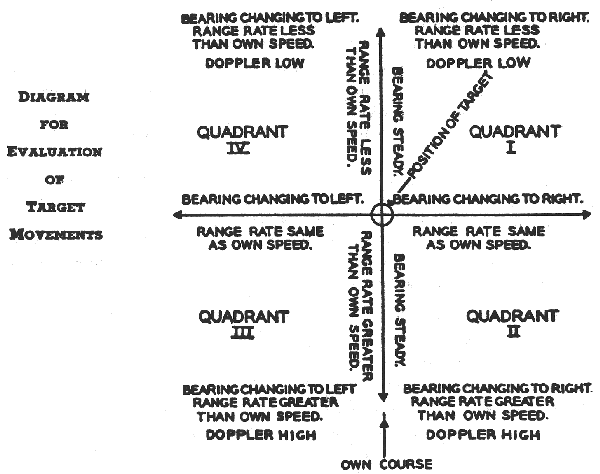
  1410 Evaluation of Target Movement 1-58
  1420 Estimating Target Depth 1-59
  1430 Depth Charge Attacks 1-60
1500 COORDINATED ATTACKS 1-60
  1510 Type One - Two Ship Attack on Submarines Not Known to be Deep 1-60
    1515 Attacking Ship 1-61
    1516 Assisting Ship 1-62
  1520 Type Two - Two-Ship Attack on Submarines Known to be Deep 1-62

[1-i]

Table of Contents--Part I (Continued)


Page
    1522 Assisting Ship 1-62
    1523 Attacking Ship 1-62
    1524 Special Depth Charge Pattern for Creeping Attacks (5 Knots) 1-63
1600 STANDARD PROCEDURES 1-65 -- 1-80
  1610 Organization of the A/S Ship's Sonar Attack Team 1-65
  1620 Duties of the Attack Team 1-65
    1621 Conning Officer 1-65
    1622 Sonar Officer 1-65
    1623 Recorder Operator 1-66
    1624 Plotter 1-66
    1625 Sonar Operator 1-67
    1626 Standby Sonar Operator 1-68
  1630 Relative Bearing Procedure 1-68
    1631 Conning Officer 1-69
    1632 Sonar Officer 1-69
    1633 Recorder Operator 1-69
    1634 Sonar Operator 1-69
  1640 Attack Procedures 1-70
    1641 Conning Procedure for Deliberate Depth Charge Attack at 15 Knots Using Cut-on Bearings 1-70
    1642 Notes on Cut-on Bearing Conning Procedure 1-71
    1643 Conning Procedure for Deliberate Depth Charge Attacking using Center (BDI) Bearings 1-72
    1644 Conning Procedure for Mousetrap Attack 1-73
    1645 Conning Procedure for Hedgehog Attack 1-74
  1650 The Anti-Submarine Plot 1-75
  1660 Depth Charge Patterns 1-76
  1670 Characteristics of Depth Charges 1-77
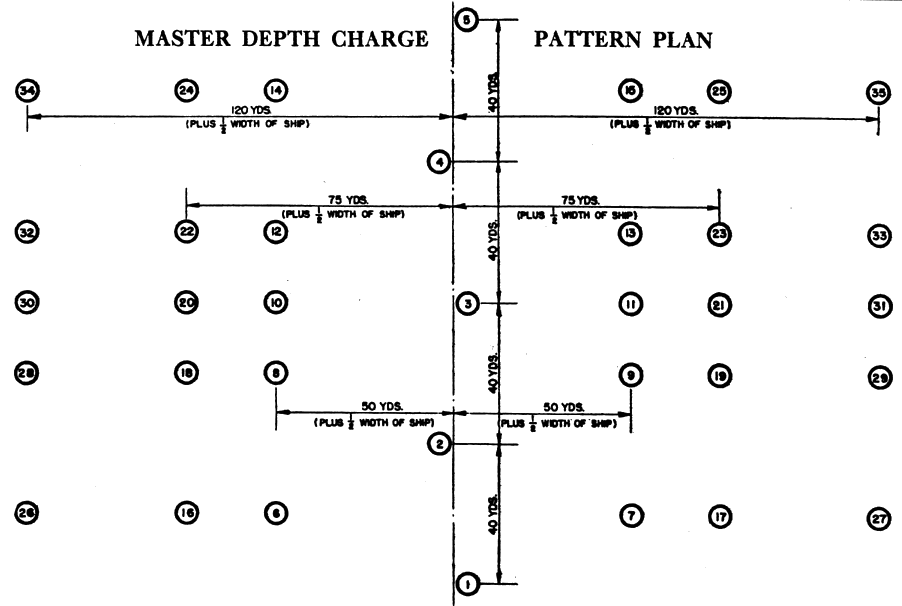
    1670-1 Master Depth Charge Pattern Plan 1-78
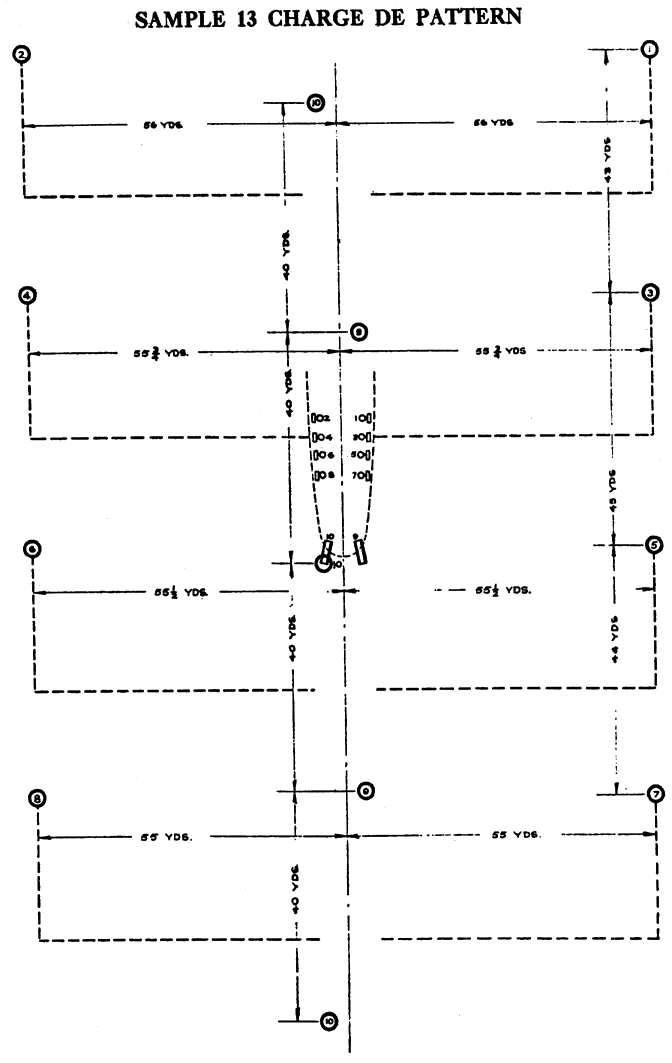
    1670-2 Sample 13 Charge DE Pattern 1-79
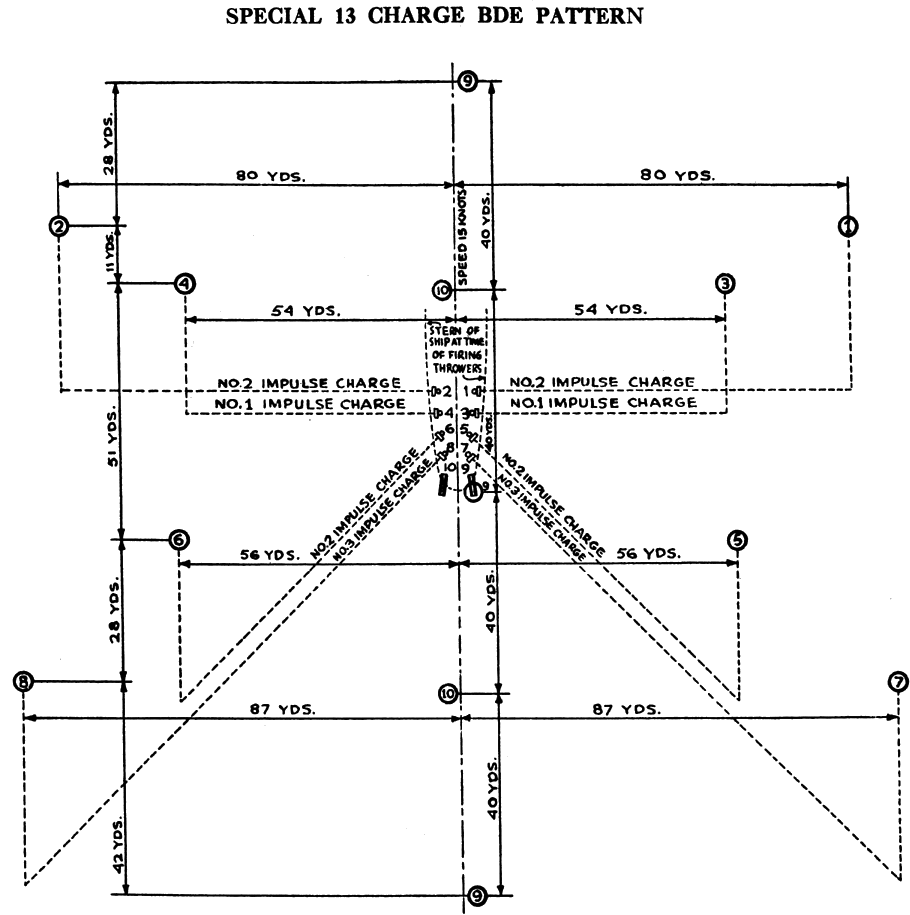
    1670-3 Special 13 Charge BDE Pattern 1-80
1700 THE USE OF SONAR GEAR FOR DETECTION AND ATTACK 1-81 -- 1-89
  1710 Selection and Training of Sonar Operators 1-81
  1720 Operation of Equipment 1-81
    1721 Automatic Keying 1-81
    1722 Manual Keying 1-82
    1723 Signal Length 1-82
    1724 Indicating Methods 1-82
    1725 Receiver-Amplifier Gains 1-82
    1726 Output Limiter 1-83
    1727 Time Varied Gain 1-83
    1728 Frequency Sweep Modulator 1-83
    1729 Bearing Deviation Indicator 1-84
  1730 Anti-Submarine Attack Plotter 1-85
  1740 The Sonar Range Recorder 1-85
  1750 Use of the Fathometer 1-86
  1760 Tuning the Sonar Gear 1-86
  1770 Verifying Contacts 1-87
    1771 Verification of Contact 1-87
    1772 Pillenwerfer 1-87
    1773 Wake Interference 1-88
  1780 Listening 1-89
  1790 Determination of Maximum Echo Range 1-89

[1-ii]

United States Fleet Anti-Submarine Instructions

Part I

SURFACE CRAFT


1000 DEFINITIONS.

  1. Anti-Submarine (A/S) Attacks.

    1. Deliberate--An accurately planned attack based on careful tracking of the target.

    2. Urgent--A prompt and hurried attack required by sudden contact with or the suspected presence of a submarine (S/M) that is in position to immediately menace a convoy or other valuable objective.

  2. Attack Course is the final course of the ship at the time when the depth charges, mousetrap or hedgehog, are fired.

  3. Automatic Keying - The transmission of a sonar signal "dash" at regular, predetermined intervals by using the proper switches to cause the time regulated keying device to automatically key the sonar transmitter (driver).

  4. Bearing Rate is the change of bearing per unit time.

  5. Collision Course is that course which if traveled by a moving body would cause it to collide with another moving body if both maintain their courses and speeds. When such a condition exists the bearing of each body from the other remains constant.

  6. Contact (Sonar) - Indications obtained by a ship's sonar gear from an underwater object.

  7. Correct Angel of Lead is the angle between the true bearing of the target and the correct attack course.

  8. Correct Attack Course is that course which will enable the attacking ship to place the depth charge, hedgehog or mousetrap, pattern on the submarine.

  9. Coverage Rate - The total area swept by the sonar beam in one minute times the probability that a submarine within the area covered would be detected if present. The coverage rate increases with maximum echo range and (up to the point where noise level reduces the range) with the speed of the A/S ship.

  10. Crossing the Target is the procedure of measuring the width of the target by training left or right in steps to obtain audible limits of the target.

  11. Cut-Ons are the limits of bearing of the contact obtained by crossing the target.

  12. Dead Time is the elapsed time between the will to fire or drop depth charges and the time the charges strike the water.

[1-1]

  1. Depth Charge Pattern is a systematic plan for laying depth charges (D/C). In using the sonar range recorder the pattern is laid with a symmetry as viewed from the submarine and not with respect to the surface of the ocean.

    1. Destructive - The standard full pattern of charges that can be fired or dropped by the A/S ship (See Art. 1660).

    2. Distracting - A pattern lid to harass the submarine and prevent accurate torpedo fire. This consists of one or more D/Cs fired immediately with shallow setting in an attempt to thwart the efforts of the S/M, even though it is known that probability of their lethal effect will not be great.

  2. Doppler, as used in anti-submarine attacks, is the difference in pitch between the reverberation and the echo.

  3. Dropping Point - Intersection of attack course and the predicted target track at which point the pattern is centered.

  4. Echo Ranging - The process of determining the bearing and distance of a submerged object by sending out a directional sonar signal and receiving the echo on a directional sonar device.

  5. Echo Search Plan - A definite system for use in the echo-ranging equipment for search, to cover effectively the maximum front with a minimum of interference with any adjacent ships.

  6. Evasive Time is the elapsed time between the receipt of the last useful target data and detonation of charges. During this time the submarine can maneuver without effective counteraction by the attacking ship.

  7. Hydrophone Effect (HE) - Underwater sounds, such as propeller beats, engine noises, or clanking sound produced by surface ships, submarines or torpedoes detected by the sonar gear.

  8. Inclination is the heading of the target relative to its bearing from the attacking ship.

  9. Instant Echoes - Instant echoes occur when the echo blends with the reverberation at short range.

  10. Killer Group - Forces formed into a unit to search for and destroy enemy submarines.

  11. Layer Effect - The partial protection from echo-ranging detection which a submarine gains by diving into or beneath a layer of sharp temperature gradient.

  12. Lead Angle is the angle between the bearing of the target and the heading of the attacking ship.

  13. Leading Edge (Bow Cut-On) is the cut-on in the direction in which the target is moving.

  14. Listening - The employment of the sonar gear to detect hydrophone effect.

  15. Lost Contact is the failure to hold the target, i.e., no further echoes or HE from the target are obtained. There are two conditions of lost contact:

    1. During approach or attack phase due to failure to maintain contact.

    2. During attack phase when contact is lost due to short ranges, i.e., sonar beam passes over target, or echoes blend with reverberations.

  16. Marker Float is any means to mark a spot in the water. It is used to locate center of depth charge pattern or to locate an origin point for reference when searching for a reported or sighted submarine.

[1-2]

  1. Range Rate is the change of range per unit time.

  2. Relative Bearing - Direction of target measured in degrees from ship's head. It is measured clockwise through 360°.

  3. Sinking Rate is the rate in feet per second at which a depth charge sinks through the water. This will vary with the depth until the charge reaches its terminal velocity, and with the type and form of the charge.

  4. Sinking Time is the tie required for the depth charge pattern to sink to the assumed depth of the submarine. It is the measured time elapsed from the instant of striking the water's surface until its arrival at the assumed depth.

  5. Slant Range - Straight line distances between sonar projector and target.

  6. Echo-Range (Assured) is the distance within which a submarine at the most unfavorable depth for detection should return a recognizable echo, considering the local temperature conditions as indicated by the bathythermograph. In general, speeds in excess of 15 knots have the effect of reducing the assured range due to the rise in background noise level.

  7. Echo-Range (Maximum) is the greatest distance within which a submarine at a particular depth can be detected under a given set of operating conditions, which includes speed of ship, and type of sea.

  8. Target Angle is the relative bearing of own ship from the target, measured in the horizontal from the bow of the target clockwise from 0° to 360°.

  9. Target Width is the difference in degrees between the right and left cut-ons.

  10. Track - Navigational path along which the ship or target has traveled.

  11. True Bearing - Direction of target from ship measured in degrees from the true North clockwise through 360°.

1100 OPERATIONS AND TACTICS.

  1. A/S Ship Training and Organization Standards.
    1. The following standards of A/S ship training and organization must be achieved before any A/S ship can be expected to be capable of taking effective action against an enemy submarine:
      1. The attack team to be trained to such a standard that it can classify a submarine target, hold contact with it and carry out an accurate attack, either with ahead thrown weapons, or depth charges; regain contact and re-attack.
      2. Maintenance of radar, sonar, and HF/DF gear to be such that all sets can be relied upon to be in continuous operation throughout any assigned task.
      3. Reliable and efficient communications, especially voice radio.
      4. Ability to fire the A/S ship's standard full pattern within 30 seconds of the sounding of the alarm, day or night.
      5. Ability to change the depth settings of the A/S ship's standard full pattern within 10 seconds day or night.
      6. Ability to reload and prepare for firing the A/S ship's standard full pattern in 50 seconds (or less if equipped with roller loaders) day or night, in all except the worst weather conditions.

[1-3]

      1. Ability to prepare the Mousetrap or Hedgehog for firing within 60 seconds of the alarm day or night, (if weather conditions permit manning the forecastle).
      2. Ability to reload and prepare the Mousetrap or Hedgehog for firing within 120 seconds day or night, (if weather conditions permit manning the forecastle).
      3. The gunnery efficiency to be such that having established contact with an enemy submarine on the surface at night the A/S ship can effectively illuminate the target and open effective fire upon it with guns and torpedoes.

  1. Operation "Observant"
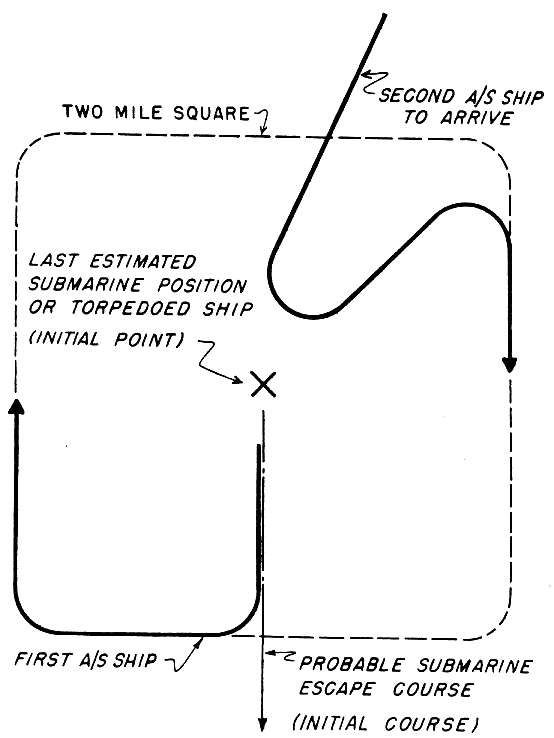
    1. Operation "Observant" is to be used:
      1. When first A/S ship can reach last estimated position (initial point) of submerged submarine within ten minutes of the time when the submarine was at that point.
      2. When a submarine is considered to be in the near vicinity of a torpedoed ship; the position of the torpedoed ship being taken as the last estimated submarine position (see figure below).
      3. When sonar contact has been lost on a submerged submarine and the A/S ships can reach last estimated position of submarine within ten minutes from the time of lost contact.

    2. Action by Escort Commander or Senior Officer.
      1. Orders "OBSERVANT" and gives Initial Point from which operation is to be initiated.


OPERATION "OBSERVANT"

Opeation Observant

[1-4]

    1. Conduct of Operation
      1. First A/S ship to arrive decides Initial Course and is responsible for advising supporting ships of the Initial Course.
      2. First A/S ship is guide and will drop marker over Initial Point, steer initial Course for one mile, turn and carry out clockwise box search within 2-mile legs as shown in diagram,
      3. Second A/S ship takes station on square opposite first ship.
      4. Third A/S ship circles Initial Point or reinforces square as directed by Senior Officer present.
      5. Operation "Observant" should never be repeated about a given point unless another contact re-establishes this same initial point.

    2. Termination of Operation "Observant"

      If contact is not established, and all parts of the perimeter of the square have been traversed by at least one A/S ship (but not necessarily by the same ship throughout), then Operation "Observant" should be abandoned and the appropriate retiring search plan started in accordance with Article 1130.

  1. Retiring Search Plans for Use Against a Submerged Submarine.
    1. Nature of a Retiring Search.

      After contact has been lost, the possible area in which the submarine can be situated rapidly becomes so great that the A/S ships with their constant searching rate cannot cover it. Therefore, some compromise is necessary. Retiring search plans provide a means whereby the A/S ships may search most effectively. The plans presented in Article 1160 are based on the following assumptions as to the submarine's maximum speed of radial departure from its last estimated position:

      • 5 knots for the first half hour,
      • 3 knots for the next two and one half hours,
      • 2 1/2 knots thereafter.

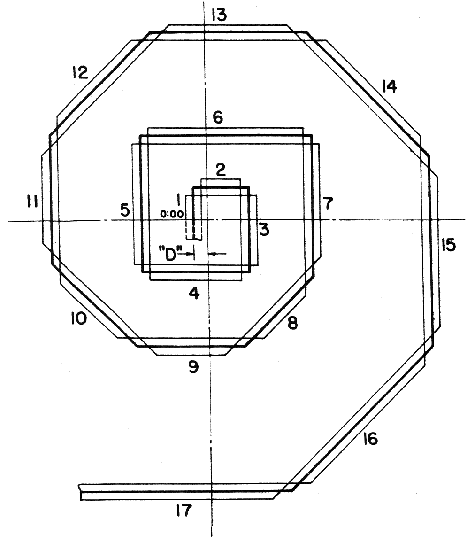
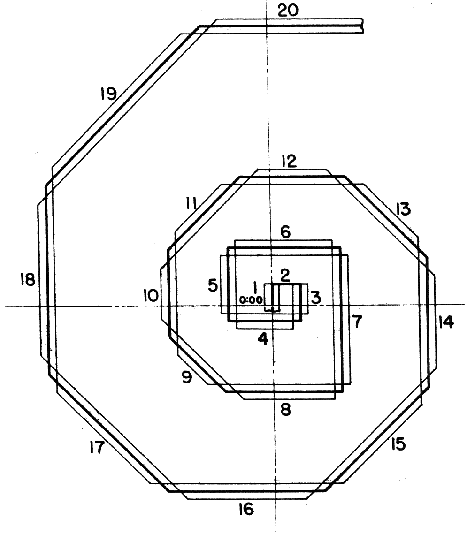
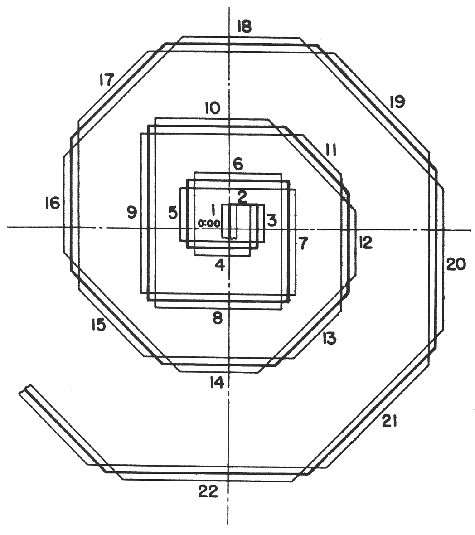
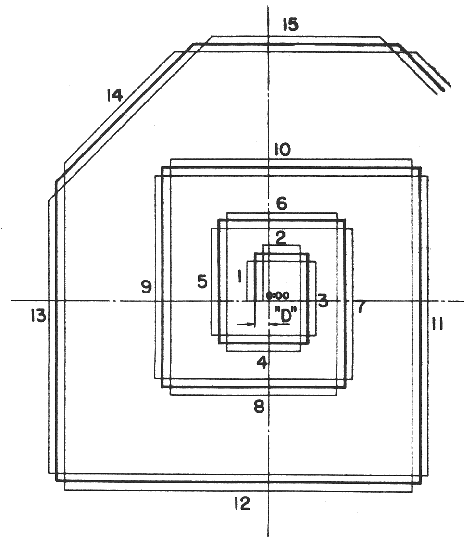
      The true retiring search plan would consist of a spiral. For practical reasons, the plans approximate to this spiral by means of a series of straight legs connected by 45° or 90° turns. Also for practical reasons the plans have been slightly modified from the theoretical in certain instances.

      The procedures for using these plans are described in the following Articles 1132 through 1146, and illustrated in the example of Article 1147.

    2. Conditions Under Which Retiring Search Is Used.

      Retiring search plans are used:

      1. When Operation "Observant", executed in accordance with Article 1120, has failed to yield contact.
      2. When the A/S ship(s) cannot reach last estimated position of submerged submarine within ten minutes of the time when the submarine was at that position.

[1-5]

    1. Selection of the Correct Retiring Search Plan
      1. To determine the correct retiring search plan to be used in a given situation it is necessary to know three facts:

        1. "Time Late" (as defined in b below).
        2. Assured Sonar Range.
        3. Number of A/S ships available (see c below).

        With these data enter the Master Table of Article 1150 and select the correct plan.

      2. "Time Late" is defined in two different ways according as the submarine is not or is believed to be using Schnorchel, as follows:
        1. If submarine is not believed to be using Schnorchel, then "Time Late" is the actual elapsed time between last contact with the submarine and the instant when the A/S ships could arrive at the point of last contact.
        2. If submarine is believed to be using Schnorchel, then "Time Late" to be used in the Master Table is determined from the actual elapsed time of "1" above by means of the Schnorchel table below:

        3.  

Actual
Elapsed
Time
corresponds to "Time
Late"
0:11 - 0:45   0:11 - 0:45
0:46 - 1:30   0:46 - 1:30
1:31 - 2:00   1:31 - 2:30
2:01 - 2:30   2:31 - 3:30
2:31 - 3:00   3:31 - 4:30
3:01 ------   4:31 - 5:30


      1. All available A/S ships should be used in executing the plan. Ships arriving after a plan has begun should join in the plan already being executed. If air coverage is not available, one ship may be detached from the main group later to conduct a supplementary radar sweep in accordance with Article 1143.

    1. Speed of Execution of a Plan.
      1. Each plan is presented for eleven different speeds. The speed selected for the execution of a plan should be the highest practicable speed, since probability of contact increases as speed increases. Factors affecting the practicability of a particular speed are: fuel available, state of the sea, condition of machinery, and echo ranging conditions. Certain features of the plans should also be remembered when selecting the speed of execution, namely,
        1. Turns in the plans are so designed that no speed changes are necessary for making the turns (see Article 1138).
        2. Speed of execution need not be maintained throughout the entire plan, but may be either decreased or increased in accordance with Article 1139.

      2. Zig-zagging may be used with the plans in accordance with Article 1144. When zig-zagging the speed of execution of the plan is defined as the man speed of advance along base course, hence the column in the plan for this mean speed must be followed in order to determine the times to turn.

[1-6]

    1. Spacing Between Ships in the Execution of a Plan.

      In the execution of a plan the distance between ships shall be one and three quarters times the assured sonar range.

    2. Approach to the Initial Point for Beginning a Plan.
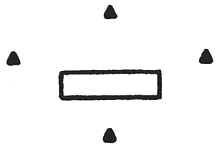
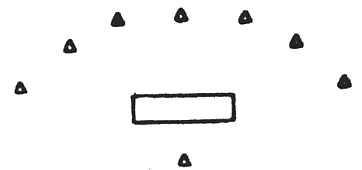
      1. During the approach the guide (OTC) should take position: (1) as center ship in a formation of an odd number of ships, or (2) as one of the center ships in a formation of an even number of ships. In this manner station keeping throughout the execution of the plan is simplified (see Article 1138(b)
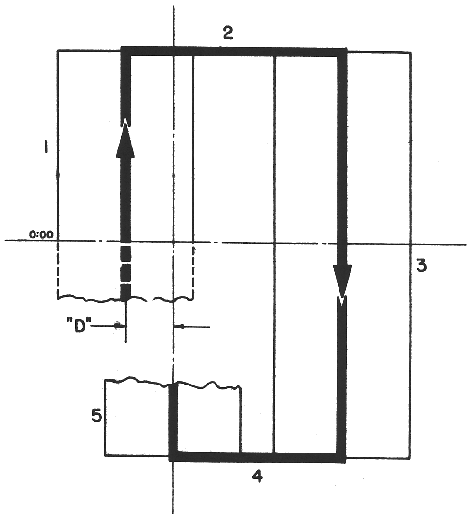
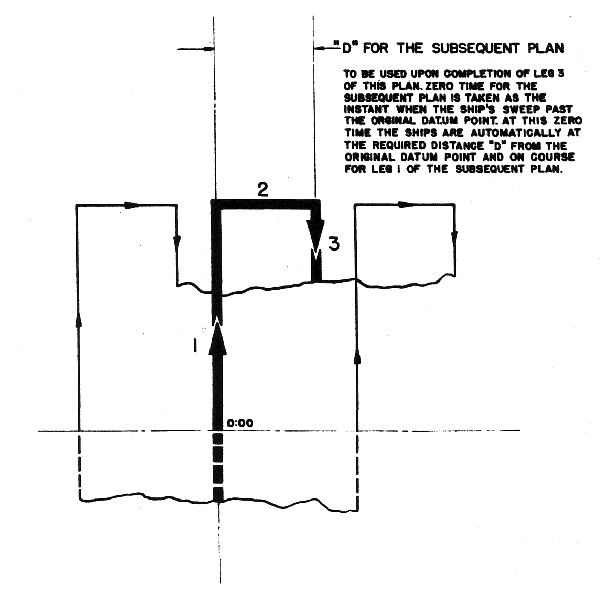
      2. In some instances the plan begins when the last estimated submarine position (indicated by the intersection of the center lines of the diagram) is a distance D, which may be up to 4 miles, bearing 090 degrees relative (or 270 if the plan is being executed counterclockwise) from the center of the sweep. Unless a D is indicated on the plan and diagram, a plan begins when the center of the sweep passes over the last estimated submarine position.
      3. The point at which the retiring search plan is to be begun should be closed at the highest practicable speed consistent with effective echo ranging.
      4. During the approach the OTC should specify:
        1. Number of the plan to be executed. (See Art. 1133)
        2. Speed of execution of the plan. (See Art. 1134)
        3. Distance between ships. (See Art. 1135)
        4. Course for leg one of the plan - usually the approach course itself.
        5. Whether the plan is to be executed clockwise or counter-clockwise.
        6. Approximate time when the plan will begin.

    3. Procedure at the Beginning of a Plan.
      1. At the instant of beginning the plan a time signal should be given and watches started simultaneously. This is time 0:00 of the plan.
      2. At this time 0:00, speed of all the A/S ships should be the speed of execution of the plan.
      3. At this time 0:00, the guide (OTC) should buoy the position where the plan is beginning.

    4. Procedure During the Execution of a Plan.

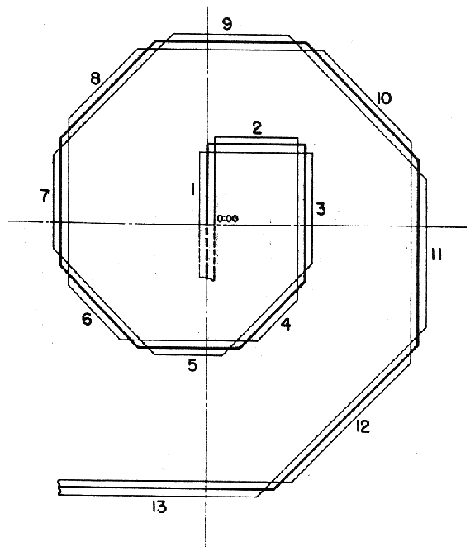
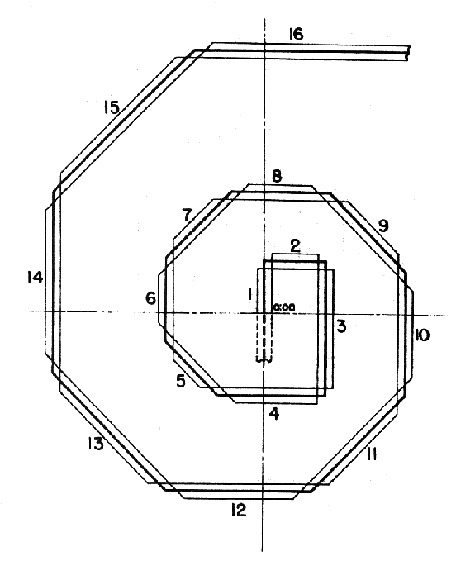
      The plans in Articles 1160-1 to 1160-42 are presented as time tables. These plans (tables) are supplemented by the diagrams presented in Articles 1161-1 to 1161-13.

      1. Relation Between the Tables and the Diagrams.

        Each plan (table) is divided into two groups of speeds and each group carries a reference to the appropriate diagram. The diagrams are entirely secondary: the essential items are the tables. The diagram illustrates the nature of the plan and the types of turns, but is never to be used to determine when and where to turn.

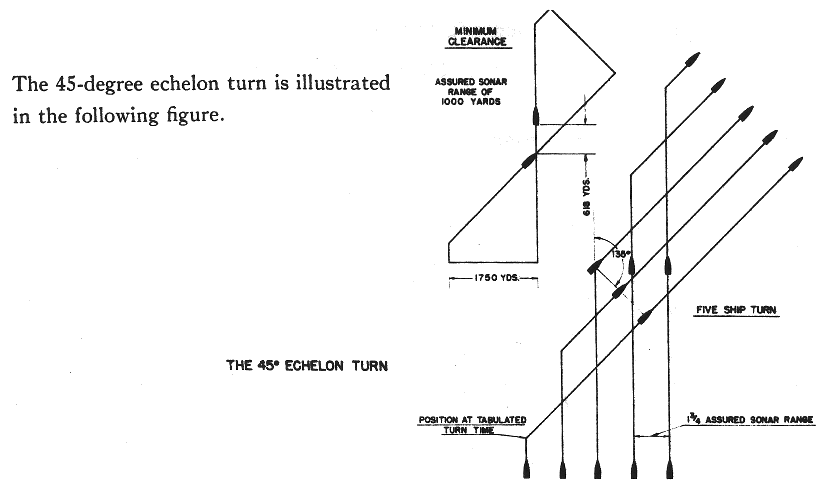
      2. Types of Turns.

        Turns are of four types only:

        1. 90-degree turns from line of bearing into column,
        2. 90-degree turns from column into line of bearing,
        3. 90-degree echelon turns,
        4. 45-degree echelon turns.

[1-7]

        In this turn, after the first ship has turned, the second ship turns when the first ship bears broad on the quarter. The third ship turns when the second ship bears broad on the quarter, etc. Thus each ship crosses astern of the ship next turning. In the 90-degree echelon turn the second ship turns when the first ship bears dead astern, etc.

      1. Times for the First Ship to Turn.

        The times given in the tables are the times for the first ship to turn. When turns are into or out of column all ships turn simultaneously; such turns are indicated by special markings in the tables and are also shown on the diagram.

    1. Method of Changing the Speed of Execution of a Plan.

      The speed of execution is an integral part of a plan, and a serious loss of efficiency will result from any change in speed unless such change is accomplished in accordance with the following rules:

      1. The speed of execution can be changed to a new speed only immediately after the completion of a turn. The OTC should decide upon the new speed and inform the several ships of the impending change well in advance of the turn.
      2. There are certain turns in a plan immediately after which no change in speed may be made. These turns are excluded as change points because of the nature of the next turn which follows them. These excluded turns are of two types:
        1. Speed may not be changed when the next turn at the old speed would be 90 degrees and at the new speed would be 45 degrees, or vice-versa.
        2. Speed may not be changed when the next turn, at either the old or new speed, is a turn into or out of column.

      3. Except for the turns of "b" above, speed of execution of the plan may be changed as follows:
        1. Execute the turn at the time stated, T, for the old speed.
        2. When the turn has been completed by all of the ships, give the order to all ships to change to the new speed. Continue on course.

[1-8]

        1. In the new speed column find the first turn time, T', that is greater that T.
        2. Subtract T from T' to get the "time correction".
        3. Subtract this "time correction" from all times in the new speed column subsequent to T', thus obtaining the "corrected times".
        4. Continue the plan at the new speed, executing, at the "corrected times", the types of turns given for the new speed.

  1. Air Coverage and Radar Search in Conjunction with Retiring Search Plans.
    1. Air Coverage.

      It is desirable that air coverage be provided throughout a retiring search to minimize the possibility of the submarine's surfacing beyond visual or radar range of the ships and retiring at high speed.

    2. Radar Search.

      During the execution of a retiring search plan appropriate radar search should be maintained.

    3. Method of Detachment of One Ship for Additional Radar Search.
      1. If air coverage is not available, and if more than three A/S ships are present, one ship may be detached for supplementary radar search. This will increase the probability of detecting a surfaced submarine. For this purpose the ship must be detached at the end of a leg in accordance with d below. In general, this should not be done before the end of the third leg.
      2. The detached ship should continue sonar search.
      3. The remaining ships continue with the retiring search without any change of plan.
      4. The following procedure for the detached ship will ensure that this ship executes a retiring search on the opposite side of the plan from the main search group (see figure below).
        1. Upon detachment at the end of a leg, the detached ship at once turns through 180 degrees instead of through the turn called for by the plan.
        2. The procedure following this 180-degree turn is divided into two cases:
        3. Case A. When the next turn called for by the plan, i.e. the turn at B, is 90 degrees, the detached ship makes a 180-degree turn B' at the time for the turn B.
          Case B. When the next turn called for by the plan, i.e. the turn at B, is 45 degrees, the detached ship makes a 45-degree turn B' at the time for the turn B but in the opposite direction. (That is, turns left if the plan is being executed clockwise - and vice versa). At the time for the next turn C, the detached ship turns 180 degrees at C'.

        4. Thereafter the detached ship makes the same turns at the same times as the main search group.

[1-9]

Detachment

    1. Zig-Zagging During the Execution of a Retiring Search Plan.

      If zig-zagging is employed during the execution of a retiring search plan, then to avoid serious loss of efficiency the zig-zag plan must meet the following conditions:

      1. The center of the formation must never depart from the base courses of the plan a distance greater than fifty percent of the total search width of the formation.
      2. The zig-zag must be performed in such a manner that: (1) the speed made good along base course equals the speed of execution of the plan, (2) the ships steam on base course for a few minutes just prior to making a turn, and (3) the ships arrive at the correct geographical position to turn at the time shown in the table.

    2. Procedure When Contact Is Obtained During Retiring Search.

      When contact is obtained during the execution of a retiring search plan, one or more ships should be detached to investigate. The remaining ships should continue the plan until the nature of the contact is established. If the contact is classified as non-submarine, then the detached ships should rejoin and continue with the original retiring search plan.

    3. Termination of a Retiring Search Plan.

      Retiring search pans should be terminated:

      1. If a submarine contact is obtained.
      2. In any case not later than approximately 20 hours after beginning the plan. After this time the probability of obtaining contact is too small to justify a continuation.

    4. Example of the Use of Retiring Search Plans. The following example displays the use of the preceding articles 1130-1140 and the tables and diagrams that follow in articles 1150-1161-13. Cross references to these articles are given throughout the example. The continuity of events is shown by the times on the left side.

[1-10]

CONTACT
0514 Searchlight plane, returning from patrol, sights fully surfaced submarine and attacks.
0518 Submarine dives at point "X", last estimated submarine position.
0519 Plane drops marker and notifies anti-submarine task group (4 A/S ships 20 miles distant) of contact at position "X".
 
SELECTION OF THE PLAN
0521 The assured sonar range is 1200 yards, sea slight (force 1-2). Considering that the submarine may use Schnorchel to clear the area rapidly, OTC consults the Schnorchel table (Art. 1133-b) and finds that the actual elapsed time of 1:18 (0636-0518) falls within the period when use of Schnorchel does not effect the choice of plan, i.e., "Time Late" will be 1 hr. 18 min. OTC consults Master Table (Art. 1150) and finds that 4 ships arriving 0:46 to 1:30 late and with assured sonar range 1200 yards should use Plan 14. OTC decides to execute plan 14 at 16 knots, at least until fuel supply or other conditions indicate that a change would be prudent.
0530 Searchlight plane is joined by another plane which attempts, without success, to track with sono-buoys.
0538 Searchlight plane reaches P.L.E. and leaves scene.
 
APPROACH TO INITIAL POINT
0541 OTC orders Plan 14, clockwise, 16 knots, distance 2100 yards (1 3/4 x 1200; see Article 1135), E.T.A. 0636.
0550 Ships have formed on OTC in ship to right of center. OTC observes Plan 14 has a "D" of 2 miles (see also Diagram 11 of Article 1161-11). OTC changes course so that center of sweep will pass 2 miles from point "X". Signals course change to task group.
0610 Task group sights plane.
 
BEGINNING THE PLAN
0631 OTC signals that present course is course for leg 1 of plan 14.
0635 "Execute". Sweep line passes position "X". Aircraft marker buoy bears 090 relative, distance 2950 yards (4000 -1/2 x 2100) from OTC. Watches started. This is time 0:00 of plan 14. All ships searching with sonar and radar.
 
EXECUTION OF THE PLAN
0700 Time is 0:25 of Plan 14. Ships turn into columns as directed in Plan 14 (Art. 1160-14) and indicated on Diagram 11 (Art. 1161-11).
0733 Time is 0:58 of Plan 14. Ships turn nine into line of bearing as directed in plan.
0837 Time is 2:02 of Plan 14. Ships turn nine into column as indicated.
0902 Time is 2:27 of Plan 14. Ships turn nine into line of bearing as indicated.
 
CONTINUATION AT END OF SHORT PLAN
0935 OTC orders that Plan 17 be begun as indicated when Plan 14 ends.
0941 Time is 3:06 of Plan 14. Center of sweep passes directly over point "X". Plan 14 ends. OTC orders "Execute" for Plan 17. Watches again set to 0:00.
1023 Time is 0:42 of Plan 17. Outboard ship (port side of sweep) turns through 90°. Other ships turn when preceding ships come astern (Article 1138-b and Diagram 2 Article 1161-2).

[1-11]

1100 Third aircraft relieves second.
1121 Time is 1:40 of Plan 17. Outboard ship (different from outboard ship at 1023) turns through 90°.
1231 Time is 2:50 of Plan 17. Outboard ship turns through 45°, other ships turn as preceding ships bear on the quarter (Article 1138-b with figure).
1323 Time is 3:42 of Plan 17. Another 45° turn begins.
 
REDUCTION IN SPEED OF EXECUTION OF PLAN
1541 Time is 6:00 of Plan 17. Sea now Force 4. Because of prospect of long search and in consideration of fuel economy, OTC orders speed of execution of plan reduced from 16 knots to 13 knots after the next turn.
1625 Time is 6:44 of Plan 17. Final turn at 16 knots is begun.
1630 Fourth aircraft relieves third.
1637 Turn which was begun at 6:44 of Plan 17 completed and all ships on station. All ships reduce speed to 13 knots. In the 13 knot column of Plan 17 the next turn time is 7:48. Hence the "time correction" (Article 1139) is 7:48 minus 6:44, i. e. 1:04. The next turn, therefore, will be executed at 13 knots at 8:21, i.e. 9:25 minus 1:04. Following turns will occur as in the table below:

From the Table Corrected for Use
11:10 10:06
13:07 12:03
15:15 14:11
1802 Corrected time is 8:21 of Plan 17 at speed 13. Turn is begun.
 
DETACHMENT OF SHIP FOR RADAR SEARCH
1900 Aircraft leaves for base.
1930 Visibility reduced. OTC signals outboard ship to port to prepare to detach immediately prior to next turn for supplementary radar search.
1946 Corrected time is 10:05. Outboard ship to port turns outboard through 180° to begin supplementary radar (and sonar) search. (Article 1143). This detached ship will turn 45° left at corrected time 12:03, and will turn through 180° at corrected time 14:11. Thereafter it will follow the plan, using corrected times.
1947 Corrected time is 10:06. Main search group now consists of three ships. Outboard ship to port begins turn. (Note: This ship became the outboard ship when the former outboard ship was detached a moment earlier for supplementary radar search).
 
PROCEDURE WHEN CONTACT IS OBTAINED
2019 Onboard ship (to starboard) makes sonar contact at position "Y". OTC orders ship making contact to investigate. Other two ships continue with retiring search plan.
2034 Contact identified as definitely not a submarine. Investigating ship sets course at 16 knots to rejoin.
2149 Investigating ship rejoins.
2205 Sonar contact obtained at position "Z" and classified as submarine. Attacks begin. Detached ship notified. (Note: If contact is again lost, position "Z" provides a basis for further search with Operation Observant or retiring search plan as required.)

[1-12]

  1.  

MASTER TABLE

  Number of plan to be used:
No. of
Ships
Assured Sonar
Range in Yards
"Time Late"
0:11-
0:45
0:46-
1:30
1:31-
2:30
2:31-
3:30
3:31-
4:30
4:31-
5:30
1 --- 1 2 3 4 5 6
2 Less than 2000
2000-2500
2600-3500*
Greater than 3500*
7
13
19
25
8
14
20
26
9
15
21
27
10
16
22
28
11
17
23
29
12
18
24
30
3 Less than 1300
1300-1800
1900-2500
2600-2900*
Greater than 2900*
7
13
19
25
31
8
14
20
26
32
9
15
21
26
33
10
16
22
27
34
11
17
23
28
35
12
18
24
29
36
4 Less than 1000
1000-1300
1400-1700
1800-2100
2200-2500
Greater than 2500*
7
13
19
25
31
37
8
14
20
26
32
38
9
15
21
27
33
39
10
16
22
28
34
40
11
17
23
29
35
41
12
18
24
30
36
42
5 Less than 1100
1100-1300
1400-1700
1800-2000
2100-2500
13
19
25
31
37
14
20
26
32
38
15
21
27
33
39
16
22
28
34
40
17
23
29
35
41
18
24
30
36
42
6 Less than 900
900-1100
1200-1400
1500-1700
1800-2100
13
19
25
31
37
14
20
26
32
38
15
21
27
33
39
16
22
28
34
40
17
23
29
35
41
18
24
30
36
42
* Assured sonar ranges greater than 2500 yards cannot be expected with present (1944) sonar gear.

[1-13]

1160-1

PLAN NUMBER 1

D=1.5 Miles

Times in Hours and Minutes for Ships to Enter Leg


Leg.
No.
SLOW SPEEDS: DIAGRAM NUMBER 13 FAST SPEEDS: DIAGRAM NUMBER 12
Change
of
Course
SEARCH SPEED IN KNOTS
10 11 12 13 14
Change
of
Course
SEARCH SPEED IN KNOTS
15 16 17 18 19 20
1
2
3
4
5
00
90
90
90
90
0 00 0 00 0 00 0 00 0 00
0 23 0 23 0 23 0 18 0 17
1 03 1 01 0 58 0 47 0 45
2 14 2 09 2 03 1 40 1 36
2 46 2 39 2 30 2 02 1 57
00
90
90
90
90
0 00 0 00 0 00 0 00 0 00 0 00
0 19 0 19 0 18 0 15 0 14 0 14
0 43 0 42 0 40 0 33 0 32 0 31
1 37 1 34 1 30 1 07 1 06 0 05
1 55 1 51 1 47 1 20 1 19 1 18
To Plan No.
5 5 5 4 4
 
4 4 4 3 3 3

NOTE: Zero time for the subsequent plan, 5, 4, or 3, is taken as the instant when the ships sweep past the original datum point.

[1-14]

1160-2

PLAN NUMBER 2

Times in Hours and Minutes for Ships to Enter Leg


Leg.
No.
SLOW SPEEDS: DIAGRAM NUMBER 6 FAST SPEEDS: DIAGRAM NUMBER 8
Change
of
Course
SEARCH SPEED IN KNOTS
10 11 12 13 14
Change
of
Course
SEARCH SPEED IN KNOTS
15 16 17 18 19 20
1
2
3
4
5
6
7
8
9
10
11
12
13
14
15
16
17
18
19
20
21
22
23
24
25
26
27
28
29
30
00
90
90
90
90
90
90
90
45
45
45
45
45
45
45
45
45
45
45
45
45


0  00 0  00 0  00 0  00 0  00
0  21 0  19 0  17 0  15 0  14
0  50 0  43 0  38 0  34 0  31
1  51 1  35 1  22 1  13 1  05
3  13 2  42 2  19 2  02 1  48
5  04 4  10 3  32 3  03 2  41
7  34 6  07 5  06 4  21  3  47
10  57 8  40 7  07 5  59 5  08
13  53 10  51 8  49 7  21 6  15
15  59 12  23 9  59 8  16 7  00
18  22 14  06 11  17 9  18 7  50
21  04 16  02 12  44 10  25 8  44
  18  11 14  20 11  39 9  43
  20  36 16  07 13  01 10  49
    18  05 14  31 12  00
    20  16 16  10 13  18
      17  59 14  44
      19  59 16  17
      22  11 18  00
        19  51
        21  53


00
90
90
90
90
90
90
90
90
90
45
45
45
45
45
45
45
45
45
45
45
45
45
45
45
45
45
45
45
45
0  00 0  00 0  00 0  00 0  00 0  00
0  13 0  12 0  11 0  10 0  09 0  09
0  28 0  25 0  24 0  22 0  20 0  19
0  59 0  54 0  50 0  46 0  43 0  40
1  37 1  28 1  21 1  14 1  09 1  04
2  23 2  09 1  58 1  48 1  39 1  32
3  20 2  59 2  42 2  27 2  15 2  05
4  29 3  59 3  35 3  14 2  57 2  42
5  54 5  12 4  38 4  10 3  46 3  26
7  38 6  39 5  54 5  15 4  44 4  18
9  02 7  50 6  54 6  07 5  29 4  58
9  58 8  37 7  34 6  41 5  59 5  24
11  00 9  27 8  17 7  18 6  30 5  51
12  06 10  23 9  03 7  57 7  04 6  21
13  19 11  22 9  53 8  40 7  40 6  52
14  37 12  27 10  47 9  25 8  19 7  26
16  03 13  36 11  45 10  14 9  00 8  01
17  36 14  51 12  47 11  07 9  44 8  39
19  17 16  13 13  53 12  03 10  31 9  20
21  06 17  41 15  05 13  03 11  20 10  03
  19  15 16  23 14  07 12  14 10  48
  20  58 17  46 15  16 13  11 11  37
    19  16 16  30 14  12 12  29
    20  52 17  49 15  16 13  24
      19  14 16  26 14  23
      20  45 17  40 15  25
        18  58 16  31
        20  23 17  42
          18  57
          20  17

[1-15]

1160-3

PLAN NUMBER 3

Times in Hours and Minutes for Ships to Enter Leg


Leg.
No.
SLOW SPEEDS: DIAGRAM NUMBER 2 FAST SPEEDS: DIAGRAM NUMBER 4
Change
of
Course
SEARCH SPEED IN KNOTS
10 11 12 13 14
Change
of
Course
SEARCH SPEED IN KNOTS
15 16 17 18 19 20
1
2
3
4
5
6
7
8
9
10
11
12
13
14
15
16
17
18
19
20
21
22
23
24
25
26
00
90
90
45
45
45
45
45
45
45
45
45
45
45
45
45
45
45
45
45


0  00 0  00 0  00 0  00 0  00
0  47 0  41 0  37 0  33 0  30
1  51 1  36 1  24 1  15 1  07
3  16 2  49 2  27 2  11 1  58
4  18 3  40 3  11 2  49 2  32
5  28 4  38 4  00 3  32 3  09
6  46 5  42 4  55 4  18  3  50
8  16 6  55 5  55 5  10 4  34
9  57 8  15 7  01 6  06 5  23
11  51 9  46 8  15 7  08 6  16
14  01 11  27 9  37 8  16 7  14
16  28 13  21 11  08 9  32 8  18
19  14 15  28 12  49 10  54 9  27
22  22 17  50 14  41 12  25 10  44
  20  29 16  46 14  05 12  07
    19  03 15  57 13  38
    21  36 18  00 15  18
      20  16 17  07
        18  06
        21  16


00
90
90
90
90
45
45
45
45
45
45
45
45
45
45
45
45
45
45
45
45
45
45
45
45
45
0  00 0  00 0  00 0  00 0  00 0  00
0  28 0  25 0  24 0  22 0  21 0  19
1  01 0  56 0  52 0  48 0  45 0  42
2  10 1  58 1  49 1  41 1  34 1  28
3  34 3  14 2  57 2  43 2  31 2  21
4  42 4  14 3  52 3  33 3  16 3  03
5  27 4  55 4  28 4  05 3  46 3  30
6  17 5  38 5  06 4  40 4  18 3  59
7  11 6  26 5  48 5  17 4  51 4  30
8  10 7  17 6  33 5  57 5  27 5  02
9  13 8  12 7  21 6  40 6  06 5  37
10  23 9  11 8  13 7  26 6  47 6  14
11  38 10  16 9  09 8  15 7  31 6  53
13  00 11  25 10  09 9  08 8  17 7  35
14  29 12  41 11  14 10  05 9  07 8  20
16  05 14  03 12  24 11  06 10  01 9  08
17  50 15  31 13  39 12  11 10  57 9  58
19  44 17  06 14  59 13  21 11  58 10  52
21  48 18  50 16  26 14  36 13  03 11  49
  20  41 18  00 15  56 14  12 12  50
    19  40 17  22 15  26 13  55
    21  29 18  54 16  45 15  04
      20  33 18  09 16  18
        19  39 17  36
        21  15 18  59
          20  27

[1-16]

1160-4

PLAN NUMBER 4

Times in Hours and Minutes for Ships to Enter Leg


Leg.
No.
SLOW SPEEDS: DIAGRAM NUMBER 1 FAST SPEEDS: DIAGRAM NUMBER 2
Change
of
Course
SEARCH SPEED IN KNOTS
10 11 12 13 14
Change
of
Course
SEARCH SPEED IN KNOTS
15 16 17 18 19 20
1
2
3
4
5
6
7
8
9
10
11
12
13
14
15
16
17
18
19
20
21
22
23
24
00
90
45
45
45
45
45
45
45
45
45
45
45
45
45
45
45


0  00 0  00 0  00 0  00 0  00
1  13 1  04 0  57 0  51 0  46
1  57 1  41 1  29 1  19 1  12
3  07 2  41 2  22 2  07 1  54
4  26 3  49 3  21 2  59 2  41
5  56 5  05 4  26 3  50 3  32
7  38 6  30 5  38 4  59  4  27
9  33 8  05 6  59 6  08 5  28
11  44 9  51 8  28 7  24 6  35
14  12 11  50 10  07 8  48 7  47
17  00 14  03 11  56 10  20 9  06
20  10 16  33 13  58 12  02 10  33
  19  20 16  13 13  53 12  08
  22  27 18  43 15  50 13  52
    21  28 18  11 15  46
      20  41 17  50
        20  06


00
90
90
45
45
45
45
45
45
45
45
45
45
45
45
45
45
45
45
45
45
45
45
45
0  00 0  00 0  00 0  00 0  00 0  00
0  43 0  39 0  36 0  34 0  32 0  30
1  34 1  27 1  20 1  14 1  09 1  05
2  45 2  31 2  19 2  09 2  00 1  52
3  32 3  14 2  58 2  45 2  33 2  23
4  23 4  00 3  40 3  23 3  09 2  56
5  19 4  50 4  25 4  05 3  47 3  31
6  20 5  44 5  14 4  49 4  27 4  08
7  26 6  43 6  06 5  36 5  10 4  48
8  37 7  46 7  02 6  27 5  56 5  30
9  55 8  54 8  03 7  21 6  46 6  15
11  19 10  08 9  08 8  20 7  38 7  03
12  51 11  28 10  18 9  22 8  34 7  53
14  31 12  54 11  33 10  30 9  34 8  47
16  19 14  27 12  54 11  42 10  38 9  45
18  17 16  08 14  22 12  59 11  47 10  46
20  24 17  58 15  50 14  22 13  00 11  51
  19  56 17  37 15  51 14  18 13  00
  22  04 19  26 17  26 15  41 14  14
    21  23 19  08 17  10 15  32
      20  58 18  44 16  56
        20  26 18  25
          19  59
          21  40

[1-17]

1160-5

PLAN NUMBER 5

Times in Hours and Minutes for Ships to Enter Leg


Leg.
No.
SLOW SPEEDS: DIAGRAM NUMBER 1 FAST SPEEDS: DIAGRAM NUMBER 2
Change
of
Course
SEARCH SPEED IN KNOTS
10 11 12 13 14
Change
of
Course
SEARCH SPEED IN KNOTS
15 16 17 18 19 20
1
2
3
4
5
6
7
8
9
10
11
12
13
14
15
16
17
18
19
20
00
90
45
45
45
45
45
45
45
45
45
45
45
45
45


0  00 0  00 0  00 0  00 0  00
1  34 1  23 1  13 1  06 1  00
2  31 2  11 1  55 1  43 1  33
4  02 3  29 3  04 2  44 2  28
5  45 4  56 4  20 3  51 3  28
7  41 6  34 5  44 5  05 4  34
9  53 8  24 7  18 6  27  5  46
12  22 10  27 9  02 7  50 7  04
15  11 12  45 10  57 9  35 8  30
18  23 15  19 13  05 11  23 10  04
21  59 18  11 15  27 13  23 11  46
  21  24 18  04 15  34 13  39
    20  59 17  59 15  41
      20  38 17  56
        20  23


00
90
90
45
45
45
45
45
45
45
45
45
45
45
45
45
45
45
45
45
0  00 0  00 0  00 0  00 0  00 0  00
0  55 0  51 0  47 0  44 0  41 0  39
2  02 1  52 1  43 1  36 1  30 1  24
3  33 3  15 3  00 2  47 2  36 2  26
4  35 4  11 3  51 3  33 3  19 3  06
5  41 5  11 4  45 4  23 4  05 3  48
6  54 6  15 5  44 5  16 4  54 4  34
8  12 7  25 6  47 6  13 5  46 5  22
9  37 8  41 7  54 7  15 6  42 6  13
11  10 10  03 9  07 8  20 7  42 7  07
12  51 11  31 10  26 9  30 8  46 8  05
14  40 13  06 11  50 10  46 9  54 9  07
16  39 14  50 13  21 12  06 11  07 10  13
18  48 16  41 14  59 13  33 12  24 11  23
21  09 18  42 16  44 15  07 13  47 12  37
  20  53 18  38 16  47 15  16 13  56
    20  40 18  34 16  50 15  21
      20  29 18  31 16  50
        20  18 18  26
          20  07

[1-18]

1160-6

PLAN NUMBER 6

Times in Hours and Minutes for Ships to Enter Leg


Leg.
No.
SLOW SPEEDS: DIAGRAM NUMBER 1 FAST SPEEDS: DIAGRAM NUMBER 1
Change
of
Course
SEARCH SPEED IN KNOTS
10 11 12 13 14
Change
of
Course
SEARCH SPEED IN KNOTS
15 16 17 18 19 20
1
2
3
4
5
6
7
8
9
10
11
12
13
14
15
16
17
18
19
20
00
90
45
45
45
45
45
45
45
45
45</