In Atlanta in the late 1960s, soccer was not exactly popular. Neither were the people who played it.
I take that back. The soccer players at North Springs, my old high school, did all right socially, but not solely because we played a particular sport as happened with the football and basketball players. We labored in anonymity as far as our sport was concerned, playing in empty stadiums through the winter when we wouldn’t compete for space and players with the football team. We surely would not have competed for fans in any case.
 But soccer was trying to make its entrance into America in general and to Atlanta in particular, and I loved it. The North American Soccer League started a professional league in 1967, and the Atlanta Chiefs had imported marquee players from all over the world. Pelé had come to conduct a national tour with his Brazilian team Santos, and a lot of momentum seemed to be forming behind the growth of soccer at the time.
My high school started a soccer team during 1965-66, my freshman year. We were first public high school in Georgia to do so. Before that, soccer had been the province of the private schools, the Westminsters and Lovetts of the blessed Atlanta upper classes. They beat us badly in our early days. Within a year or two, however, we were started beating them on a regular basis. More public schools were starting teams, so the Georgia High School Association began holding state championships in soccer.
 One of the many elementary schools I attended was populated with some real special characters. This was an Atlanta elementary school, and I was there for sixth and seventh grades, right before going to high school the way we did in those days.
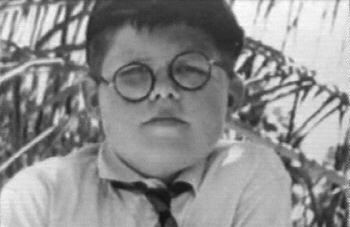 He was “Piggy,” all right, and I might have been Ralph or Simon and been his friend, but it seems I didn’t have the nuts for it. I had just moved back to Atlanta the year before, and I didn’t want to be “the new kid” forever. A lot didn’t depend on what I wanted, though, and that became clearer and clearer as time went along. Several of the boys were just as happy to keep me “the new kid” forever if they could manage it.
 We actually didn’t see this boy out all that much. He had some sort of
  This would have happened in the late 1950s, just after my fifth grade year at
  Oklahoma has freakish