


Harry Halpin - Researcher at IRI (Institut d'Recherche et al Innovation) - MARIE CURIE Project PHILOWEB exchange with World Wide Web Consortium/MIT CSAIL,
harry@w3.org
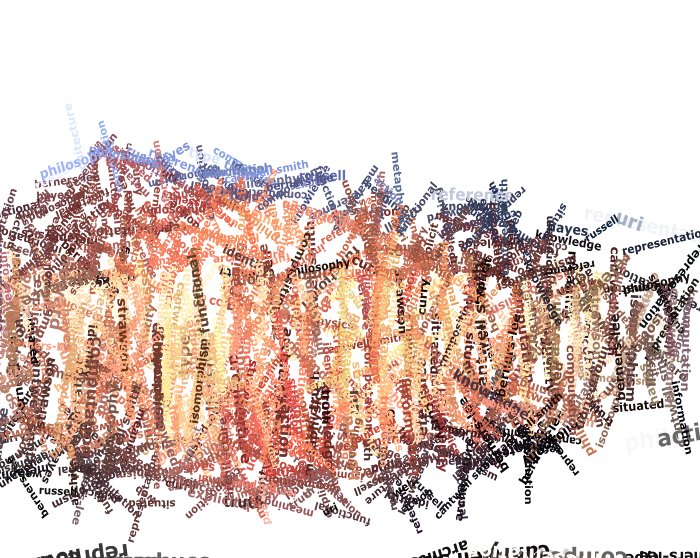
The Social Web is a set of relationships that link together people over the Web. The Web is an universal and open space of information where every item of interest can be identified with a URI. While the best known current social networking sites on the Web limit themselves to relationships between people with accounts on a single site, the Social Web should extend across the entire Web.
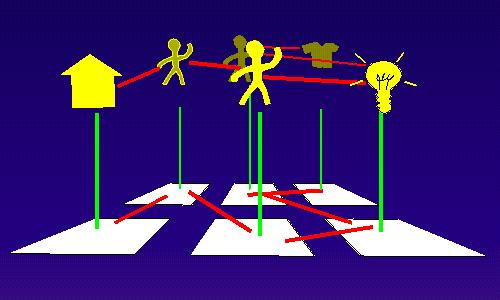
A Standards-based, Open and Privacy-aware Social Web (Halpin and Tuffield, 2010)
Called the "Open Graph Protocol", the Like Button uses a mixture of the Semantic Web (RDFa) and Javascript to determine the relationships between people and other sites outside of Facebook - and ship them back to Facebook!

When you are "only" visit on a site with the "Like" button (without clicking), the site sends that data back to Facebook...
The most widely-used log-in in the world is the proprietary Facebook Connect. Facebook connect allows users to use their Facebook login, plus an open open standard called OAuth (Open Authorization) to share your personal data with the site you logged into.

While this is a step upwards in security from sharing a password (restricted access token-passing rather than unrestricted symmetric shard secret), Facebook Connect does enable unintended consequences...
Is it your Facebook Profile(Facebook)? Your URI(Tim Berners-Lee)? Your email address (Mozilla BrowserID)? Your government-mandated ID?
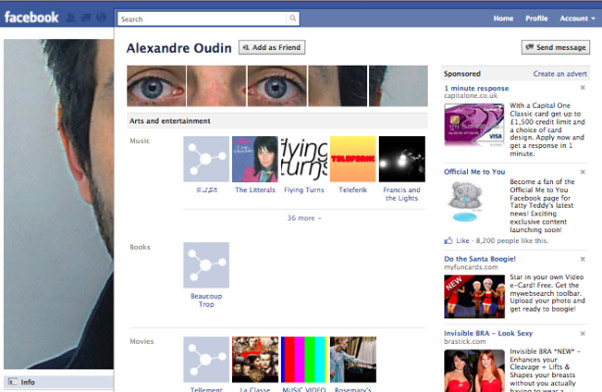
Or could your identity simply be the sum of all your social relationships
And thus your relationships not only with people, but links with properties (such as your name, photos, address, etc.), things (products, cinema, books, etc.) and places (employer, home, restaurants...) over time...
The life-world of the cybernetic form of life is increasingly defined by their personal data, which unbeknownst to the individual is being trafficked in a largely unregulated global market.
However, is it not that the form of life of the Internet is ultimately collective? Can any single person take credit for the amount of shared content of the internet on Facebook, Google, or any other service that builds off user-generated content? If so, can we define what a collective intelligence is?
This talk is based on my AISB 2008 paper "Foundations of a Philosophy of Collective Intelligence", although the content has been considerably revised.
The paradigmatic problem of analytic philosophy and cognitive science: What properties of the individual human deserve credit for intelligence and why?
Proposed Answer:
The unique combination of language and consciousness, a Cartesian general-purpose reasoning process that leads to flexible, adaptive behavior (not ants, trees, or computers).
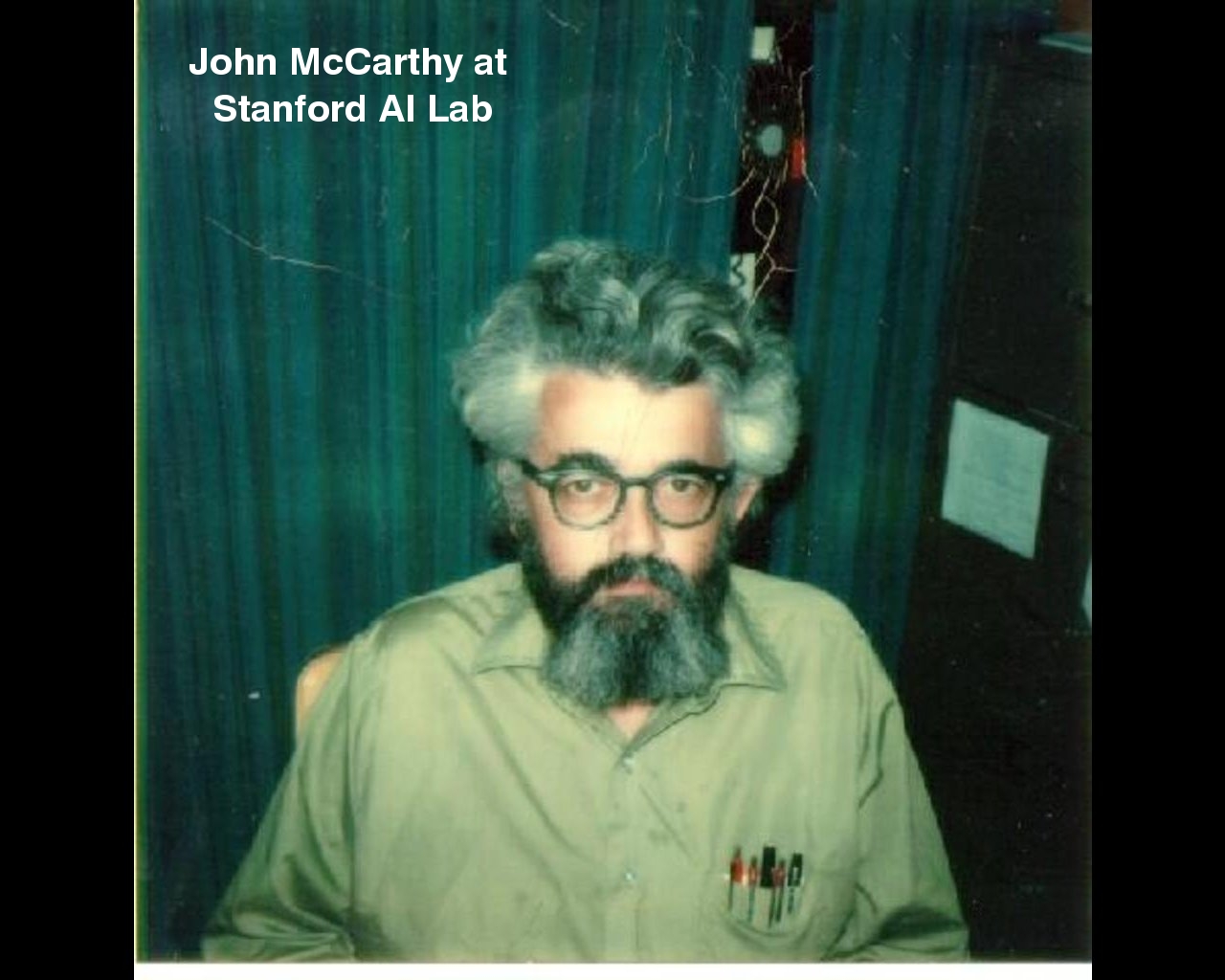
The original project of artificial intelligence(AI), as championed by John McCarthy of Stanford, was to demonstrate that this general purpose reasoning process was computational and so could be simulated on machine, thereby created artificial intelligence.
Inspired by Dreyfus's neo-Heideggerian critique of Cartesian AI, Brooks and others - primarily in robotics - have been working on producing intelligent behavior without linguistic representations, much less consciousness or reasoning.
One assumption that classical Cartesian AI, and the new Heideggerian embodied AI all share is that the fundamental unit of analysis for intelligence should be the individual, although this is stretched by the work of Andy Clark and David Chalmers on the Extended Mind Hypothesis.
Rodney Brooks, ‘Intelligence without representation’, Artificial Intelligence, 47(1-3), 139–159, (January 1991).
 Recent work in tracking the behavior of individuals finds that their behavior - ranging from movement to turn-taking in conversation - can be reliably tracked by appealing to the behavior of others in their social network with a high degree of accuracy (over 40 to 80% of variation over a wide variety of tasks) without any appeal to planning, reasoning, or verbal language.
Pentland(2007) claims "that important parts of our personal cognitive processes are caused by the network via unconscious and automatic processes such as signaling and imitation, and that consequently, important parts of our intelligence depend upon network properties."
'On the collective nature of human intelligence', Adaptive Behavior, 15(2) 189-198.Decision-making guided by the aggregate of information in a social network - reliably makes better decisions than any individual ("Wisdom of Crowds").
Tracking the behavior of individuals via mobile phones finds that their behavior - ranging from movement to turn-taking in conversation - can be reliably tracked by appealing to the behavior of others in their social network with a high degree of accuracy (over 40 to 80% of variation over a wide variety of tasks)
A. Pentland, ‘On the collective nature of human intelligence’, Adaptive Behavior, 15(2), 189–198, (2007).
The presence of mirror neurons provides a set of neurological mechanisms that allow individuals to share the same neurological state.
V. Gallese and A. Goldman, ‘Mirror neurons and the simulation theory of mind’, Trends in Cognitive Science, 12, 493–501.
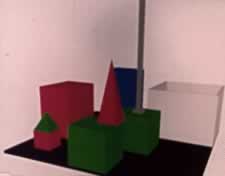
Collective intelligence does not necessarily mean collective intentionality: the sharing of a cognitive state (via perhaps mirror neuron-based functions).
Intelligence can be exhibited by a network of individuals where each individual is specialized in a particular task so that no two individuals share the same cognitive state (skills, activity, and so on) per se: the successful action depends on the activities of the entire network.
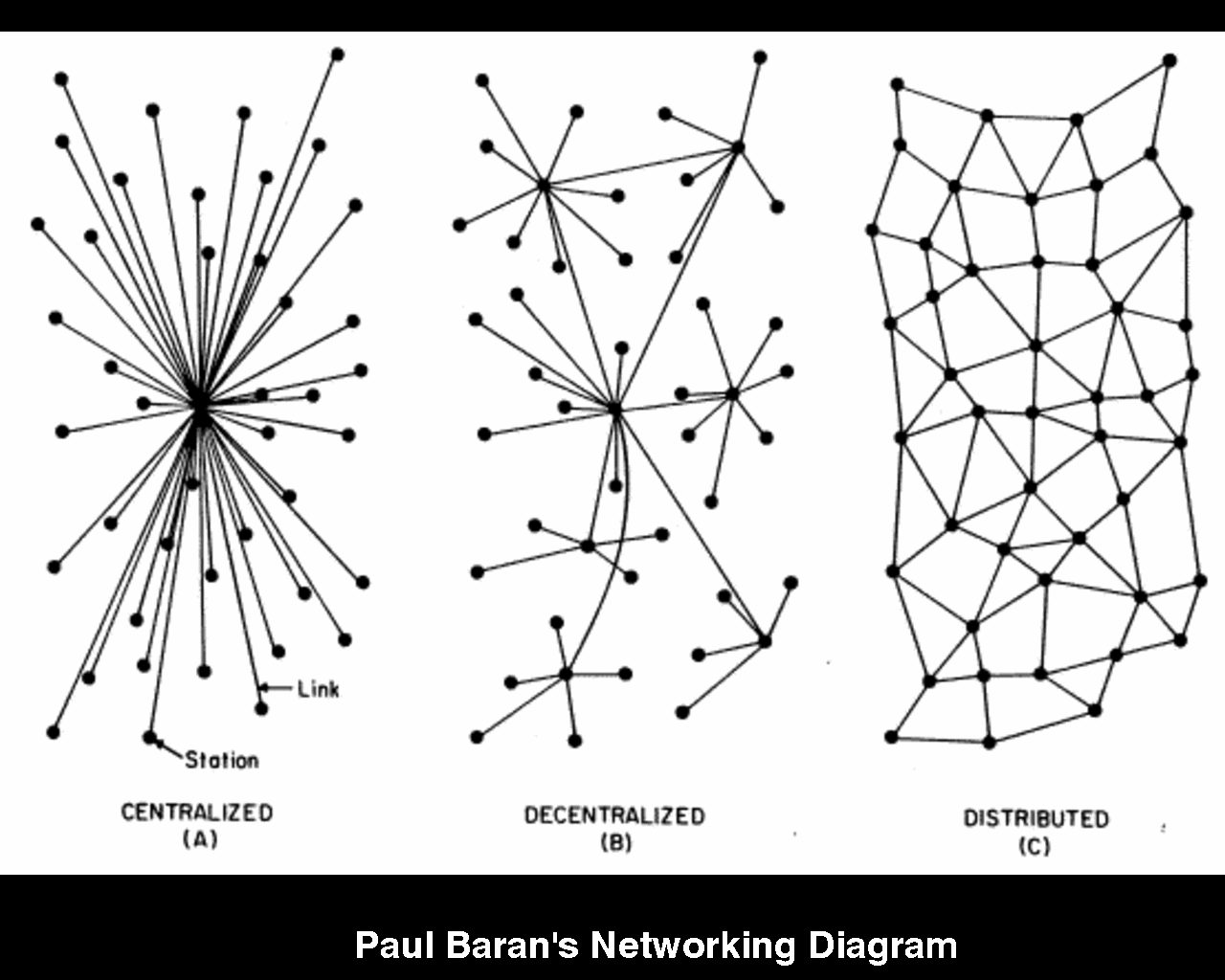
Shaping of the environment is crucial to intelligence - The classic example is the pheromone trace of the ant, in which a traces get reinforced as more ants use a particular trail, has been shown to be an efficient way of navigating the environment. This shows how individuals with limited memory can use the shaping of the environment as an external memory.
Culture, ranging from design of cities to Wikipedia, can be considered collective cognition extended into the environment. This usage of the environment has a number of advantages over direct individual-to-individual communication.
To modify Pentland's thesis: The collective activity of individuals and their modifications to the environment are responsible for intelligence. Contrary to the Cartesian assumptions of classical artificial intelligence, in their study of frog vision, what Maturana and others discovered was that the frog's eye "peaks to the brain in a language already highly organized and interpreted instead of transmitting some more or less accurate copy of the distribution of light upon the receptions" J. Lettvin, H. Maturana, W. McCulloch, and W. Pitts "What the frog's eye tells the frog brain", Proceedings of the Institute Radio Engineers, 47(11) 1940-1959 (1959).
This discovery caused Maturana to reconceptualize the foundations of cognitive science in terms of autopoiesis: that "living organization is a circular organization which secures the production or maintenance of the components that specify it in such a manner that the product of their functioning is the very same organization that produces them" Humberto Maturana and Francisco Varela, Autopoiesis and Cognition (1973).
Example: A frog is autopoietic precisely because its internal metabolism is inside a boundary, frog-skin, that defines its organization as a frog.
The components of the unity, the organs, are inside the frog-skin and self-reproducing. Yet autopoietic systems are not entirely closed, for the frog's consumption of gadflys and other interactions with the environment are done in lieu of maintaining its own organization as a frog, as eating allows it to bring in energy to maintains its metabolism.
Despite the biological favoritism of Maturana and Varela, there is nothing inherent in autopoiesis that restricts the components of biology in all possible worlds.
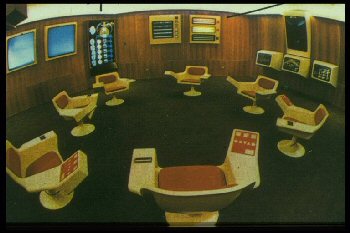
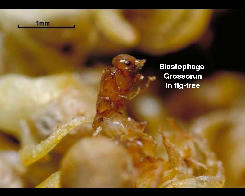
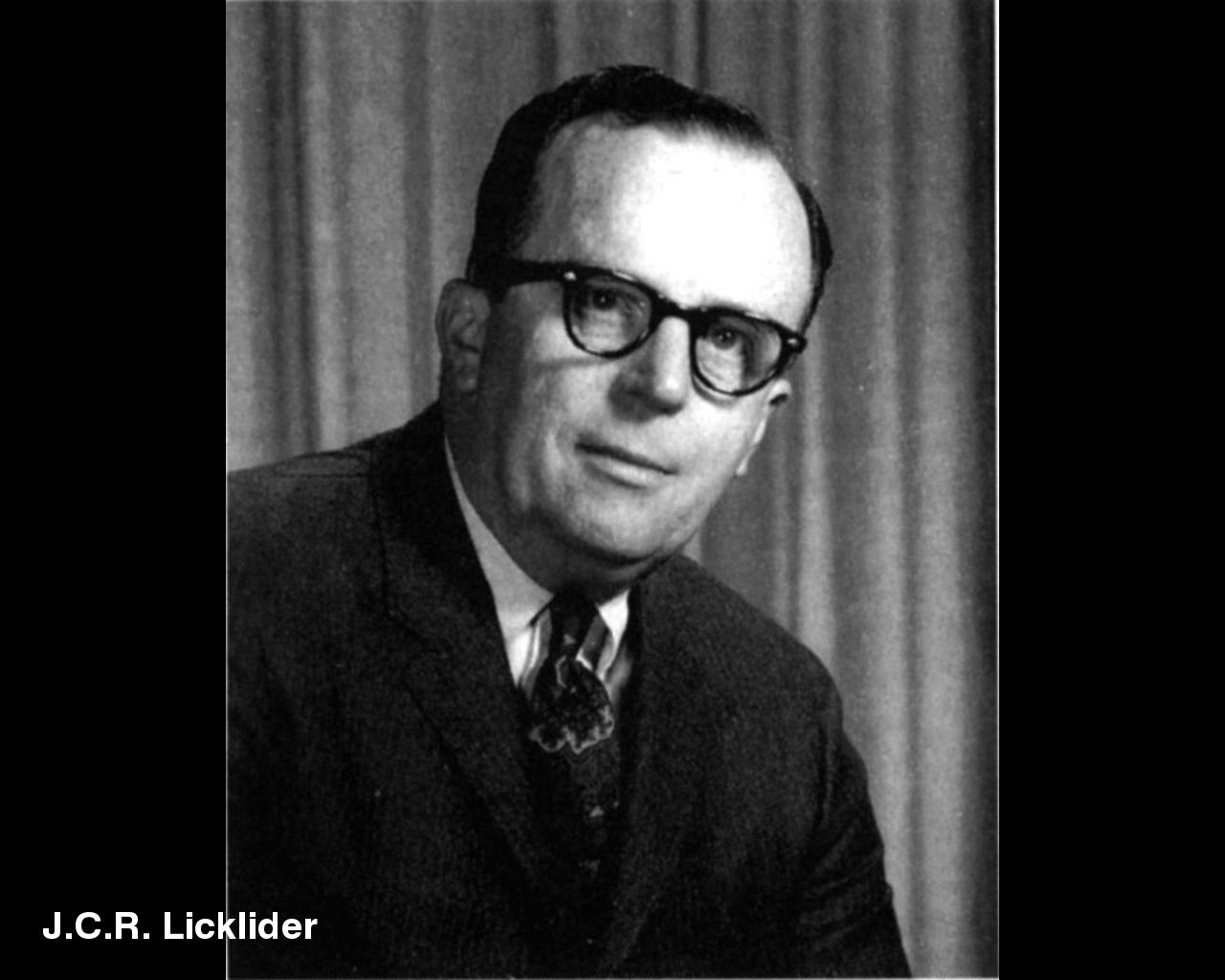
"The fig tree is pollinated only by the insect Blastophaga grossorun. The larva of the insect lives in the ovary of the fig tree, and there it gets its food. The tree and the insect are thus heavily interdependent: the tree cannot reproduce without the insect; the insect cannot eat without the tree; together, they constitute not only a viable but a productive and thriving partnership. This cooperative "living together in intimate association, or even close union, of two dissimilar organisms" is called symbiosis. The hope is that, in not too many years, human brains and computing machines will be coupled together very tightly, and that the resulting partnership will think as no human brain has ever thought and process data in a way not approached by the information-handling machines we know today."
The obvious objection could be that the biological component is reproducing itself, while the non-biological component is not.
Is not the reproduction of culture itself what Marx termed social reproduction? If so, then humans can be considered not just ways for genes to reproduce, but for our non-biological environment - culture to reproduce as well.
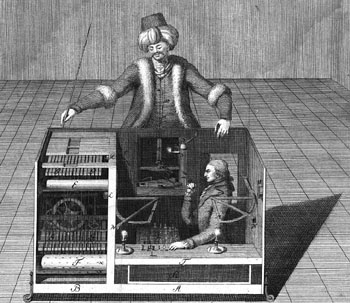
It is cheaper to distribute a task using human computation through interfaces like "Amazon Mechanical Turk" than to build a robot to do the task!
The Web is an attempt to build an architecture for a new kind of intelligence in which humans are components of a larger system that allows them to take advantage of collective intelligence.What we are seeing now is the movement of this collective intelligence into the world: ranging from to the anti-SOPA/PIPA protests to the Egyptian Revolution.
While not responsible for political change per se, collective intelligence is the spark that brought these movements together...
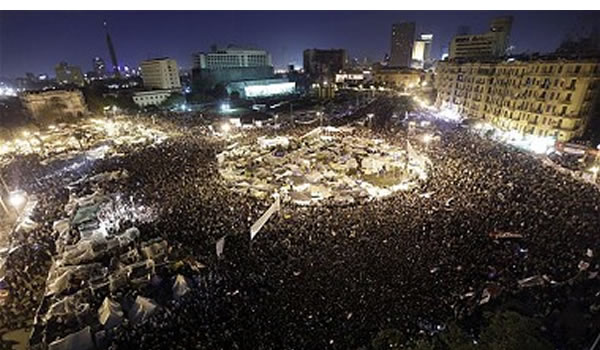
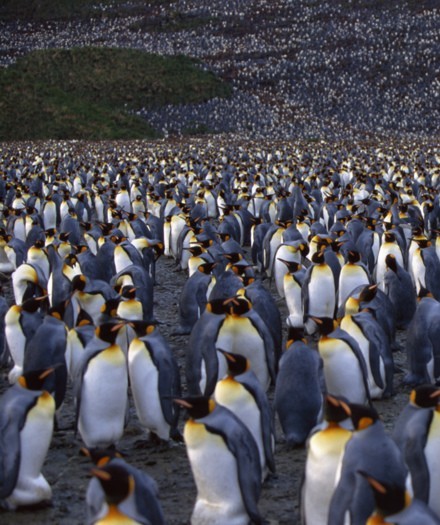
Would you trust the Internet as your collective intelligence if it was not controlled by you but instead controlled those (see SOPA/PIPA and ACTA debates) that may not have your own best interest in mind?
How can there be any way to trust the collective intelligence on the Web except via the self-organization of itself?