


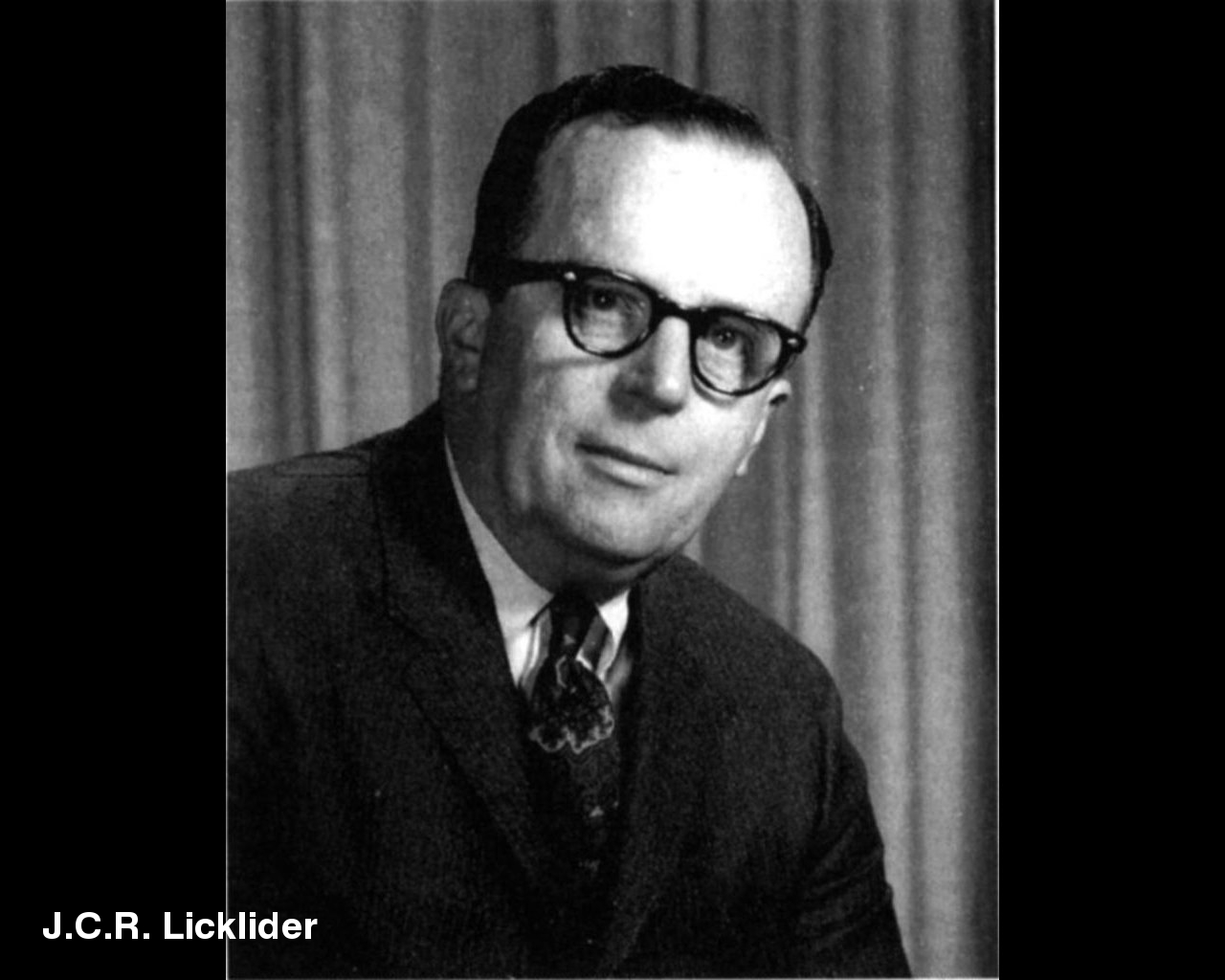
Inspired by Cold War missile defense systems like Project Whirlwind, Licklider became the institutional architect of the Information Processing Techniques Office at Advanced Research Projects Agency (ARPA), providing him the funding needed to assemble a "galactic network" of researchers to implement the first step of his symbiosis, interactive computing through time-sharing.
"The fig tree is pollinated only by the insect Blastophaga grossorun. The larva of the insect lives in the ovary of the fig tree, and there it gets its food. The tree and the insect are thus heavily interdependent: the tree cannot reproduce without the insect; the insect cannot eat without the tree; together, they constitute not only a viable but a productive and thriving partnership. This cooperative "living together in intimate association, or even close union, of two dissimilar organisms" is called symbiosis. The hope is that, in not too many years, human brains and computing machines will be coupled together very tightly, and that the resulting partnership will think as no human brain has ever thought and process data in a way not approached by the information-handling machines we know today."
 To historicize the birth of AI in the 1950s and 1960s, AI was conceived as a technological solution to the problem of labour in an era of full employment and traditional factory production. What was needed was intelligence but servile machines to replace the skilled individual laborer's manual work.
The paradigmatic problem of both analytic philosophy and cognitive science is to explain the intelligence of the human individual: What properties of the individual human deserve credit for intelligence, and why?
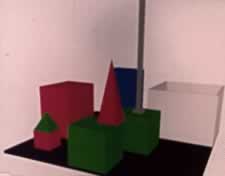 AI attempted to define an individual on a level of abstraction and then implement this computationally.
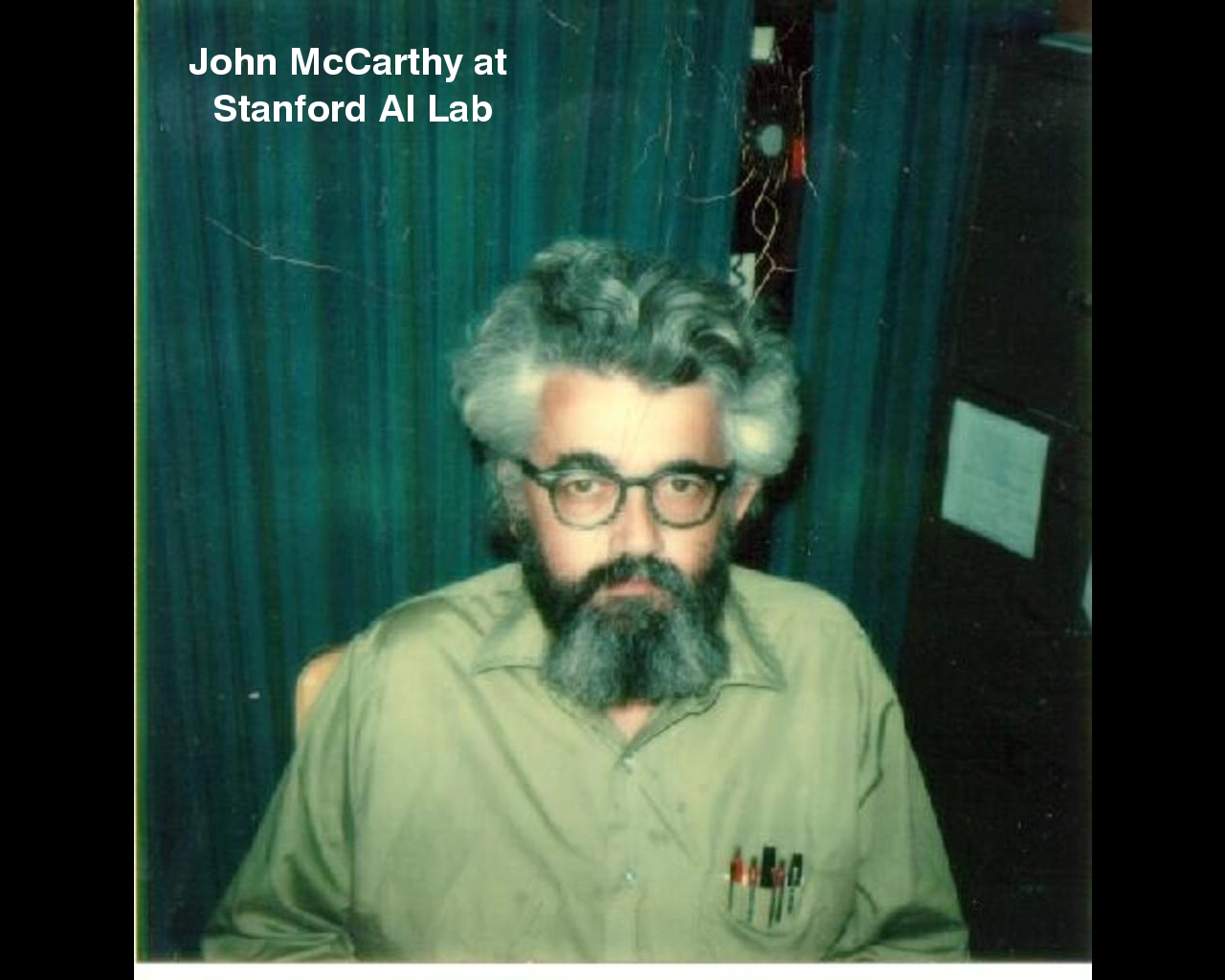
Everyone will learn how to program. That is how we will speak to the servants.
John McCarthy
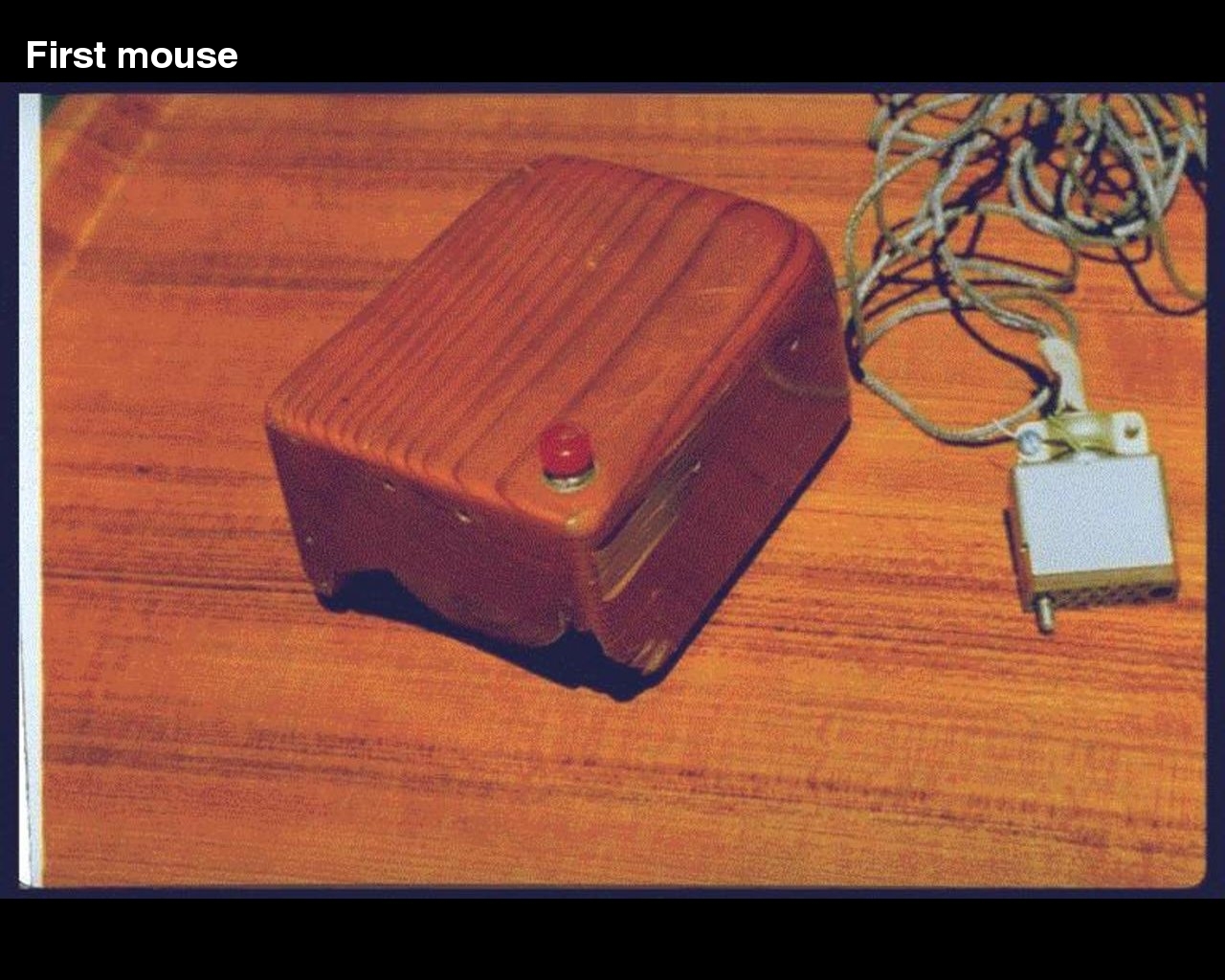
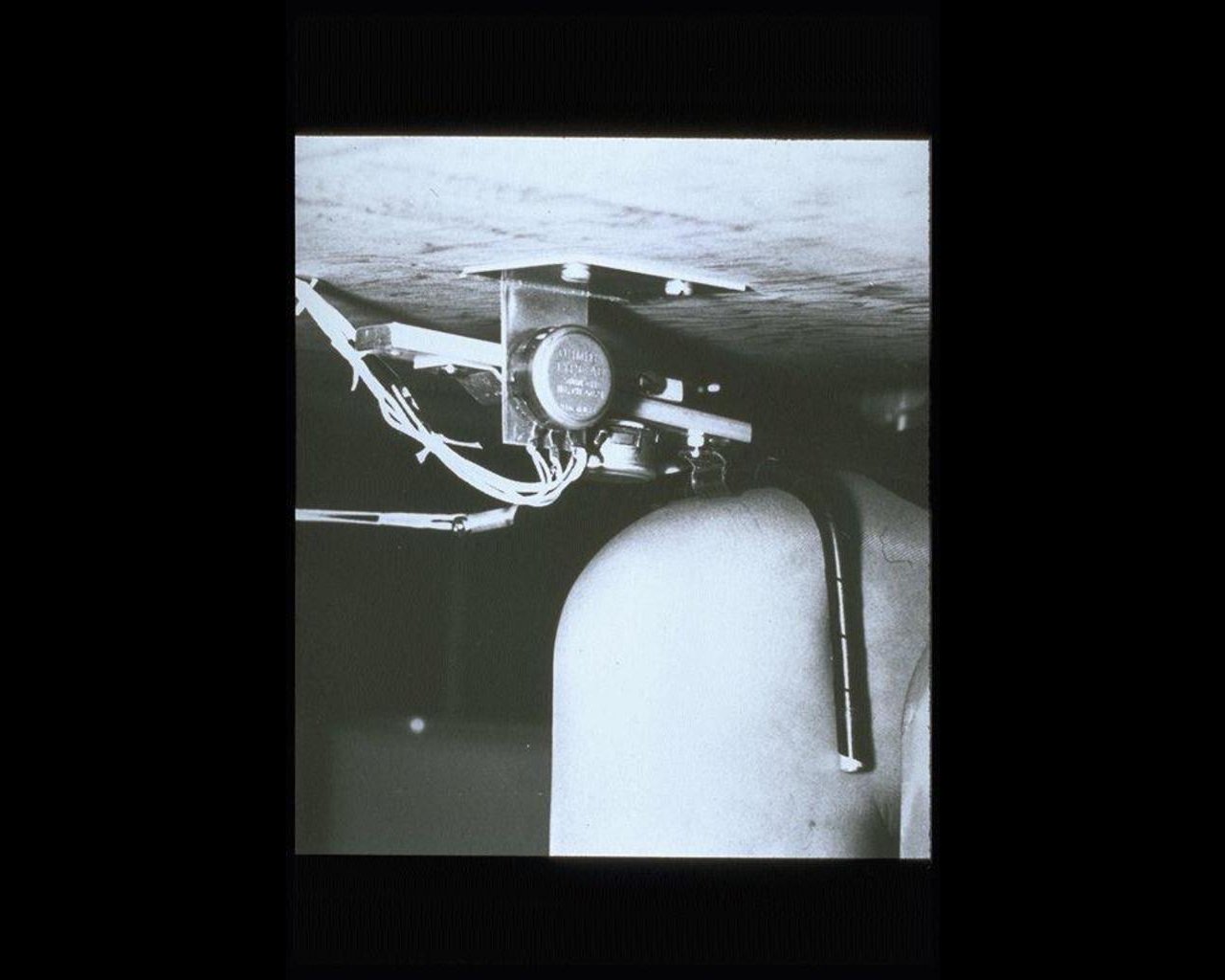
Douglas Engelbart had in parallel generated his own vision of human augmentation that shared much of the same conceptual groundwork with Licklider's "man-machine symbiosis." Human augmentation differed from man-machine symbiosis in a subtle yet powerful manner by putting the human at the center of the symbiosis, focusing on using the machine to extend to the human.
 Unlike AI, Engelbart's thesis on collective intelligence has never been phrased in terms of its underlying philosophical assumptions, but only articulated as an engineering project.
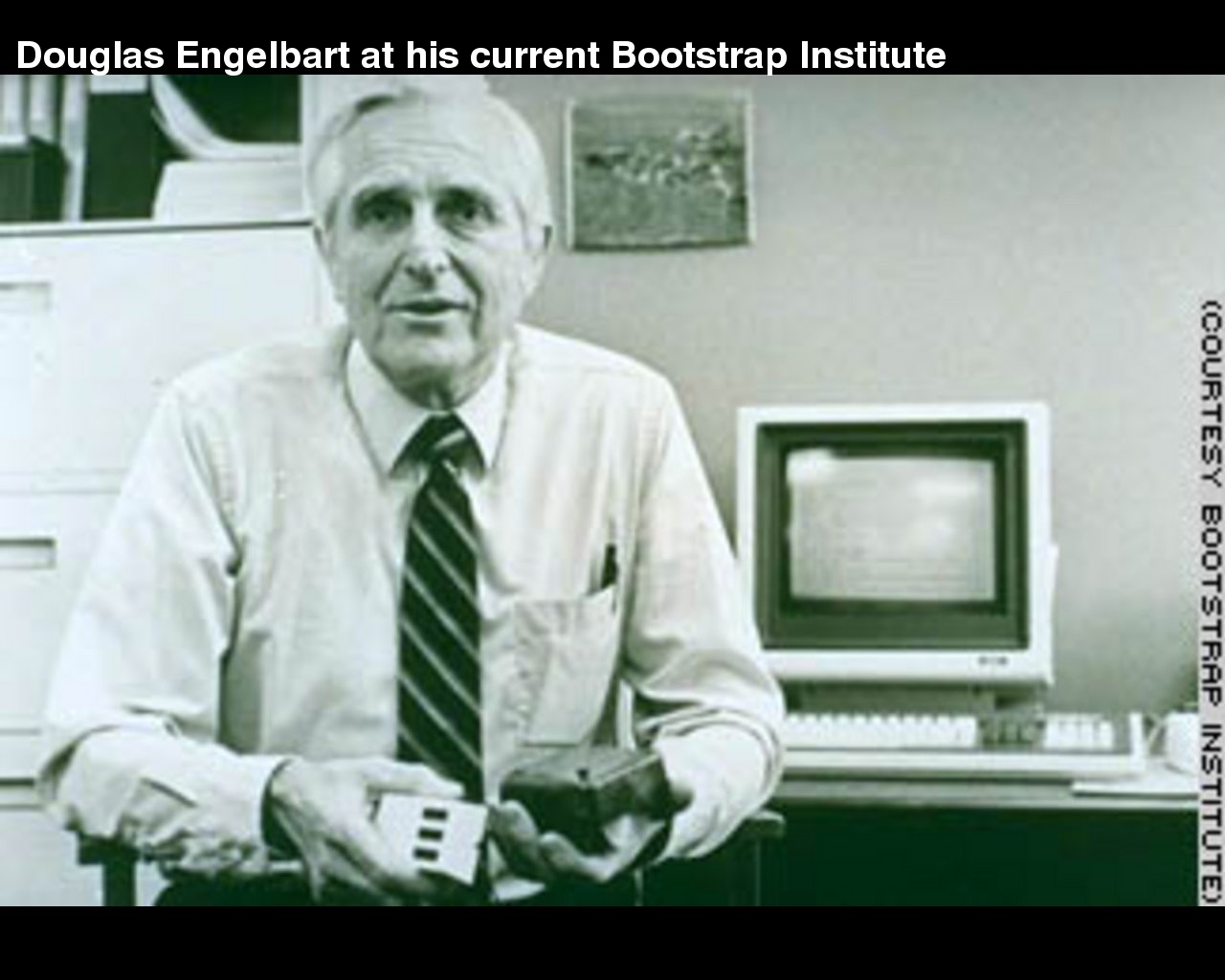
" By augmenting human intellect we mean increasing the capability of a man to approach a complex problem situation, to gain comprehension to suit his particular needs, and to derive solutions to problems. Man's population and gross product are increasing at a considerable rate, but the complexity of his problems grows still faster, and the urgency with which solutions must be found becomes steadily greater in response to the increased rate of activity and the increasingly global nature of that activity. Augmenting man's intellect, in the sense defined above, would warrant full pursuit by an enlightened society if there could be shown a reasonable approach and some plausible benefits. "
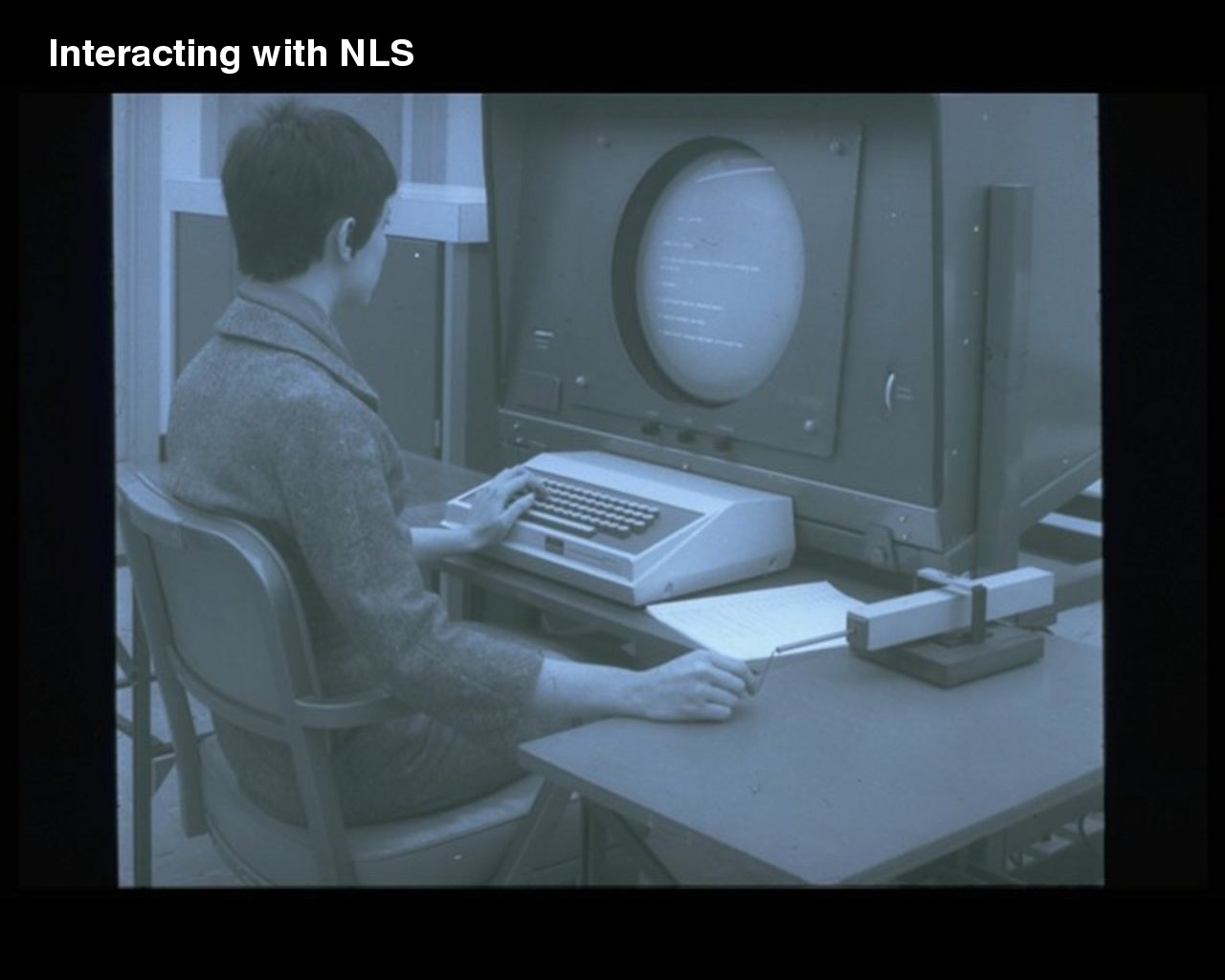
NLS allowed any text to be hierarchically organized in a series of outlines, with summaries, allowing a user to move through various levels of information and "link" information, foreseeing the development of hypertext, and also to "publish" information in a Journal for others to use and comment upon.
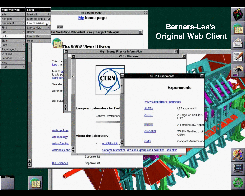 Engelbart's vision could not be be realized on the primitive computers of his day, with limited memory, and his zeal for efficiency made NLS so arcane that when it was put on ARPANet as the Network Information Center (NLS was used to publish many of the early publications of the IETF), NLS never experienced the viral growth of the Web.
 Recent work in tracking the behavior of individuals finds that their behavior - ranging from movement to turn-taking in conversation - can be reliably tracked by appealing to the behavior of others in their social network with a high degree of accuracy (over 40 to 80% of variation over a wide variety of tasks) without any appeal to planning, reasoning, or verbal language
Pentland(2007) claims "that important parts of our personal cognitive processes are caused by the network via unconscious and automatic processes such as signaling and imitation, and that consequently, important parts of our intelligence depend upon network properties."
'On the collective nature of human intelligence', Adaptive Behavior, 15(2) 189-198.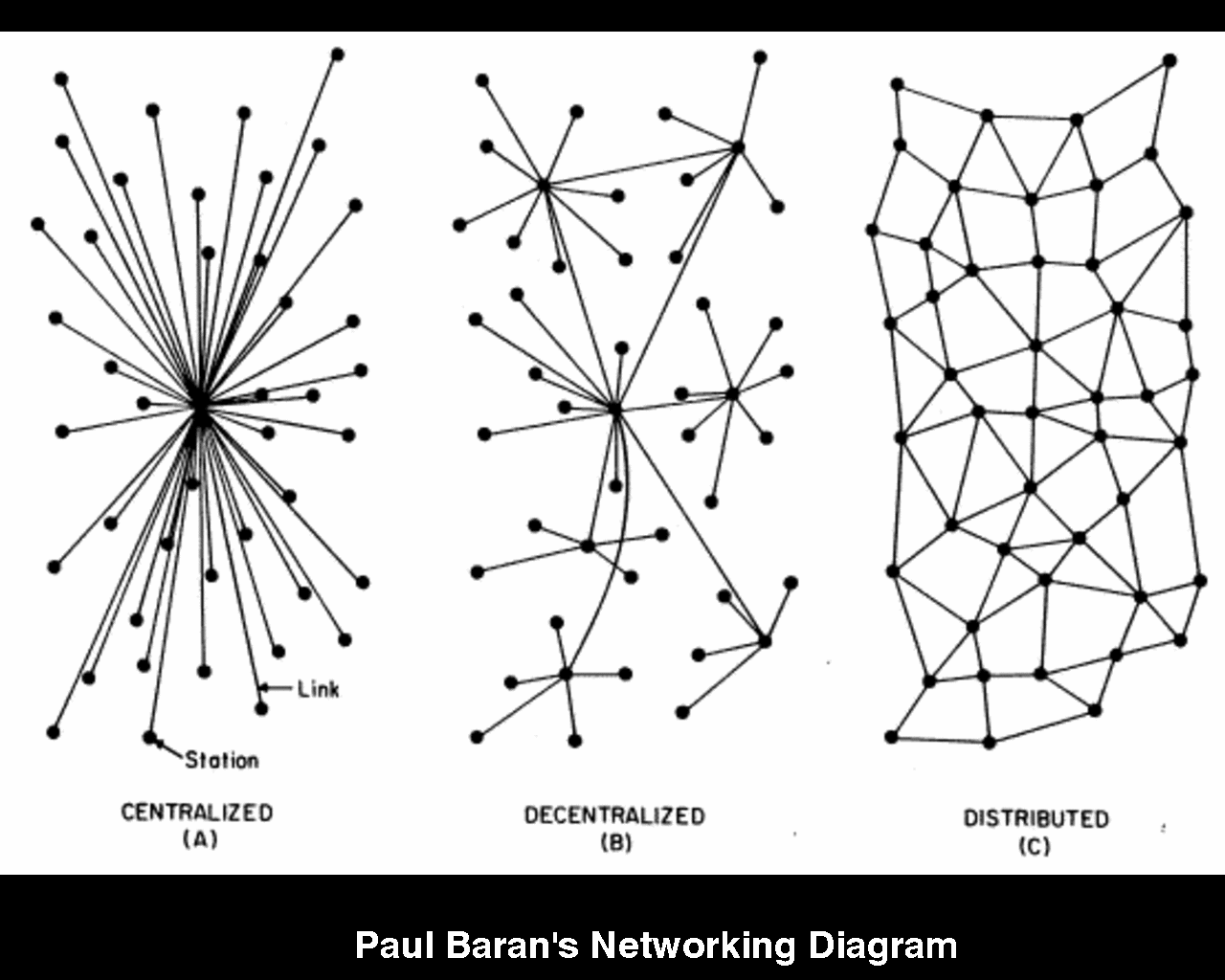
Although this may be true in some cases, it would be to primitive to describe the ant totally to be at the mercy of its environment. Intelligence in general - collective or not - leave traces behind in the environment.
The classic example is the pheromone trace of the ant, in which a traces get reinforced as more ants use a particular trail, has been shown to be an efficient way of navigating the environment. This shows how individuals with limited memory can use the shaping of the environment as an external memory.Culture, ranging from design of cities to Wikipedia, can be considered collective cognition extended into the environment. This usage of the environment has a number of advantages over direct individual-to-individual communication.
To modify Pentland's thesis: The collective activity of individuals and their modifications to the environment are responsible for intelligence. Contrary to the Cartesian assumptions of classical artificial intelligence, in their study of frog vision, what Maturana and others discovered was that the frog's eye "peaks to the brain in a language already highly organized and interpreted instead of transmitting some more or less accurate copy of the distribution of light upon the receptions" J. Lettvin, H. Maturana, W. McCulloch, and W. Pitts "What the frog's eye tells the frog brain", Proceedings of the Institute Radio Engineers, 47(11) 1940-1959 (1959).
This discovery caused Maturana to reconceptualize the foundations of cognitive science in terms of autopoiesis: that "living organization is a circular organization which secures the production or maintenance of the components that specify it in such a manner that the product of their functioning is the very same organization that produces them" Humberto Maturana and Francisco Varela, Autopoiesis and Cognition (1973).
Example: A frog is autopoietic precisely because its internal metabolism is inside a boundary, frog-skin, that defines its organization as a frog. Second, the components, the organs, are inside the frog-skin and self-reproducing. Yet autopoietic systems are not entirely closed, for the frog's consumption of gadflys and other interactions with the environment are done in lieu of maintaining its own organization as a frog, since eating allows it to bring in energy to maintains its metabolism.
Despite the biological favoritism of Maturana and Varela, there is nothing inherent in autopoiesis that restricts the components of biology in all possible worlds.
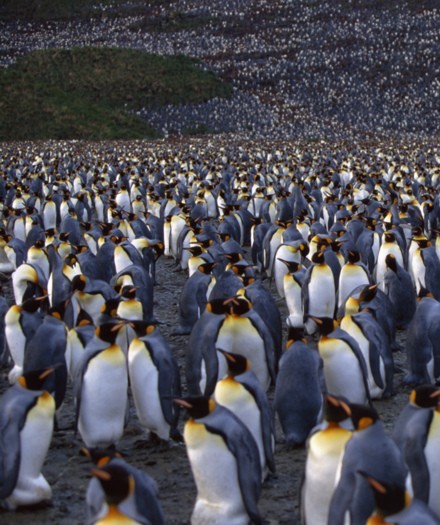
If the individual can be defined via autopoiesis, and to maintain its autopoiesis the individual must increasingly incorporate non-biological components, then the individual is no longer a static, closed system, but an open and dynamic system capable of assimilating and decoupling from various components as it goes in and out of autopoiesis, including digital representations and other biological beings. The obvious objection could be that the biological component is reproducing itself, while the non-biological component is not.
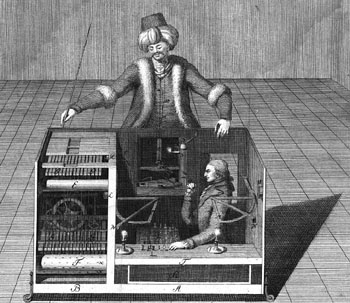
It is cheaper to distribute a task using human computation through interfaces like "Amazon Mechanical Turk" than to build a robot to do the task!
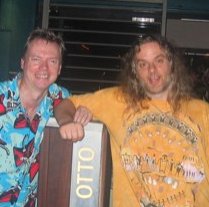
What is the difference between this and an act of memory? The mind is therefore extended into the environment.
What if there are other people in the environment? Or knowledge representations? Imagine Otto has a knowledge representation-driven Semantic Web system helping him? Or del.ici.us generated bookmarks?
The evolution of digital technology is the logic of human's overcoming their own biological heritage. Far from replacing or replicating human intelligence, digital technology fundamentally complements human intelligence.
When one eliminates the human subject as an transcendental individual, one opens the door for new collective subjects, subjects composed of what were formerly thought of as individuals. When this collectivity is put into practice, not as an abstract or utopian notion, but in confrontation against the concrete and practical problems that threaten these new subjects, collective intelligence is born. The Web and its development into the Semantic Web makes much more sense as a "a common space in which we could all interact", a technological and universalizing system of information that has the possibility of creating universal collective intelligence.
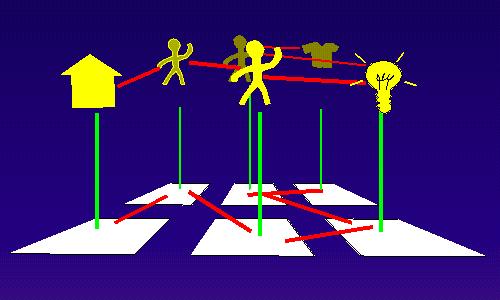
To a computer, then, the web is a flat, boring world devoid of meaning...This is a pity, as in fact documents on the web describe real objects and imaginary concepts, and give particular relationships between them...Adding semantics to the web involves two things: allowing documents which have information in machine-readable forms, and allowing links to be created with relationship values.Tim Berners-Lee, WWW1994