Lighthouses of Japan: Southern Iwate

The nation of Japan, known in Japanese as Nihon or Nippon (日本), occupies an archipelago off the east coast of Asia. The four main islands are Hokkaidō in the north, Honshū (the largest) in the center, Shikoku in the south, and Kyūshū in the southwest. The country includes thousands of other islands of all sizes; among them the Ryūkyū (Nansei) Islands are a long chain extending to the southwest and including the large island of Okinawa, and the Nanpō Islands are another long chain extending south into the Pacific Ocean. Much of Japan is mountainous but the coastal regions are densely populated and urbanized; the country's population is about 126 million.

Japan is divided into 47 prefectures. This page lists lighthouses of the southern half Iwate Prefecture, near the northeastern corner of Honshū, Japan's largest island. Iwate is the largest prefecture of Honshū. The coast of Iwate, called the Rikuchū Coast (Rikuchū Kaigan), is mostly rugged and spectacular--and dangerous to navigation. For 180 km (115 mi) south of Kuji a narrow strip of land along the coast has been preserved as the Rikuchū Kaigan National Park. Most of these lighthouses are located in the park.

This coast was devastated by the Tōhoku earthquake and tsunami of 2011 March 11. Most of the lighthouses are high enough above the sea to escape the tsunami; most were damaged by the earthquake but all have been returned to service. A number of harbor lights were overturned or destroyed by the tsunami; most but not all have been replaced.

In Japanese the word for a lighthouse is tōdai or toudai (灯台). The words saki and misaki are for capes and headlands, hana ("nose") is a promontory, hantō is a peninsula, shima (also spelled sima or jima) is an island, bae is a reef, iwa or shi is a rocky reef, amase or se is a shoal, wan is a bay, nada is a sound or basin, kaikyō is a strait, kawa is a river, and or minato is a harbor.

Lighthouses in Japan are operated and maintained by the Japanese Coast Guard's Maritime Safety Agency. On Honshū there is usually one Coast Guard Section Office in each prefecture; for Iwate the section office is at Kamaishi.

ARLHS numbers are from the ARLHS World List of Lights. JCG numbers are the Japanese Coast Guard's light list numbers. Admiralty numbers are from volume M of the Admiralty List of Lights & Fog Signals. U.S. NGA List numbers are from Publication 112.

General Sources
Lighthouses in Japan - Iwate
A site providing photos and data for most major Japanese lighthouses.
Lighthouse-Japan.com - Iwate
Another comprehensive site with photos and notes from visits to many lighthouses.
Form of a Lighthouse - Iwate Prefecture
This web site, cited below as FOAL, has photos for many lighthouses in Iwate.
Lighthouse Visits
Another excellent source of photos of Japanese lighthouses.
Misty's Japanese Lighthouse Tour - Iwate
Photos and notes for lighthouses in all parts of the country.
Lighthouses in Iwate Prefecture
Photos by various photographers available from Wikimedia.
Second Region Lighthouse Story
Posted by the Coast Guard region office in Aomori, an interactive map linking to information on the major lighthouses.
Online List of Lights - Japan - Honshu East Coast
Photos by various photographers posted by Alexander Trabas.


Ryōri
Saki Light, Ōfunato, December 2021
Google Maps photo by Nori Bento

Ōtsuchi Town Lighthouses
Ōtsuchi Kō (Horai Shima) (2)
2012 (station established 1953). Active; focal plane 11 m (36 ft); red light, 3 s on, 3 s off. 7.5 m (25 ft) round hourglass-shaped concrete tower. Entire lighthouse is red. FOAL has photos (lower half of the page) and Google has a street view from shore, a sea view and a satellite view. The original light, a concrete post rising from a square 1-story equipment room, was destroyed by the tsunami. Lighthouse-Japan.com has photos of the original light and a 2008 photo (2/3 the way down the page) of the original light is also available. Located on an islet connected to shore by a pier. Accessible with caution by walking the narrow pier. Site open, tower closed. ARLHS JPN-1122; JCG-1663; Admiralty M6595; NGA 4084.
Ōtsuchi Shirahama Breakwater
Date unknown. Active; focal plane 12 m (39 ft); green flash every 3 s. 9 m (30 ft) concrete post attached to a square 1-story concrete equipment shelter. Entire lighthouse is white. A 2022 closeup photo is available and Google has a distant sea view and a satellite view. Located on the main breakwater of Shirahama harbor, on the south side of Ōtsuchi Bay. Site status unknown; probably accessible by walking the pier. JCG-1664.5; Admiralty M6594.5; NGA 4092.
Ohako Saki
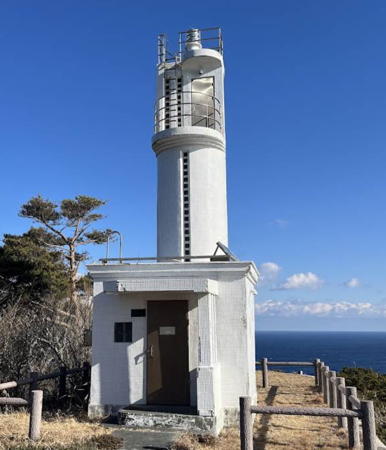
Date unknown. Active; focal plane 71 m (233 ft); four white flashes every 15 s. 9 m (30 ft) round white concrete tower. A photo is at right, a 2022 photo and another photo (2/3 the way down the page) are available, and Google has a satellite view. Located high on a razor-sharp promontory about 16 km (10 mi) northeast of Kamaishi. Site status unknown. ARLHS JPN-475; JCG-1662; Admiralty M6594; NGA 4096.

Ohako Saki Light, Ōtsuchi, January 2018
ex-Google Plus photo by Gonzaburou Kitakaze

Kamaishi City Lighthouses
Ryioshi Wan (Naka Ne)
Date unknown. Active; focal plane 11 m (36 ft); two white flashes every 5 s. 10 m (33 ft) round concrete tower with gallery, painted black with one red horizontal band. FOAL has photos (on the right, first row in 2009, last row in 2016), another photo (2/3 the way down the page) is available, Gonzaburou Kitakaze has a distant view (lighthouse on the right), and Google has a satellite view. Located on a shoal in the center of Ryioshi Bay, an inlet about 5 km (3 mi) north of Kamaishi Bay. Accessible only by boat. Site open, tower closed. JCG-1665; Admiralty M6593; NGA 4100.
[Ryioshi Kō (2)]
2013. Active; focal plane 9.5 m (31 ft); continuous green light with a more intense flash every 5 s. 8.5 m (28 ft) white concrete post. FOAL has photos (next to last row) and Google has a satellite view. The original lighthouse, an 8.5 m (28 ft) concrete post rising from a square 1-story equipment room, was destroyed by the tsunami in 2011. FOAL has a 2009 photo (on the left, first row). Located at the east end of a detached breakwater of Ryioshi harbor. Accessible only by boat. JCG-1666; Admiralty M6593.2; NGA 4104.
#Madaga Saki
1971. Inactive and demolished. This was a 10 m (33 ft) round cylindrical concrete tower rising from a circular 1-story equipment room. Entire lighthouse was white. Google has a satellite view of the concrete pad where the tower stood. Located on a promontory on the north side of the bay of Kamaishi, about 6 km (3.5 mi) east of the city. Site open. ARLHS JPN-2635; ex-JCG-1667; ex-Admiralty M6589.2.
Kamaishi Kō (2)
2016. Active; focal plane 16 m (52 ft); two red flashes every 6 s. Approx. 14 m (46 ft) round cylindrical concrete tower with lantern and gallery. Entire lighthouse is red. Lighthouse Visits has photos and Google has a satellite view. The original lighthouse, a 10 m (33 ft) round cylindrical concrete tower attached to a small equipment room, was destroyed by the 2011 tsunami. Kamaishi had the world's deepest breakwater, built for tsunami protection, but the 2011 tsunami overwhelmed the barrier. Located at the south end of the north breakwater of Kamaishi. Site status unknown. ARLHS JPN-324; JCG-1671; Admiralty M6589.25; NGA 4108.
O Saki (Rikuchū O Saki)
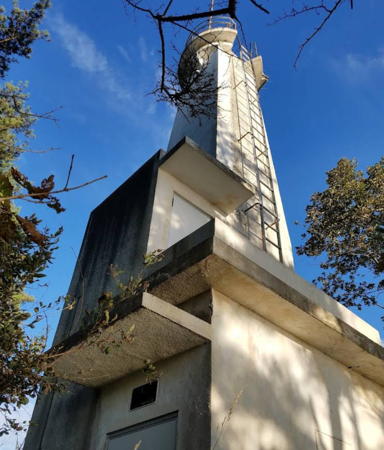
1951. Active; focal plane 114 m (374 ft); white flash every 10 s. 15 m (49 ft) square cylindrical concrete tower with lantern and gallery, attached to a 2-story concrete equipment building. Entire lighthouse is unpainted white concrete. Yukihiro Matsumura's 2022 photo is at right, Kazutoshi Yamada has a 2019 closeup, Lighthouse-Japan.com has a page with several photos, and Google has a street view and a satellite view. Located on the tip of a long narrow peninsula that shelters the south side of the bay of Kamaishi, about 15 km (9 mi) east southeast of the city. It is a rather strenuous 6 km (4 mi) hike one way to the lighthouse. Site open, tower closed. . ARLHS JPN-505; JCG-1670; Admiralty M6589; NGA 4136.
Shikotsu (Sikotu) Saki
Date unknown. Active; focal plane 27 m (89 ft); white flash every 3 s. 10 m (33 ft) round hourglass-shaped concrete tower. Entire lighthouse is white. Google has a sea view and a satellite view. Shikotsu Saki is a rugged promontory about 15 km (9 mi) south of Kamaishi. Located on a small island off the tip of the cape. Accessible only by boat. Site status unknown. ARLHS JPN-1131; JCG-1677; Admiralty M6588.2; NGA 4144.

Rikuchū O Saki Light, Kamaishi, May 2022
Instagram photo by Yukihiro Matsumura
#Kojirahama Kō (1)
Date unknown. Destroyed by the tsunami in 2011. This was an 8.5 m (28 ft) concrete post rising from a square 1-story equipment room. Entire lighthouse was red. Google has a satellite view of the former location. The light was replaced by a buoy seen in Google's sea view and at the bottom of FOAL's page. In March 2018 a new 9 m (30 ft) light (focal plane 11 m, red flash every 3 s) was installed on the breakwater; Lighthouse Visits has a 2019 photo. ARLHS JPN-1108. New light: JCG-1678; Admiralty M6588.4; NGA 4140.

Ōfunato City Lighthouses
Kōbe Saki
Date unknown. Active; focal plane 124 m (407 ft); white flash eversy 5 s. 10 m (33 ft) round cylindrical concrete tower with gallery, rising from a 1-story concrete equipment shelter. Entire lighthouse is white. A 2022 photo is at right, FOAL's page has closeup 2016 photos, Lighthouses in Japan has a distant view, and Google has a satellite view and a distant sea view. Located on the tip of a rugged peninsula about 8 km (5 mi) east of Ōfunato. Accessible by a hike of more than an hour along a closed service road (the FOAL webmaster reports this was one of the most difficult lighthouses to reach in his experience). Site and tower closed. . ARLHS JPN-270; JCG-1680; Admiralty M6587; NGA 4152.
[Rikuchū Sakihama Kō (2)]
2013 (?). Active; focal plane 11 m (36 ft); continuous red light with two more intense flashes every 8 s. 8.5 m (28 ft) red post. Google has a satellite view. FOAL has 2009 photos of the original lighthouse, an 8.5 m (28 ft) concrete post rising from a square 1-story equipment room; it was destroyed by the tsunami in 2011. Located at the end of the south breakwater of Sakihama, a fishing port sheltered by Kōbe Saki. Site status unknown. Site open, tower closed. ARLHS JPN-1124; JCG-1681; Admiralty M6586.6; NGA 4156.
Okirai (Okkirai) Kō East Breakwater (2)
2013 (?). Active; focal plane 12 m (39 ft); red flash every 3 s. 9 m (30 ft) post attached to a small equipment cabinet. Entire lighthouse is red. Google has a satellite view. FOAL has photos of the original lighthouse, a 9 m (30 ft) concrete post rising from a square 1-story equipment room; it was destroyed by the 2011 tsunami. The tsunami destroyed the breakwaters as well as the lighthouse. A beautiful bay just east of Ōfunato, Okkirai was devasted by the earthquake and tsunami. Located at the end of the breakwater. Accessible by walking the pier. Site open, tower closed. ARLHS JPN-1117; JCG-1682; Admiralty M6586.4; NGA 4160.

Kōbe Saki Light, Ōtsuchi, July 2022
Google Maps photo by Tiger Tasmanian
* Ryōri Saki
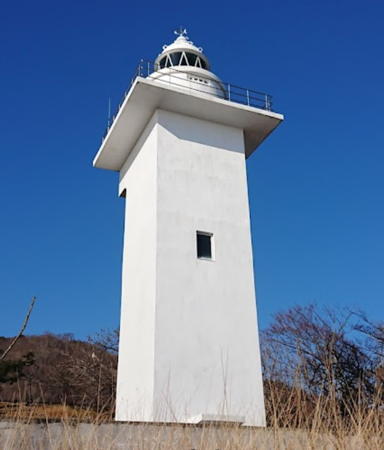
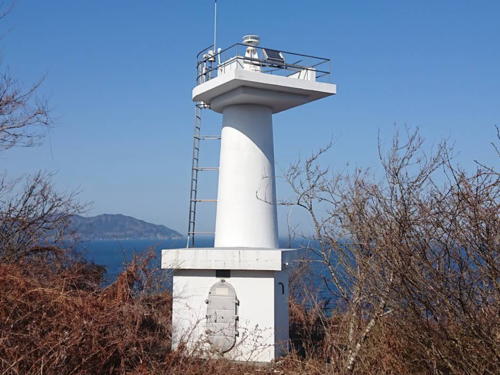
Date unknown. Active; focal plane 112 m (367 ft); white flash every 15 s. 16 m (52 ft) square cylindrical concrete tower with lantern and double gallery. Entire lighthouse is white. Nori Bento's 2021 photo is at the top of this page, Gonzaburou Kitakaze has a 2018 photo, Lighthouse-Japan.com has a page with good photos, FOAL has photos from a 2016 visit, a 2021 photo is available, and Google has a satellite view. Located on the tip of a peninsula about 25 km (15 mi) southeast of Ōfunato. It is a fairly strenuous 5 km (3 mi) hike to the lighthouse. Site open, tower closed. . ARLHS JPN-512; JCG-1683; Admiralty M6586; NGA 4164.
Ryōri Kō Outer Breakwater (2)
2017. Active; focal plane 13 m (43 ft); two red flashes every 6 s. 10 m (33 ft) post centered on a square 1-story equipment building. Entire lighthouse is red. Google has a satellite view. The 2011 tsunami destroyed the original lighthouse and the entire breakwater. FOAL has distant views (top photo and second row right) of the lighthouse taken in 2009. The lighthouse was replaced by a buoy until new breakwaters could be built. Ryōri Kō is at the head of a narrow inlet and was devasted by the tsunami. Located at the end of the detached east outer breakwater of Ryōri, near the entrance to the inlet. ARLHS JPN-1126; JCG-1684.3; Admiralty M6584; NGA 4166.
#Ryōri Kō East Breakwater (1)
Date unknown. Destroyed by the 2011 tsunami. This was an 8.5 m (28 ft) concrete post rising from a square 1-story equipment room. FOAL has photos (top photo and second row left) taken in 2009. The light was apparently replaced by a post light seen in Google's satellite view but this light is not listed by JCG or the Admiralty. Located at the end of the east inner breakwater of Ryōri. ARLHS JPN-1127; ex-JCG-1684; ex-Admiralty M6585; ex-NGA 4168.
Ryōri Kō
1935. Inactive since 1967. Approx. 13 m (43 ft) round white concrete tower. FOAL has both 2009 and 2016 photos, a 2020 view from the sea is available, and Google has a satellite view and a distant street view. Located on a cliff adjacent to the west breakwater at Ryōri. The site is nearly inaccessible (the FOAL author could not find a way to reach it), but the lighthouse is easy to see from nearby.
Kōri Saki (Koori Saki)
1922. Active; focal plane 48 m (157 ft); white flash every 4 s. Approx. 15 m (49 ft) 2-stage concrete tower, lower stage square and upper stage round, with gallery but no lantern, rising from a 2-story concrete equipment shelter. Entire lighthouse is white. A 2022 photo is at right, a 2018 photo is available, Lighthouse-Japan.com has a page with good photos, FOAL's page has photos, a 2022 closeup is available, and Google has a satellite view. This lighthouse serves as a landfall light for ships approaching the narrow entrance to Ōfunato Wan (bay), one of the best sheltered harbors of the Rikuchū coast. Located on a bluff about 12 km (7.5 mi) south southeast of Ōfunato. Difficult to locate, according to the Lighthouse of Japan webmaster. Site open, tower closed. . ARLHS JPN-275; JCG-1685; Admiralty M6582; NGA 4172.

Kōri Saki
Light, Ōfunato, September 2022
Google Maps photo by Iron Mask DR30
Ōfunato Wan North Breakwater (2)
2017. Active; focal plane 12 m (39 ft); red flash every 3 s. 10 m (33 ft) post centered on a sqaure equipment cabinet. Entire lighthouse is red. Gonzaburou Kitakaze has a distant view of the two breakwater lights and Google has a satellite view. This is a copy of the original lighthouse destroyed by the tsunami in 2011. The former light is at upper right in FOAL's distant view (first photo on the page). Located on a short detached breakwater on the north side of the entrance to Ōfunato Wan about 8 km (5 mi) south of Ōfunato. ARLHS JPN-1115; JCG-1686; Admiralty M6582.6; NGA 4184.
Sango Shima (Sangojima) South
Date unknown. Active; focal plane 19 m (62 ft); white flash every 3 s. 10 m (33 ft) round cylindrical white concrete tower. FOAL has a two views (second and fourth rows), a 2023 drone view is available, and Google has a sea view and a satellite view. Located at the southern tip of the teardrop-shaped Sango Shima, an island in the middle of Ōfunato Wan. Accessible only by boat. Site open, tower closed. ARLHS JPN-1129; JCG-1691; Admiralty M6583.5; NGA 4188.
Sango Shima (Sangojima) North
Date unknown. Active; focal plane 33 m (108 ft); white flash every 4 s. 8.5 m (26 ft) concrete post rising from a square 1-story equipment room. Entire lighthouse is white (NGA describes the light as being red). FOAL has a two views (second row, on the right, and last photo on the page), a 2023 drone view is available, and Google has a satellite view and a distant sea view. Located at the northern tip of Sango Shima. Accessible only by boat. Site open, tower closed. ARLHS JPN-1128; JCG-1692; Admiralty M6583.7; NGA 4192.
* Ōfunato Kō Directional Light
2002. Active; focal plane 53 m (174 ft); continuous light, white, red or green depending on direction. 14 m (46 ft) pentagonal cylindrical white concrete tower with gallery. FOAL's page has photos and Google has a street view and a satellite view. A passing light (JCG-1689.1), shown from the top of the tower, was deactivated in 2009. Located on the west side of the entrance to Ōfunato Wan about 4 km (2.5 mi) south of Ōfunato. Site open, tower closed. JCG-1689.2; Admiralty M6582.9; NGA 4196.
Ōfunato Wan South Breakwater (2)
2017. Active; focal plane 12 m (39 ft); green light, 3 s on, 3 s off. 9.5 m (31 ft) post centered on a small equipment cabinet. Entire lighthouse is white. Gonzaburou Kitakaze has a distant view of the two breakwater lights and Google has a satellite view. The original lighthouse was destroyed by the tsunami in 2011. That light is at upper left in FOAL's distant view (first photo on the page). Located on a breakwater on the south side of the entrance to Ōfunato Wan about 8 km (5 mi) south of Ōfunato. ARLHS JPN-1116; JCG-1687; Admiralty M6582.4; NGA 4180.
* Goishi Saki
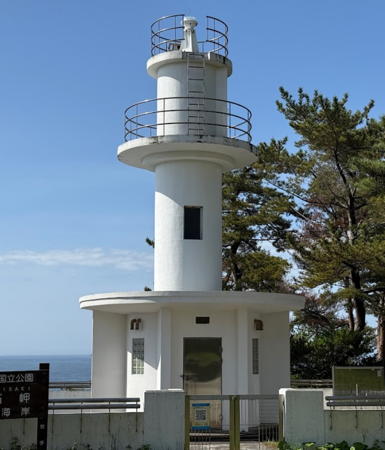
1958. Active; focal plane 39 m (128 ft); three white flashes every 13 s. 10 m (33 ft) round cylindrical concrete tower with two galleries but no lantern, centered on an octagonal 1-story equipment shelter. Entire lighthouse is white. An observation deck below the lighthouse provides wide views of the Pacific. A 2022 photo is at right, Lighthouse of Japan has a page with good photos, Wikimedia has a photo, a 2020 closeup is available, Misty's Tour also has a photo, FOAL's page has photos from 2009 and 2016, and Google has a sea view and a satellite view. Located at the tip of a peninsula about 13 km (8 mi) south of Ōfunato. Accessible by road and a short, pleasant walk; parking is provided. Site open, tower closed. . ARLHS JPN-072; JCG-1693; Admiralty M6581; NGA 4208.

Goishi Saki Light, Ōfunato, October 2022
Instagram photo by iwateomiai

Rikuzentakata City Lighthouses
Tsubaki Shima
Date unknown. Active; focal plane 47 m (154 ft); white flash every 6 s. 10 m (33 ft) round hourglass-shaped white concrete tower. Google has a sea view and a satellite view. Located on an islet off a sharp promontory about 12 km (7.5 mi) southeast of Rikuzentakata. Accessible only by boat. Site open, tower closed. ARLHS JPN-1135; JCG-1694; Admiralty M6571; NGA 4216.
Akaiso Iwa
Date unknown. Active; focal plane 11 m (36 ft); one short and one long red flash every 3 s. 10 m (33 ft) concrete tower. Entire lighthouse is red. Google has a sea view and a satellite view. Located on a reef about 300 m (0.2 mi) off Hirota harbor in Hirota Bay. Accessible only by boat. Site open, tower closed. JCG-1695; Admiralty M6578; NGA 4224.
Hirota Kō
Date unknown. Active; focal plane 12 m (39 ft); continuous red light with a more intense flash every 4 s. 9.5 m (31 ft) concrete post rising from a square 1-story equipment room. Entire lighthouse is red. Fumihiro Ono has a 2022 photo and Google has a sea view and a satellite view. Located on the end of the main breakwater of Hirota harbor, on the east side of Hirota Bay. Site status unknown. ARLHS JPN-1100; JCG-1696; Admiralty M6579; NGA 4220.

Information available on lost lighthouses:

Notable faux lighthouses:

Adjoining pages: North: Northern Iwate | South: Miyagi

Return to the Lighthouse Directory index | Ratings key

Posted August 15, 2006. Checked and revised October 17, 2024. Lighthouses: 25. Site copyright 2024 Russ Rowlett and the University of North Carolina at Chapel Hill.