Originally published December 23, 2008

Photo by Ken Moore. A robust Christmas fern stands out on a forest-floor sea of Christmas ferns.
By Ken Moore
Christmas fern, Polystichum acrostichoides, is common in forests throughout the eastern United States and especially in our local piney and mixed deciduous woods. The dark evergreen-green fronds (leaves) of this fern stand out on the brown forest floor of the winter woods.
I’ve heard several creative notions behind the common name, but none relate to the religious heritage of this time of year. I have read that these evergreen fronds were used for indoor decoration during the Christmas season. I’ve never seen them used in this way, but I can imagine them spread across fireplace mantels in years gone by.
read more…
Bringing holly indoors for more than beauty
Originally published December 19, 2008
By Ken Moore
Staff Writer
When I was a youngster, bringing holly branches indoors for its seasonal beauty just seemed like the thing to do.
Now, because of protective land owners and deer hunters, it is difficult, if not downright dangerous, to attempt, like in the old days, to collect a few holly branches from the local woods. Heavily red-berried branches of American holly, Ilex opaca, bring premium prices at local markets. Some folks are fortunate to have specimens of this common forest tree growing on their property, in which case the season is just right for a little judicious pruning to share with friends and neighbors for indoor decoration.
How well I remember one special Christmas when my Dad and I cut a little holly tree from my aunt’s farm, thinking it would be a nice change from the traditional red cedar tree. We felt so proud in decorating that little tree that sparkled through the holidays, and I still feel sad remembering my Mom, from the holly-barren Midwest, lamenting that, “It just didn’t seem like Christmas, because we didn’t have a ‘real’ tree.†read more…
Originally published December 10, 2008

Photo by Ken Moore. Witch hazel flowers best in full sun
Ken Moore
It’s always a surprise to come upon the yellow flowering witch hazel, Hamamelis virginiana, in the winter woods. How can a small native tree have flowers in the cold of early December? Well, that’s just one of nature’s mysterious ways, and as Dave Cook describes in The Piedmont Almanac, “Witch hazel is the proverbial ‘late bloomer’ of the Piedmont.†As in early Decembers past, the common wild witch hazel is right on schedule, holding fast to its thin four-petaled flowers even in our recent bitter cold temperatures. If you take a closer look, you may be rewarded with a whiff of the softly fragrant flowers when they are warmed by the sun streaming through the recently opened canopy.
read more…
Originally published November 25, 2008
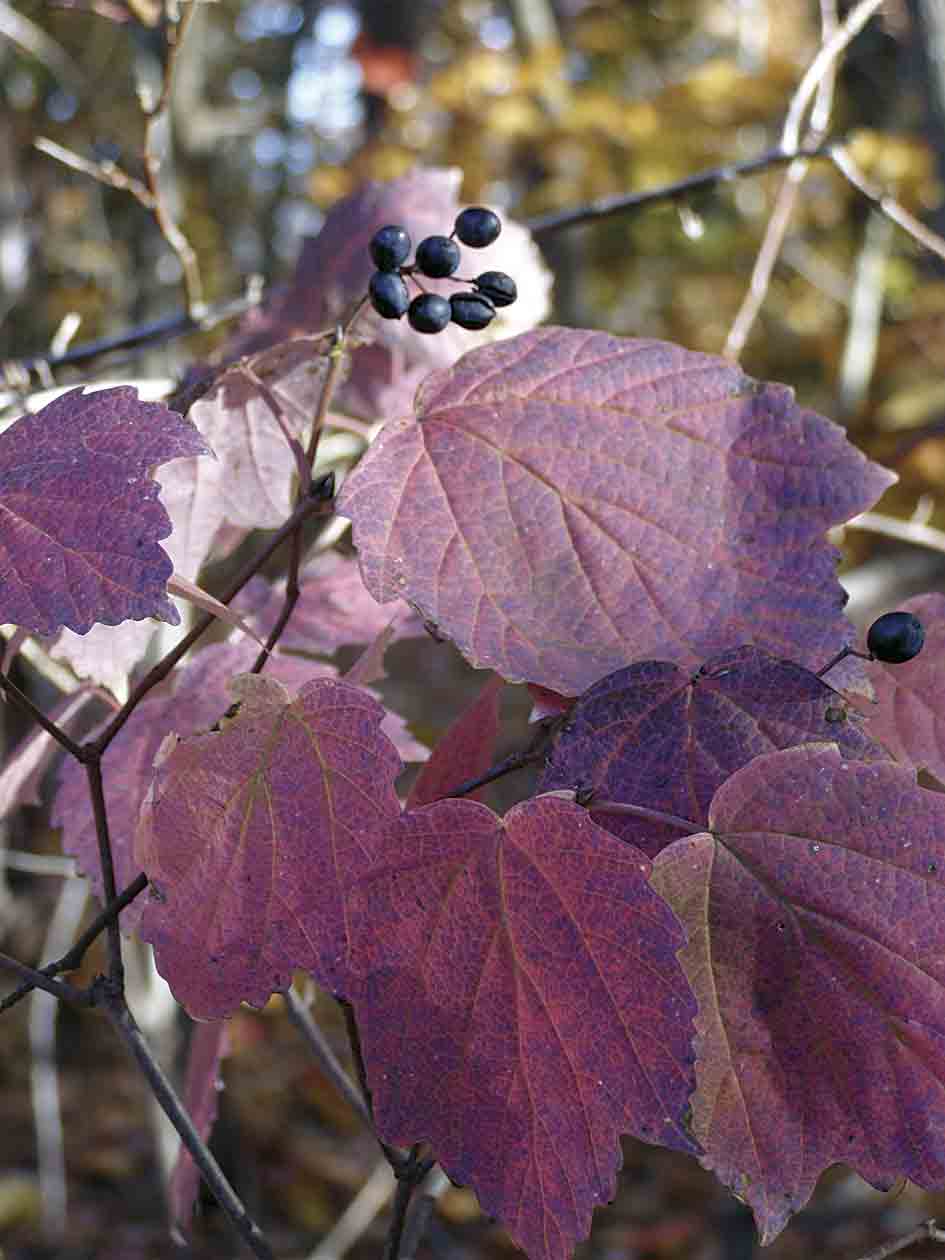
Photo by Ken Moore. Dusty-pink leaves of maple-leaved viburnum with drupes.
By Ken Moore
Lots of trees are bare, cold temperatures reign, and yet our Piedmont flora continues to glow. The scarlet-red fern-like leaves of sumacs are still dramatic along roadsides and the rich burgundy-reds of highbush blueberries are noticeable against otherwise leafless forest edges.
If you venture into the forests, you will encounter the subtler colors of native viburnums, often called arrowwood because Native Americans used the hard straight stems of these shrubs for arrow shafts.
read more…
Originally published November 13, 2008

Photo by Dave Otto. The purplish flowers of the leafless, parasitic beech-drops can be found now in the forests beneath beech trees.
By Ken Moore
Dave Otto, organizer of the monthly Friends of Bolin Creek walks, and I had considered rescheduling due to predicted rain. Impulsively, I suggested we proceed as planned and enjoy exploring nature in nature’s conditions.
read more…
Originally published November 6, 2008
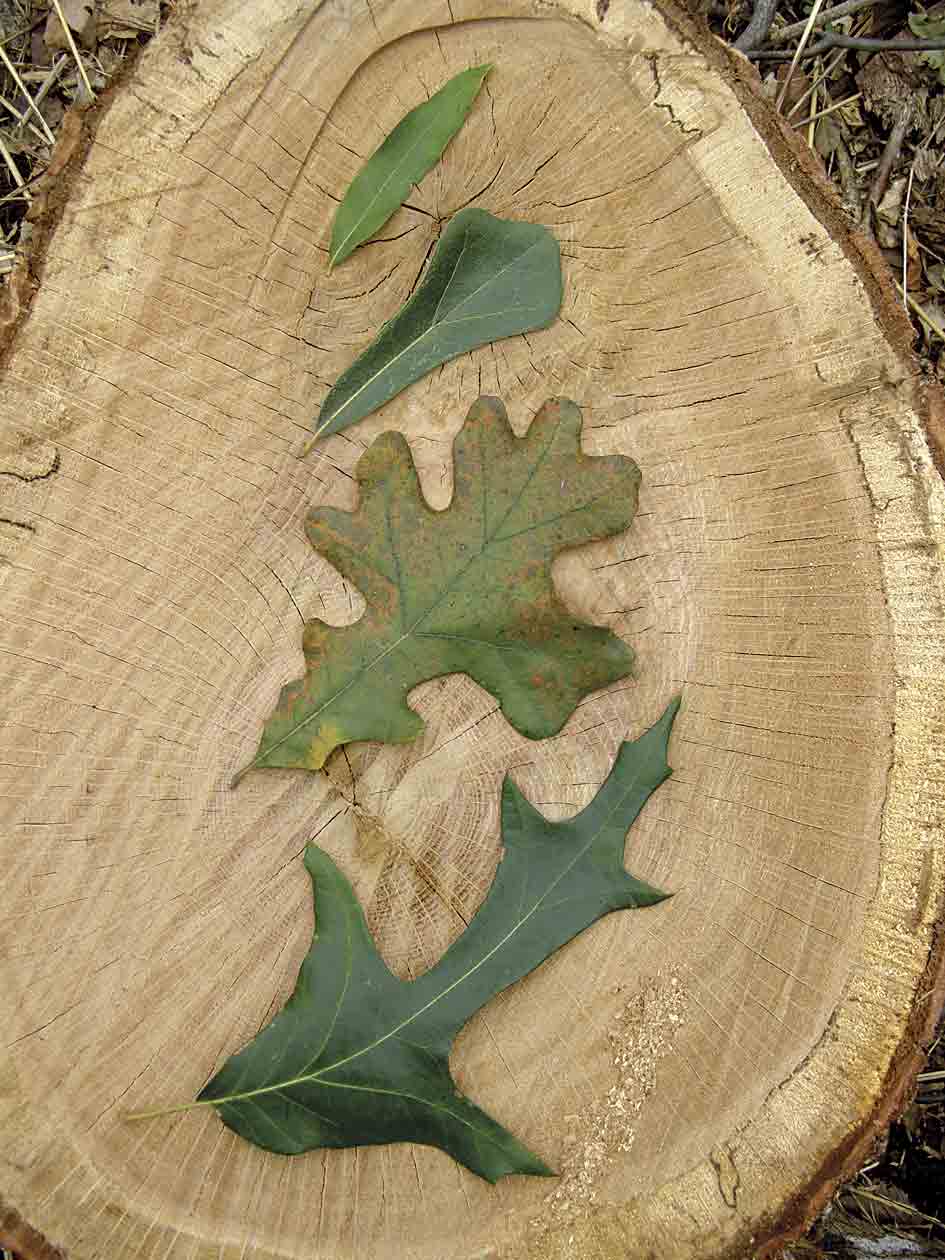
Photo by Ken Moore. (Top to bottom) Leaves of Weaver Street’s willow oak, water oak, post oak and southern red oak.
Ken Moore
Months ago, a Carrboro reader, wanting verification of the identity of the Pecan, Carya illinoiensis, just outside the Weaver Street Market’s exit door, suggested an article on identification of the nearby oaks.
Following up on that suggestion, I’m happy to promote appreciation for Weaver Street’s stately oaks.
read more…
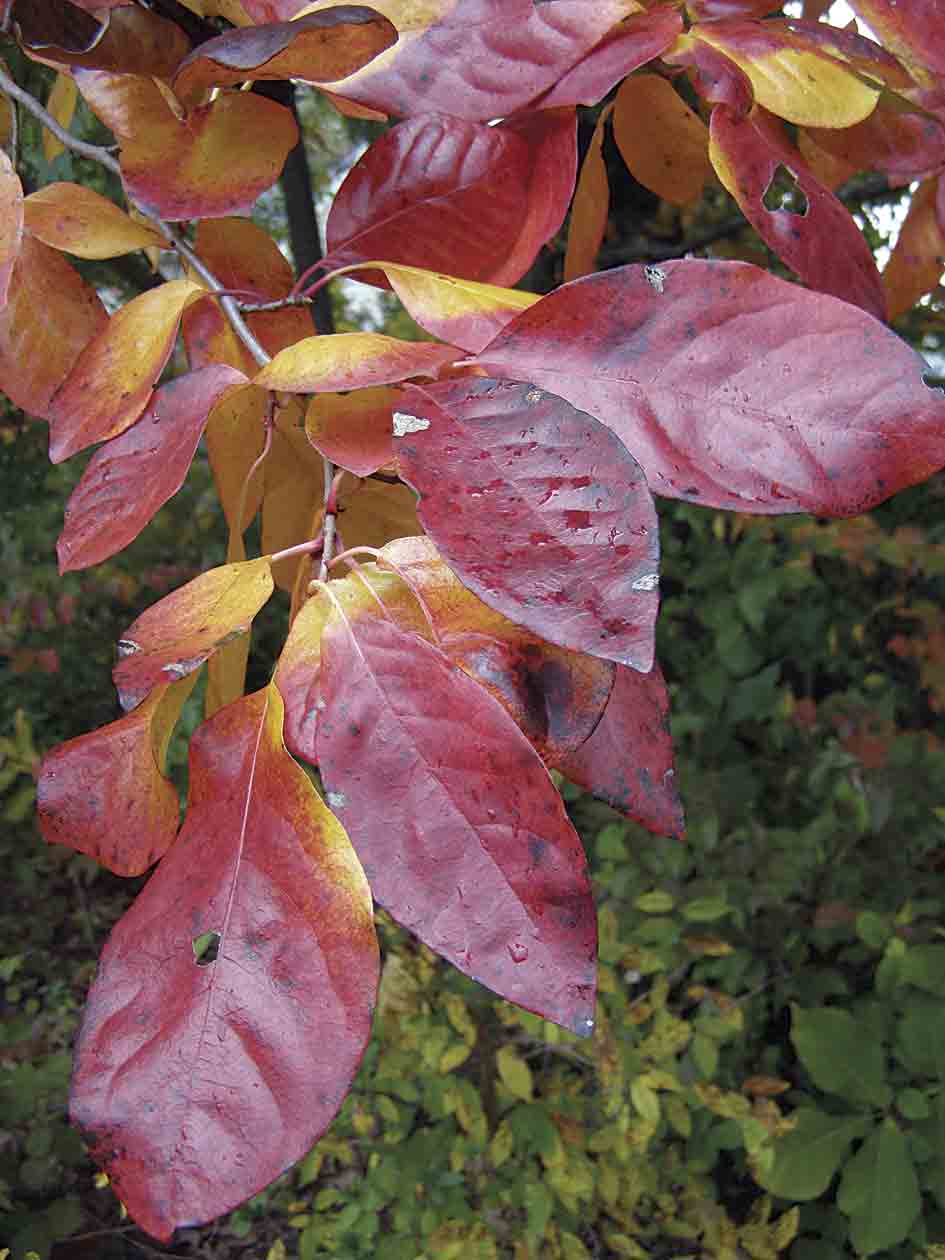
Photo by Ken Moore. Each brilliant red leaf of black gum appears polished.
Ken Moore
I eagerly anticipate the fall coloring of black gum, Nyssa sylvatica. Because the bright red leaves are among the most brilliant of fall colors, it is a favorite American tree planted in English gardens.
read more…
Seeing autumn tints before the peak
Originally published October 16, 2008
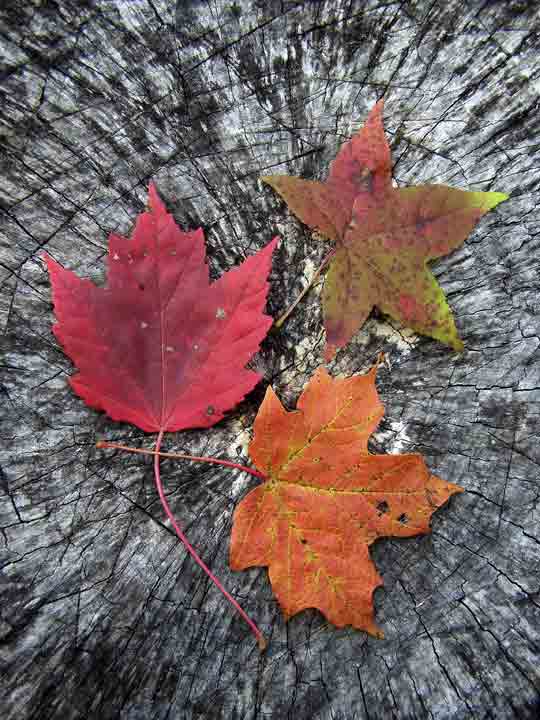
Photo by Ken Moore. Smooth margined leaf of southern sugar maple (bottom) and serrated margined leaf of red maple are sometimes confused with star-shaped leaf of sweetgum
By Ken Moore
It’s all about taking a closer look. This is the season that folks seek instructions on when and where to view peak color. It’s sad that we place such emphasis on a peak of fall color.
The English describe fall colors as “autumn tints.†I like the notion of “autumn tints.†In a way, it describes the subtle natural progression of colors as plants move from the growing season to the dormancy of winter. Rather than anticipate a sudden turn from summer green to a dazzling peak of color, we can enjoy weeks and weeks observing plants moving slowly through tints of colors that vary from species to species.
read more…
Originally published October 9, 2008
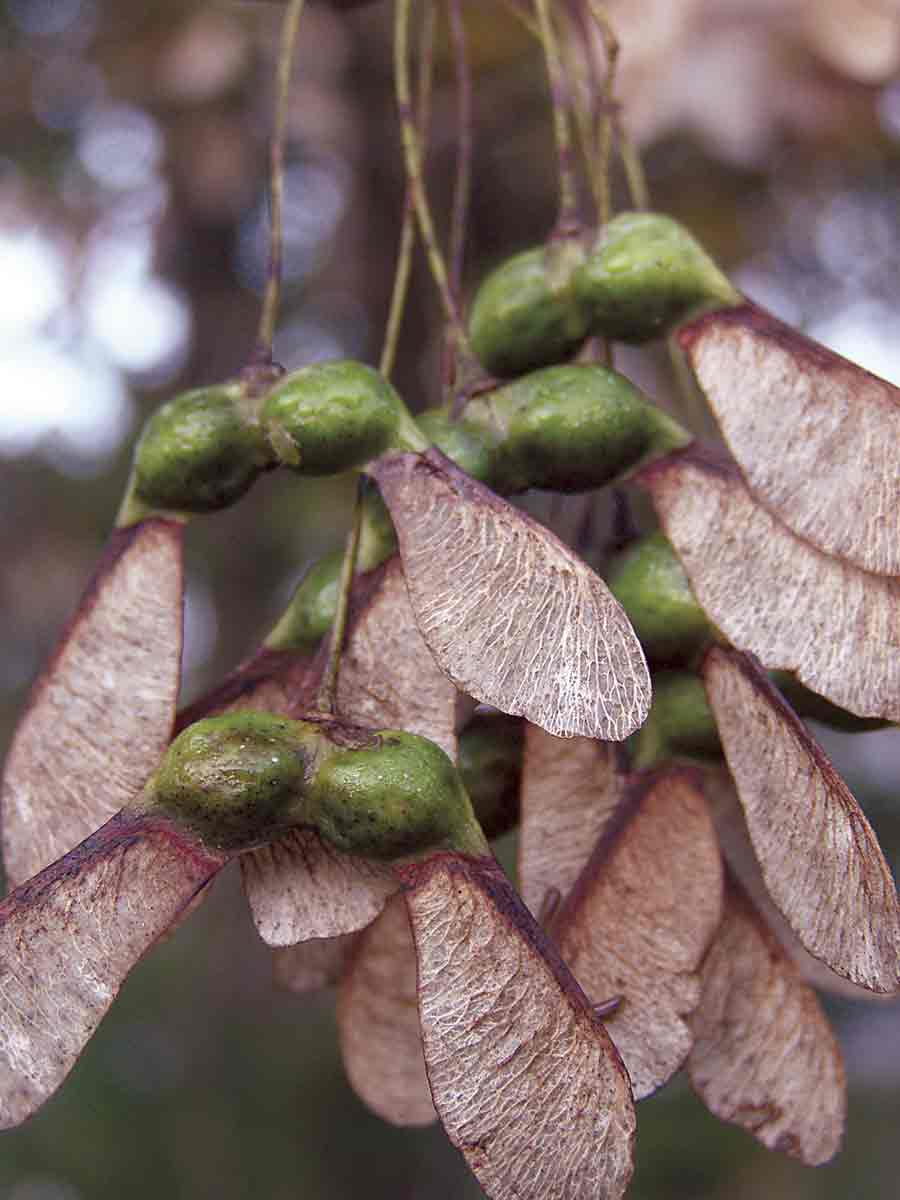
Photo by Ken Moore. Beautiful winged seeds of southern sugar maple
By Ken Moore
Though the sun was rising, the paper had not yet arrived. Walking slowly back up the drive, my eyes were captured by clusters of emerald green. The sun had illuminated the paired winged seeds, samaras, of the big southern sugar maple, Acer barbatum (formerly A. saccharum ssp. floridanum), shielding our house from the road. Countless green seed clusters dangled beneath the leaves throughout the tree. The subtle beauty of the green seeds with their pale tan wings was one of those magical moments that nature offers at unexpected times.
read more…
Originally published October 2, 2008
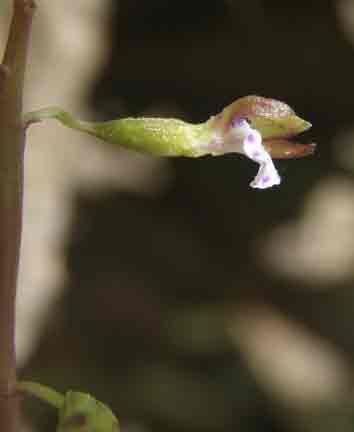
Photo by Ken Moore. You have to take a really close-up look to see the one-eighth-inch flowers of coralroot.
By Ken Moore
You most likely won’t see the little autumn coralroot orchid, Chorallorhiza odontorhiza, on any of your fall woods walks, and with that challenging notion I hope you’ll go out and discover it.
I hadn’t seen one in years – just hadn’t been in the right place at the right time. Walking along a forest trail in an earth sanctuary west of Burlington last week, I was lucky to glance down and spot one on the edge of the path. Stooping down for “a closer look†at that six-inch-high, solitary leafless stem, I discovered that none of the flower buds were open. Happy to have discovered this little orchid again after so many years, my visual awareness was sharpened as I continued along the trail.
read more…