By Ken Moore
Flora Columnist
Last week I received a call: “Ken, where can I find a deciduous holly for my wife for Christmas?†This small native tree is not commonly found in nurseries, but this time I had a happy answer.
Having recently dropped by the Carrboro Southern States to pick up the bow of 25 yards of red ribbon being donated for the town’s giant holiday wreath, I was stopped in my footsteps by a group of deciduous hollies in full berry there in the garden center.
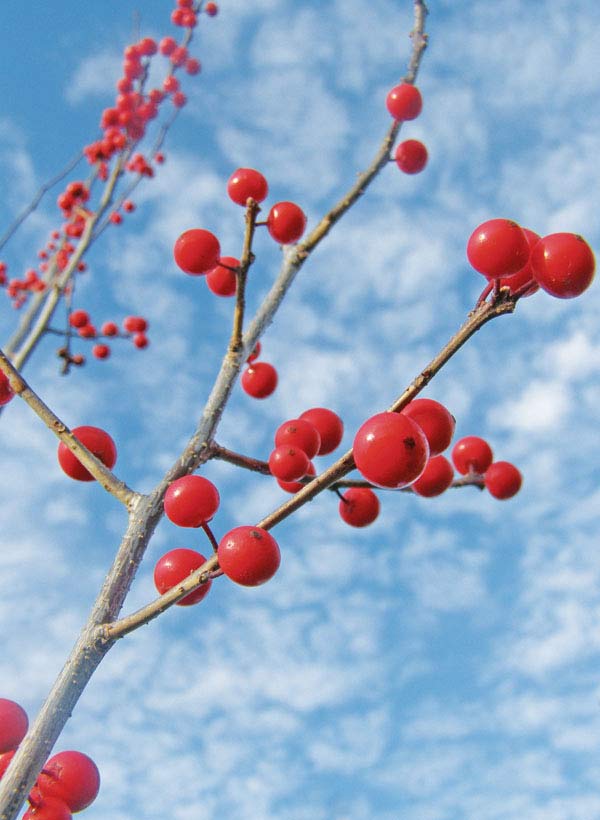
Though holly fruit are correctly termed drupes, most of us call them berries, and these berries absolutely sparkled. Some of the tags on the various little trees were labeled “Sparkleberry,†one of several cultivars of deciduous hollies. The true deciduous holly, Ilex decidua, a single- to multi-trunk small tree, is commonly called Possum Haw. Now, who is going to get really excited about that name? I would like to know the story behind that one. Common in woods throughout the Piedmont and coastal plain, this little tree is thoughtlessly destroyed when forests are cleared for new residential development. Unlike the more familiar evergreen spiny-leaved American Holly, Ilex opaca, deciduous hollies are not readily noticed where they are so plentiful in our local woods.
The other deciduous holly sometimes found in local nurseries is Ilex verticillata, Winterberry Holly. This one, growing throughout the state in wet habitats, will mature as a multi-stem large shrub and the berries, though often larger and brighter than the berries of the tree form, don’t seem to last as long. I believe the birds relish the flavor of the shrub berries more than the tree berries. Unless a flock of cedar waxwings or robins “de-berry†a deciduous holly tree in midwinter, your tree will bear red fruit right into spring.
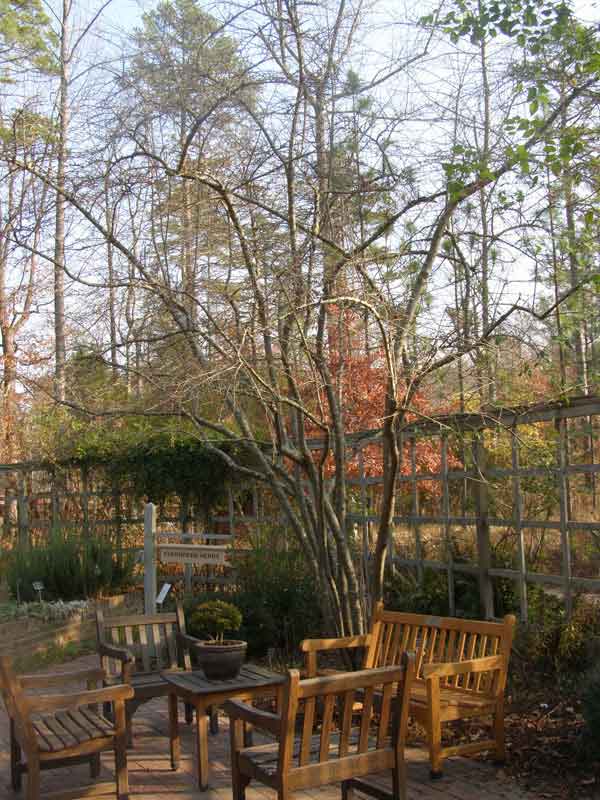
My personal favorite will remain the tree form. I admire the irregular shape these trees attain with age. Several fine specimens are in the Botanical Garden’s herb garden in front of the Totten Center. Those trees were there in the woods before the herb garden. They stand there as Tolkien-like sentinels of a former time.
For the first time in several years, those holly trees are not so heavily fruited. The ones in my wild yard are not fruiting this winter. All the green berries set in the spring dropped, I believe, as a water-saving strategy. The trees themselves are still vigorous. There is wisdom in nature. Next summer, I know where my buckets of reuse water will be applied. With or without fruit, the deciduous holly is a year-round joy.
Now is a good time to plant deciduous hollies in your landscape. Make certain you get a male to accompany your females. If you live adjacent to woods, you may have males nearby. However, you most likely will not have a male Winterberry growing in your nearby woods, so a male is certainly a must. I have a magnificent Winterberry that fruits heavily every spring only to drop all the berries because there is no male friend growing near by. I’m planting a male this winter! And I know one lady who is going to be very happy on Christmas morning.
Email Ken Moore at flora@carrborocitizen.com. Find previous Ken Moore Citizen columns at The Annotated Flora (carrborocitizen.com/flora).
Photos by Ken Moore.
By Ken Moore
Flora Columnist
For 20 years, the holiday greenery that has adorned the columns of Carrboro’s Town Hall has been the result of the time and creativity of members of the Carrboro Community Garden Club.
Now, this group of gardeners is not your typical garden club organization. It does not belong to a Garden Club Council. It does not collect dues. A hat is passed around if the group needs a few dollars. It does not have any official elected officers, though several individuals voluntarily perform essential functions to keep the group loosely organized. Members meet monthly at members’ homes, where they enjoy walking about one another’s gardens, discovering new plants and gardening ideas. All learn from members freely sharing growing wisdoms and experiences. These monthly gatherings have also become a rather serendipitous gourmet feast of members sharing food and treats. There are meeting agendas, but they are frequently altered on the spot to meet the immediate interests of the members. Typically everyone enjoys talking at once and, amazingly, some rather remarkable things get planned and executed.
The group has three ongoing projects in the Carrboro community.
They plant and weed and hand water the wild garden along the Frances Shetley Bikeway. To many strollers, that stretch of wild brambles may look forsaken. But other strollers who may encounter one or more of the gardeners crawling around planting and weeding will stop and voice thanks for that wild patch where something is always flowering or fruiting or otherwise providing food and cover for birds and butterflies and other wild critters.
The group has participated for years in the community’s annual Carrboro Day, providing gardening information and plant identification and distributing free plants dug from the gardens of members and from community citizens who bring their own extra plants to share and swap on that first Sunday in May.
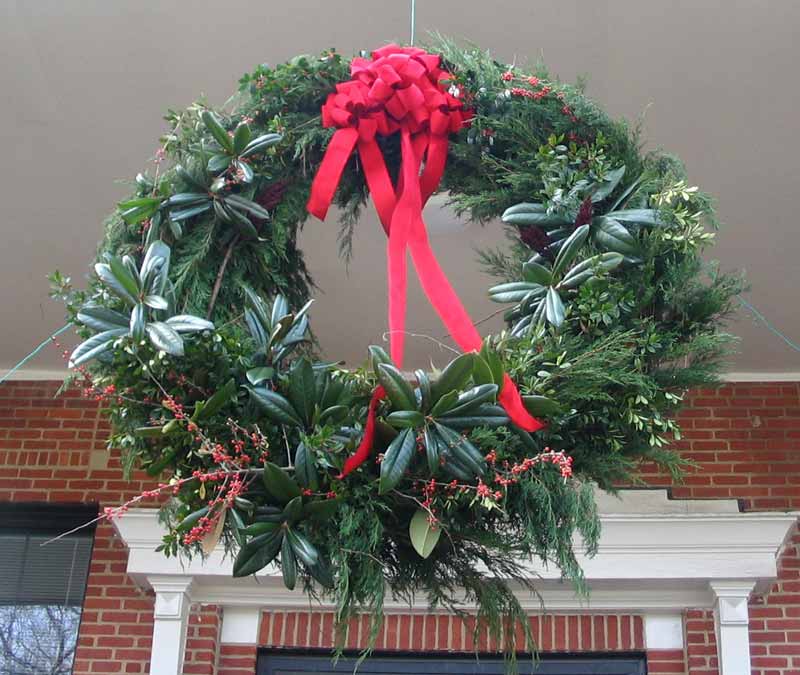
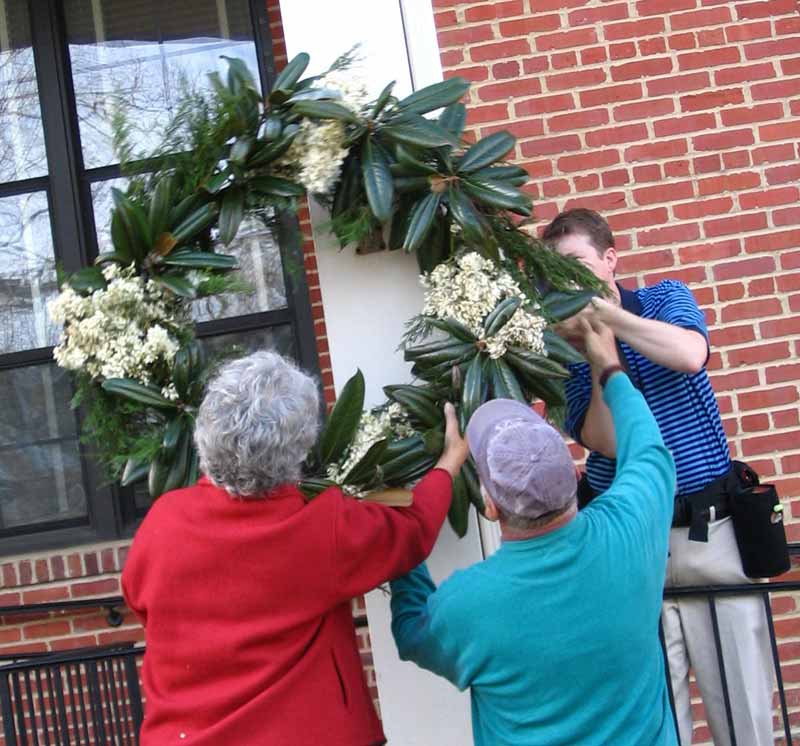
The third project is the annual holiday decorating of the Carrboro Town Hall. In the early years, the group created holly and pine swags with red bows for the four columns and wrapped the front railing with garlands of similar greenery. Then about ten years ago, a giant plywood cutout circle, rescued from the landfill, became a frame for a giant wreath to hang over the entrance. Now the hanging of this giant wreath has become an annual tradition accompanied by the placing of four smaller wreaths on the four columns.
Over the years, the group has committed itself to utilizing only native materials and the results are not your ordinary holiday wreath. The group generally relies on local cedar and pine and magnolia for the base, but you can count on some infrequently used materials, like sumac cones, broom sedge and cattails for accents.
This year the wreath goes up at 10 a.m. Friday morning. You are welcome to join in on the excitement of observing members of the Town’s Public Works Landscape and Grounds Division hoisting that giant wreath into the air while members of the Carrboro Community Garden Club hang the smaller wreaths. I suspect there will be some surprises on those wreaths again this year.
Email Ken Moore at flora@carrborocitizen.com. Find previous Ken Moore Citizen columns at The Annotated Flora (carrborocitizen.com/flora).
Another wild aster for your garden

By Ken Moore
Flora Columnist
We’ve finally had some killing frosts and winter is beginning to settle in. This is the season we are accustomed to being the hosts of garden mums, Chrysanthemum x morifolium, with their neon-like orange, yellow and red colors, as well as the quieter colors of pink and white of Sasanqua Camellia, Camellia Sasanqua, cultivars. Also noticeable, more often smelled than seen, is the very fragrant, very tiny, flowered evergreen Sweet Olive, Osmanthus x Fortunei.
So it is often a surprise and a joyful relief to happen upon something different in flower this late in the season. For years, I have enjoyed the several specimens of Climbing Aster, Aster carolinianus, (Ampelaster carolinianus) that have remained in full flower after killing frosts through the Thanksgiving holidays. This is one of our native asters; it occurs infrequently in our Southeastern coastal plain and more commonly further south down to Florida. It is somewhat surprising that it is such a hardy and sturdy grower in our Piedmont, a bit beyond its natural occurrence. It does not seem to pose a threat of spreading rampantly in gardens and in the wild because its characteristic late flowering doesn’t find many pollinating insects buzzing around to assist it in setting viable seed.
I have difficulty adequately describing the flower color. The buds of each flower head begin as a rosy pink before opening to shades of lavender and blue. Over the years, I have become aware that I tend to be more appreciative of plants in bud than in full flower. I’m curious why the anticipation of a flower can be more rewarding than the open flower itself – but I encourage you to focus as much on flower buds as the flower.
It will definitely extend your number of days of watching and appreciating an individual plant.
A gardening friend recently called my attention to a particularly dramatic specimen of Climbing Aster along the pathway of North Boundary Street over in Chapel Hill. It’s worth a visit. This plant is a mound at least six feet wide and almost as high. Climbing Aster does in fact climb, almost like a vine. If it doesn’t have a trellis on which to climb, it will simply make a big mound by climbing on itself. At the Botanical Garden, the giant specimen behind the aquatic tanks is scrambling up the high lattice fence behind it, and elsewhere another specimen is happy to climb even higher by hanging its angled woody stems on the limbs of an old cedar snag.
Last week at the Garden, I also noticed the native Coral Honeysuckle, Lonicera sempervirens, still sporting clusters of little red tubular flowers, a happy find, I’m sure, for any chilly hummingbird who’s late moving on southward. The Coral Honeysuckle routinely flowers off and on during mild weeks throughout the winter. This native red honeysuckle is frequently seen in local gardens, but the Climbing Aster is seldom seen. It’s time to plant one in your garden and place it out front so others can enjoy it.
Email Ken Moore at flora@carrborocitizen.com. Find previous Ken Moore Citizen columns at The Annotated Flora (carrborocitizen.com/flora).
Time to harvest a Carolina Bay wreath
Time to harvest a Carolina Bay wreath
Wreath of bay leaf branches woven into grape vine. Photo by Ken Moore
By Ken Moore
Flora Columnist
Back in the mid 1970s, UNC botany professor Dr. C. Ritchie Bell got an idea while teaching an Economic Botany class. In addition to teaching, Dr. Bell liked to cook, and he discovered that the leaves of a native plant were every bit as fine as those exotic bay leaves from California and the Mediterranean.
That plant, Carolina Red Bay or Swamp Bay, Persea borbonia, is an evergreen tree of the coastal plain from Virginia all the way to Louisiana.
By Ken Moore
Flora Columnist
I believe we humans have lost the ability to step back and fully appreciate what we have around us. In the fall, folks look forward to the brilliant display of deciduous trees as the greens give way to an arsenal of other colors before the seasonal falling of leaves. And every year we try to plan vacations and family drives to western Carolina to enjoy “Peak Week.â€
To assist us, staff of the Blue Ridge Parkway and regional tourist offices list predictions of “Peak Color†weeks at various elevations.
I’ve been trying to catch the “Peak Week†for decades. Each time, I am greeted with: “Oh, you should have been here last week!†or “You’ll have to come back up next week to catch the ‘peak.’†I believe I did catch the peak once, but it was hard to determine because of the fog and wind and rain. The colors of the leaves pressed against the windows of my truck were really spectacular.
By Ken Moore
Flora Columnist
“What’s that white-flowered shrub I see everywhere along the roadsides?â€
If you dare stop your car to take a closer look, you will observe that those shrubs are not in flower at all. That brilliant white effect is created by the fluffy seed heads of Sea-myrtle, Baccharis halimifolia. Dense clusters of tiny seed with parachute-like threads or hairs are characteristic of many of the plants in the composite or aster family. The Sea-myrtle is one of the very few woody plants in the aster family that occur in North Carolina.
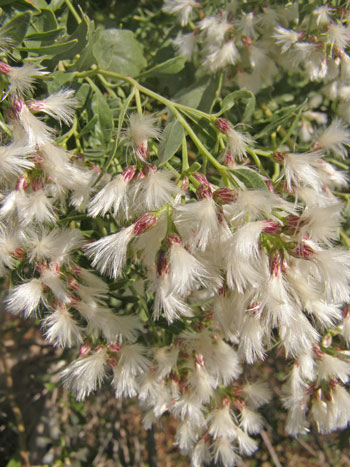
Showy seed heads of female Sea-myrtle. Photo by Ken Moore
Along roadsides, long stretches of the white form of this shrub are interrupted by patches of less-noticeable male plants. This native shrub is “dioecious.†You can impress your non-botanical friends with this term, which describes plants that bear male and female flowers on separate plants. Like the red-berried hollies, only the female plants become noticeable by bearing fruit.
This shrub of the outer coastal dunes and salt marsh shrub thickets was not locally so evident years ago. The “bible†of plant identification for the past several decades, Manual of the Vascular Flora of the Carolinas by Radford, Ahles and Bell, described this shrub thusly: “Believed to have been restricted at one time to the outer coastal plain, but now widely spread inland.†The newest guide, Flora of the Carolinas, Virginia, and Georgia by Alan Weakley, still in preparation, updates the shrub’s habitat as “… plants of the outer Coastal Plain and also spread extensively inland as a weed …†As a botany student back in the mid-1960s, I don’t recall ever seeing it locally.
Recently, I voiced concern to a plant ecologist about the very rapid westward movement of Sea-myrtle. Was it likely to become a terrible invasive like Chinese Privet, Ligustrum sinense and Spring Silverberry, Eleagnus umbellata? I was advised that Sea-myrtle would only take hold on disturbed sites.
The Interstate 40 corridor is such a site. And since it opened, Sea-myrtle has taken advantage of it as a fast lane from the coast to the mountains. In our areas, it is so thick along roadsides and edges of abandoned fields that it is literally pushing out wildflowers and other natives like dogwoods, Cornus florida, and redbuds, Cercis canadensis. Within the last decade I have watched it move west along the interstate to the very entrance of Asheville. Air-borne seeds have only to land on disturbed ground for opportunities to grow. And these days our landscape is becoming more and more disturbed. A good reason to support our local Triangle Land Conservancy and similar land conservation groups is that an undisturbed habitat is the best protection against invasion of “outsider†plants.
However you choose to view this invasion, reduce your pace during the next week to take a closer look at Sea-myrtle, invisible most of the year and so brilliantly evident right now. If you really are too busy for a “time out,†then just wait a few years. You will most likely have Sea-myrtle show up on your roadside or in your garden. I have one; it showed up three years ago and now it’s taller than the tool shed. But it’s a lone male and not spectacular like all those females.
Email Ken Moore at flora@carrborocitizen.com. Find previous Ken Moore Citizen columns at The Annotated Flora (carrborocitizen.com/flora).
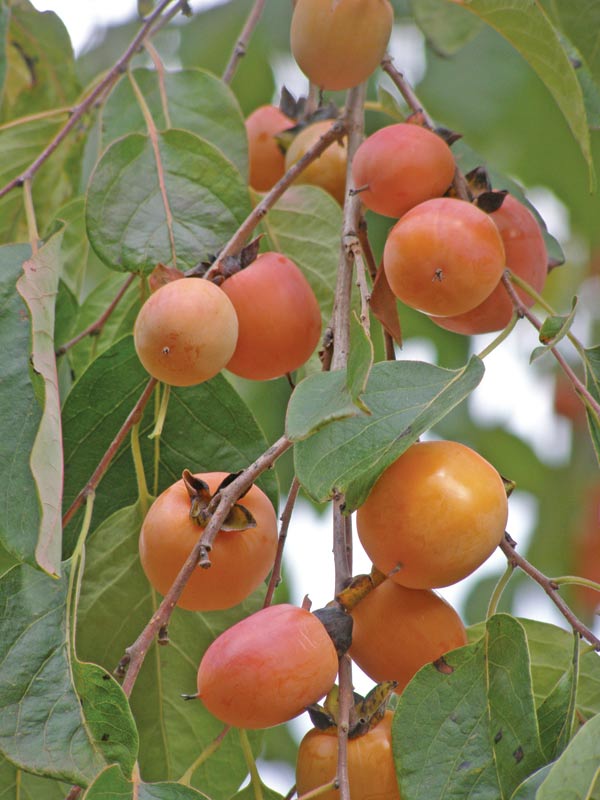
An unusually heavy fruiting Persimmon Tree in the middle of Chapel Hill. Photo by Ken Moore
By Ken Moore
Flora Columnist
A desperate call two weeks ago: “Ken, that persimmon tree near my office is already dropping fruit and I’m leaving for a couple of days and don’t want them to go to waste!†I assured him I would collect those ‘simmons during his absence. We shared mutual curiosity that the ripe persimmons were dropping before the first frosts this year. So, it must be shorter days rather than frigid nights that trigger fruit ripening.
Across town, my favorite persimmon tree (Diospyros virginiana) is loaded with fruit again this year. But, wow, when I arrived at the base of my friend’s favorite tree, I was stopped in my tracks. The persimmons on his tree hung like clusters of giant grapes.
It was the Wednesday afternoon of UNC fall break and I anticipated being alone. I found several grounds crew members working nearby and they called over to me that they also had claim to some of those fruit on the ground. A few minutes later, a car pulls up and out steps another friend, who for years has been visiting this tree during ’simmon season. It seems this particular tree has more than one watchful guardian.
Most folks use the persimmon pulp for pudding and bread recipes. I simply enjoy the fruit by plucking a ripe one (you’ll never put an unripened one in your mouth a second time!) to enjoy that cinnamon colored pulp while being careful not to swallow the five flat, long-oval, dark-brown seeds. Save the seeds to take home and plant in the ground where you want your very own persimmon trees. Be certain you plant several seeds some feet apart, for you need both a male and female plant to have your very own fruit-producing tree.
Persimmons are legendary in our area. You’ll enjoy reading more in “Who’s Gonna Cover ‘Em Up?!†Chapel Hill Uncovered – 1950-1985, written by Roland Giduz, a local legend himself. Next time you see him volunteering at the information tent at our Farmers’ Market, ask him for a persimmon recipe and I suspect he’ll have a persimmon story or two to share.
In the late 1950s, Roland described UNC News Bureau Director Pete Ivey’s enthusiasm for persimmons in the old Chapel Hill Newspaper. Over the years, Persimmon Pete, the self proclaimed “patron saint of persimmonry,†made the sharing of his persimmon recipes a cherished tradition.
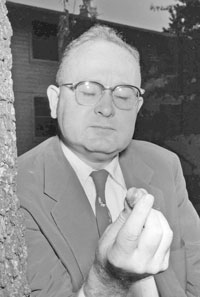
Pete Ivey contemplates a persimmon. Photo by Roland Giduz
Following Ivey’s death, Giduz carried on the persimmonry tradition for a time, going so far as to initiate a campaign to have the persimmon declared the state fruit. Sadly, not enough enthusiasts gathered around that cause. The scuppernong grape (Vitus rotundifolia) was declared the official state fruit in 2001.
Since the scuppernong is a vine, perhaps we can pick up the torch and lobby for the persimmon to become our official state fruit tree.
In the meantime, you had better get out there, find yourself a persimmon tree and make daily visits to collect those ripened fruits on the ground before the possums and other critters beat you to it.
Email Ken Moore at flora@carrborocitizen.com. Find previous Ken Moore Citizen columns at The Annotated Flora (carrborocitizen.com/flora).

By Ken Moore
Flora Columnist
“My poke’s bigger than your poke!â€
Believe it or not, that challenging brag has passed between more than two energetic gardeners in this area. While folks may consider the common American Pokeberry, Phytolacca americana, merely a weed, more and more really sophisticated gardeners admire and grow this giant native perennial.
Poke is a striking plant for all seasons.
By Ken Moore
Flora Columnist
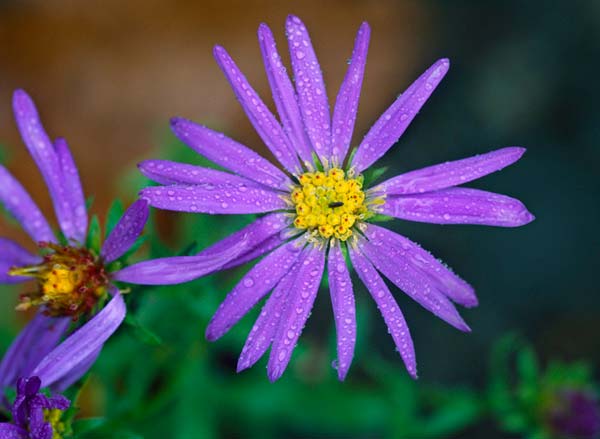
Referring to my annual enthusiastic descriptions of most common flowering weeds, gardening friend Sally recently stated that she was waiting for Ken Moore’s “love letter†to the Frost Aster. Aptly named, Frost Aster, Aster pilosus (Symphyotrichum pilosum), does flower during the frosty days of mid-October.
Back in the olden days – the decades of the 1960s into the ‘90s – the mid-October week of the NC State Fair generally signaled our first hard, killing frost. In addition, at least one day of chilling rains challenged nursery staff and garden club members installing display gardens for the fair’s Flower and Garden Show. Our local Piedmont’s peak of fall color was also a treat for travelers along the roadsides from Carrboro-Chapel Hill to and from the fairgrounds. Well, not this year.
The “times are a’changing,†and now our killing frosts arrive in late November or early December.
However, Frost Asters are right on schedule along roadsides and in fields.
These white asters are real survivors, persisting vigorously on the barest and driest of soil surfaces. They even flower profusely close to the ground following persistent roadside mowing. Left to grow, a single plant can reach a height of five to six feet, taking the form of a miniature tree festooned in a canopy of tiny pure white daisies. Viewing a whole field of Frost Asters can be overwhelming, like viewing a terrace filled with fall mums. The beauty of a single plant and a single flower is missed entirely. Focus your attention on one plant; look closely at an individual flower head. No two are alike and sometimes you find ones that are shades of pink and lavender.
Noted local author and philosopher Paul Green described: “There are many species of this wild weed or flower. The pastures and wastelands and roadsides are beautiful in autumn by its profusion of white, pink, blue, lavender and purple bloomings. For all its beauty it still awaits the praise of a single Valley (the Cape Fear River Basin) poet.†Paul Green’s Plant Book.
Indeed, there are dozens and dozens of different species of wild aster throughout North Carolina. For pure beauty of a single flower head, my personal favorite is the Large Flower Aster, Aster grandiflorus, (Symphyotrichum grandiflorum).
And though local poets have not yet honored our wild asters in verse, numerous keen horticulturists have honored them by selecting forms as “named cultivars.†I noticed several such cultivars of our wild asters at Southern States garden center last week. If you want to appreciate the beauty of the wild species, there are many now in full flower at the Botanical Garden and a number of them are available on the plant sales shelves behind the Totten Center.
For pure pleasure, go outside and walk the local fields and you too can love an aster. And by all means, plant a few of these hardy, drought-tolerant perennials in your landscape.
Email Ken Moore at flora@carrborocitizen.com.
Find all of Ken Moore’s Citizen columns at The Annotated Flora
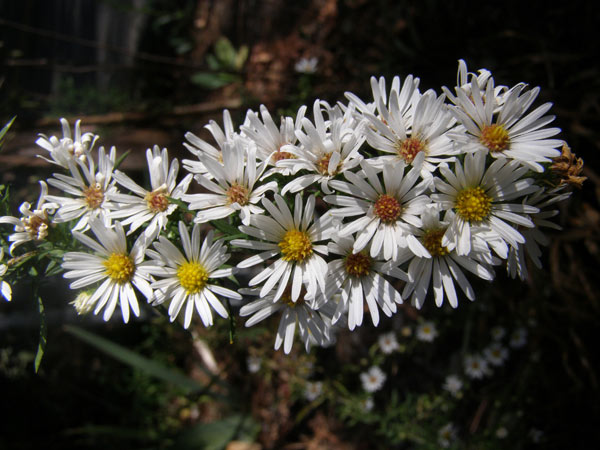
Photos by Ken Moore
Get creative with planting this fall
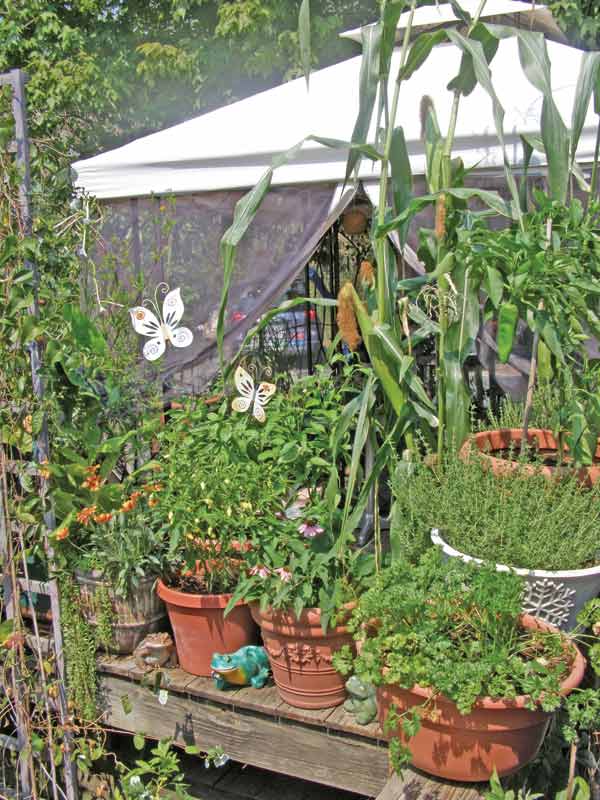
A variety of plants — from flowering annuals and perennials to kitchen herbs, tomatoes, peppers and even a few stalks of corn — are easily grown on a sunny deck or patio. Photo by Ken Moore
By Ken Moore
Flora Columnist
Fall is for planting, a time when one can get a spade into the soil and we have ample rainfall. Not this year. While we home gardeners lament our situation, let’s all pray to whatever spirits we honor for our local farmers who are hard pressed to begin those fall crops we so take for granted every September through December at our Carrboro Farmers’ Market.
Though it is not advisable to try a garden in the ground just now, we do have some options. Think containers, from expensive ceramic art pieces to the very useful discarded sheetrock buckets with holes in the bottom for drainage. It wasn’t the drought, but the local deer population that forced us to garden in containers on the deck several years ago. Though container gardening may require daily hand-watering, or at least daily checking for water needs, one becomes much more involved with the plants when caring for them up close and personal on a patio or deck, and water isn’t wasted. Here in our piedmont, a fall and winter garden is a much-too-often missed option for most of us. Don’t let the present heat and drought keep you from planting and harvesting a fall garden in containers.
There is no limit on what can be cultivated. I’ve enjoyed deck-grown okra in the past, and this year, just for fun, we have a few ears of corn for harvest. Search your local garden center and market for packets of seed for fall sowing. Your choice will include a great variety of root crops from beets, turnips, radishes and kohlrabi to leafy greens such as spinach and lettuces, even those giant collards, and the tasty edible flower head producing broccoli and cauliflower. Next time at the Farmers’ Market, be on the lookout for plant sets and seedlings of fall and winter veggies to set directly into your containers.
Remember to add slow-release organic fertilizers or composted manure to your soil mix and/or apply liquid fertilizers as needed from time to time. But if you have raccoons in your neighborhood, don’t use fish emulsion fertilizer. I did it earlier this season and the raccoons had a grand time digging up my container veggies trying to unearth that fishy smell.
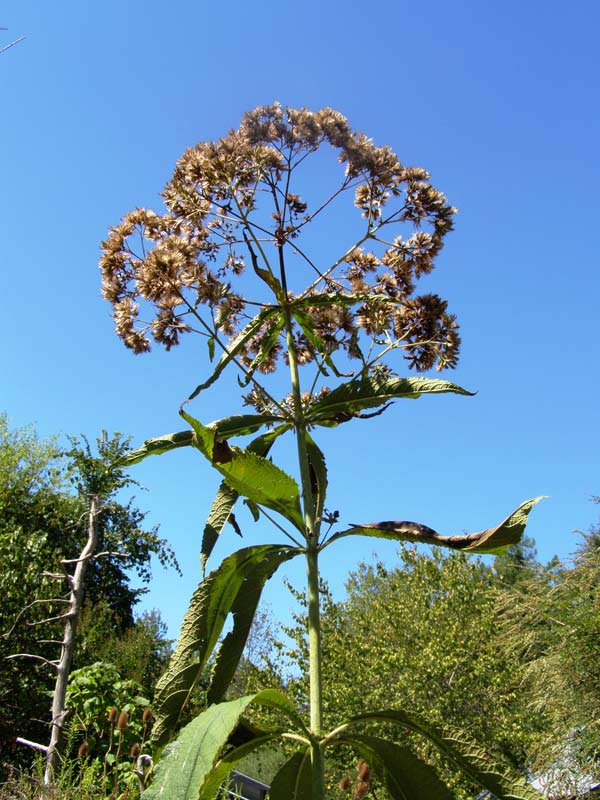
Leave plant stems, such as Joe-Pye Weed, standing in your garden through the winter season to benefit birds and provide winter landscape interest. Photo by Ken Moore
The fall is also that time of year that many gardeners “put their garden to bed for the winter.†I never do, but I’m not one of those neat gardeners and I don’t have a disease and pest problem that many such gardeners use as justification for such tidiness. I don’t cut the dried upright stems of plants like goldenrods, asters and especially Joe-Pye Weeds. I leave them for the benefit of birds that use the branches for cover and perching as well as for seed and insect harvesting during the late months. And I love the winter interest. For example, an ice-covered seed head of Joe-Pye Weed is a real object of beauty in the winter landscape.
And here’s one more fall suggestion. If your perennials and biennials have green leaves at the base going into the winter months, make certain you do not cover those green basal rosettes with mulch. Many plants, such as Cardinal Flower, are lost by well-meaning gardeners covering green leaves with mulch.
Green foliage takes advantage of the winter sun.
Now, in spite of this drought, enjoy creating a container garden!
Email Ken Moore at flora@carrborocitizen.com.
Find all of Ken Moore’s Citizen columns at The Annotated Flora