

By Valarie Schwartz
Columnist
Spring arrived with a flourish this year, a few minutes after the last of the parking lot snow mountains finally melted. The dogwood trees had barely had a chance to unfurl their blooms, when 90-degree temperatures forced the leaves out a few days after Easter.
All the while, the proprietors of nine gardens in the Chapel Hill Lake Forest neighborhood, venue for the 2010 Spring Garden Tour, watched tulips and other bulbs open gloriously – and drop to the ground – well before the tour, scheduled for April 17 and 18.
But these folks don’t garden by bulbs alone. As their neighborhood name suggests, they are gardening in the woodlands. The homes of Lake Forest began to be built in the late 1940s, around the time that Memorial Hospital was built and the UNC Medical School became a four-year program. Though some of the homes around the 50-acre Eastwood Lake are as well-established as the owners, many changes have come with time – and storms.
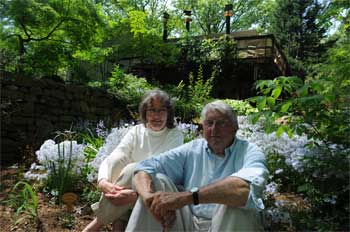
Lou Ann and David Brower moved to their home on Shady Lawn in 1970. With two careers and four children, they had little time for gardening during their early days there. And being from the Midwest, they were acquainted with fertile soil, not clay or forest gardening.
“I had a lot to learn,†Lou Ann said as she showed me around the property aptly named in the Chapel Hill Garden Club tour brochure “A Suite of Garden Rooms.â€
“The backyard was a wild place,†where their children took root and grew, she said. Now, though, the former car-park has become an entrance into the garden with an “allée†of Japanese maples spreading above a bevy of hellebores. One passes through an arched wooden gate to enter the deer-deterred backyard, where luscious pathways meander down and around the multilayered garden, and a dry stream bed leads to a retention pond, among countless other treasures that have earned this yard certification as a natural bird habitat. Two giant oaks felled by Hurricane Fran in 1996 created the light required for sun-loving vegetation.
“I’ve been here so long, [the garden] gives me a sense of continuity with my life and the land we’ve lived on,†Brower said. “Along the way, I began to feel at home and become part of the South. Part of getting to know what the South is like is getting to know plant habitats and so forth. It keeps your brain alive, learning about the landscape,†said the retired editor of academic texts and medical school educator.
The garden tour, held every other year since 1996 by the Chapel Hill Garden Club, opens the garden gates of historical neighborhoods of Chapel Hill to garden enthusiasts from around the state to see the treasures held in our ground here, raising over $100,000 to date for the N.C. Botanical Garden, which is always part of the tour.
Like the botanical garden, with its long history of conservation practices, the Browers strive toward sustainability and collect rain water in two 650-gallon tanks on their roof, which provide the irrigation their garden requires.
“I hope a lot of people come on the tour and help support the botanical garden,†Bower said. “Research is essential for our being able to have the best of everything we can. The botanical garden is a huge asset to the community, and much beyond that.â€
The women of the garden club tend to every detail in making tour day (rain or shine) as comfortable as possible for all guests, presenting gardens that hold more surprises and delights than can be calculated. Tour tickets purchased in advance are $15, or $20 when purchased at any garden. See chapelhillgardentour.net for details.
Contact Valarie Schwartz at valariekays (at) mac.com