The Fiddler’s Companion
© 1996-2010 Andrew Kuntz
_______________________________
HOME
ALPHABETICAL FILES REFERENCES
|
DIA - DIM |
|
Notation
Note: The tunes below are recorded in what
is called “abc notation.” They
can easily be converted to standard musical notation via highlighting with
your cursor starting at “X:1” through to the end of the abc’s, then
“cutting-and-pasting” the highlighted notation into one of the many abc
conversion programs available, or at concertina.net’s incredibly handy “ABC
Convert-A-Matic” at http://www.concertina.net/tunes_convert.html **Please note that the abc’s in the Fiddler’s
Companion work fine in most abc conversion programs. For example, I use
abc2win and abcNavigator 2 with no problems whatsoever with direct
cut-and-pasting. However, due to an anomaly of the html, pasting the abc’s
into the concertina.net converter results in double-spacing. For
concertina.net’s conversion program to work you must remove the spaces
between all the lines of abc notation after pasting, so that they are
single-spaced, with no intervening blank lines. This being done, the F/C
abc’s will convert to standard notation nicely. Or, get a copy of
abcNavigator 2 – its well worth it.
[AK] |
DIAMOND [1]. AKA and see “Dooley’s Fancy.” American,
Reel. A Major. Standard tuning. AB. Although any connection with the tune is
unknown, there were two dancers in the mid-1800’s who went by the name Diamond.
John Diamond was a young dancer who paired with banjo player (and also a
dancer) Billy Whitlock (one of the original Virginia Minstrels). Whitlock later
paired for a time with a young man named Frank Lynch, who also called himself
Diamond, and frequently appeared in
X:1
T:Diamond [1]
M:2/4
L:1/8
S:Ryan’s Mammoth Collection
(1883)
Z:AK/Fiddler’s Companion
K:A
e | c/A/E/A/ c/e/a/e/ | d/c/B/A/
G/A/B/d/ | c/A/c/e/ a/g/a/f/ | e/a/g/b/ a/f/e/d/ |
c/A/E/A/ c/e/a/e/ | d/c/B/A/
G/A/B/d/ | c/A/c/e/ aa/f/ | e/d/c/B/ A || (f/g/) |
ag/f/ f/e/e/c/ | d/c/B/A/ G/A/f/g/ |
ag/f/ f/e/e/c/ | f/A/g/A/ a/e/f/g/ | a/g/a/g/ f/e/d/c/ |
d/c/B/A/ G/A/B/d/ | (3c/B/A/.e/.A/
f/A/g/A/ | (a/f/)e/d/ c/e/a/e/ ||
DIAMOND [2]. AKA and see “Bobby Casey’s
Jig [2],” “Hag’s Purse,” “Little Black Pig,” “Roscommon Jig.” American, Jig. D
Mixolydian. Standard tuning. AABB. Bayard says this tune is of the "Oro, Welcome Home" family: see note
for "Bonaparte
Crossing the Alps." It is probably Irish in origin, and in fact,
|
See also listings at: Alan Snyder’s Cape Breton Fiddle Recording
Index |
X:1
T:Diamond [2]
M:6/8
L:1/8
S:Ryan’s Mammoth Collection
(1883)
Z:AK/Fiddler’s Companion
K:Dmix
(F/G/) | AFD DEF | A2G ABc | AGE cEE
| ECD EFG | AFD DFG |
A2G ABc | GFE cEE | EDD D2 :: A |
d2e =f2d | e2d dcA | AGE cEE |
GAG GAB | d2e =f2d | e2d dcA | GFE
cEE | EDD D2 :||
DIAMOND [3], THE.
Scottish, Reel or Hornpipe. G Minor. Standard tuning. J. Scott Skinner
(1843-1927) adapted this reel as a hornpipe, and says: “The crossbowing is very
effective in hornpipes.” AB (Surenne): AAB (Skinner). Skinner (Harp and Claymore), 1904; pg. 135. Surenne (Dance
Music of
X:1
T:Diamond, The [3]
M:C
L:1/8
R:Reel
S:Surenne – Dance Music of
Z:AK/Fiddler’s Companion
K:Gmin
d | BGBd ecfe | dBd=e fcAF | GBAD
EGFB, | CED=F G<GGd | BGBd ecfe |
dBd=e fcAF | GBAD EGFB, | CED=F
G<G G || a | bga^f g2 d=e | fdcB AcfA |
Bdfd cege | dg^fa g<ggd | gbad
egfB | cedG ^FGAD | GBAc Bdce | dBcA G<G G ||
X:2
T:Diamond [3]
M:2/4
L:1/8
R:Hornpipe
S:Skinner – Harp and Claymore (1904)
Z:AK/Fiddler’s Companion
K:Gmin
d/c/ |: B/>(G/ B/>)(d/ e/>)(c/f/>)(e/
| d/>)(c/d/>)(=e/ f/>)(c/A/>)(F/ | G/>)(B/A/>)(D/
E/>)(G/F/>)(B,/ |
C/>)(E/D/>)(^F/ G/>)G,/
d/>c/ :| b/>g/a/>^f/ gd/>e/ | f/>d/c/>B/ A/>c/f/>A/ |
B/>d/f/>B/ c/>e/g/>e/ |
d/>(g/^f/>)(a/
g/>)(d/=e/>)(^f/ | g/>)(b/a/>)(d/ e/>)(g/f/>)(B/ | c/>)(e/d/>)(G/
| ^F/>)(G/A/>)(D/ |
G/>)(B/A/>)(c/
B/>)(d/c/>)(e/ | d/>)(B/c/>)(A/ {^F}G) ||
DIAMOND JOE. Old‑Time, Breakdown.
***
I'm gonna buy me a sack of flour
Cook a hoecake every hour,
Diamond Joe better come get me, Diamond Joe.
***
I'm gonna buy me a piece of meat,
Cook me a slice but once a week,
Diamond Joe you better come get me, Diamond Joe.
***
I'm gonna buy me a sack of meal,
Take a hoecake to the field,
Diamond Joe come and get me, Diamond Joe.
***
I'm gonna buy me a jug of whiskey,
I'm gonna make my baby frisky,
Diamond Joe better come get me, Diamond Joe.
***
I'm gonna buy me a jug of rum,
I'm gonna give my Ida some,
Diamond Joe you better come get me, Diamond Joe.
***
Kuntz (Ragged but Right), 1987; pg. 277‑278.
Silberberg (Tunes I Learned at Tractor Tavern), 2002; pg. 35. County 514, The Georgia Crackers (a cover name for the Cofer
Brothers)‑ "Hell Broke Loose in
X:1
T:Diamond Joe
L:1/8
M:2/4
S:Liz Slade
B:Kuntz – Ragged but Right
N:ADAE tuning. Notated as fingered in standard position, not as sounded.
K:D
D/E/ F/F/A/A/||[G>B>](A [G>)B>)](A|[G/)B/)]B/(A A/)D/F|A>B A>(A|B/)D/F/(E/ D)(D/E/|
F)(A A/)D/F/D/|E/D/E/(E/ F/)(F/E)|D>G, A,/G,/A,/A,/|D>[DE] D2:|
|(3A/2B/2c/2|:d/)(e/d/)d/ d/(e/d/)(A/|B/)A/F A(3A/2B/2c/2|d)B/B/ de|
(e/ f) (e/ f) (3A/2B/2c/2|d/)(e/d/)d/ d/(e/d/)(A/|B/)A/F A(D|D/)E/F/F/ A/B/A/(A/|
B/)A/F
A(A | A/)(B/A/)D/ F/F/E | DD/D/ F/F/A :|
DIAMOND REEL, THE. Scottish. John Glen (1891) finds the earliest
printing of the tune in Robert
MacIntosh's 1783 collection (pg. 30). See “Diamond [3]” ???
DIARMAID AN TIOMANUIDE. AKA and see "Darby the
Driver."
DIARMAID UA AEDA. AKA and see "Jerry Hayes."
DIARMUID AGUS A
CHAILIN. AKA and see "Dermot and His Lass."
DIARMUID BACACH. AKA and see "Lame Dermot."
DIBDIN’S FANCY. English, Country Dance Tune
(2/4 time). D Major. Standard tuning. AABB. Versions appear in print in several
publications, including Samuel, Ann & Peter Thompson’s Twenty Four Country Dances for the Year 1791 (
X:1
T:Dibdin’s Fancy
M:2/4
L:1/8
S:John Rook music manuscripts
(Warerton, 1840-41)
K:D
A|dAdA|FAAA|BGGG|f2
ec|dAdA|FAAA|BGec|d2 d:|
|:d|fefg|aeea|dfed|dcBA|BABc|dAAd|gefd|a3
A:||
DIBIR AN MIO-AD. AKA and see "Banish
Misfortune."
DICK A DOLLIS. AKA and see “Lady
Jane Stuart’s Rant,” “Stewart’s Rant,”
“Stuart’s Rant.” Scottish, Reel.
Published in Henry Playford's 1700 collection of Scottish dance tunes.
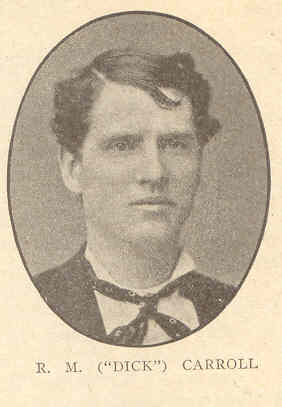
DICK CARROL'S CLOG. American, Clog. E Flat Major. Standard tuning. AABB. Edward Le Roy
Rice, in his book Monarchs of Minstrelsy
(New York, 1911), gives this entry on Dick Carroll:
***
R.M. CARROLL, or “Dick” as he is better known, or “Master Marks” as he
was originally
known to the profession, probably has the greatest number of years of
theatrical service of
any one in minstrelsy. Mr. Carroll is best remembered as a dancer, and
he was one of the
world’s greatest; but in his early career he was a splendid wench
performer; he was the
third one to do “Lucy Long”; a great feature of old-time minstrelsy. Mr.
Carroll’s first
public appearance was at Tinkham Hall of Grand Street, New York City;
the occasion
was the benefit of an elderly Irish lady, long since departed—this was
in 1837. For many
years he danced at balls and parties. About 1845 he first appeared
professionally at the
Bowery Amphitheatre,
Theatre he blacked up for the first time with “Daddy” Rice, playing in
“Bone Squash.”
The year following he played his initial minstrel engagement with
Charley White’s Company,
also in
Serenaders in
***
February 14, 1859, he made his first appearance as a member of Morris
Bros., Pell and
Trowbridge’s Minstrels in Boston, where he became a great favourite,
remaining about
three years. In his long career Mr. Carroll played with many prominent
minstrel organiza-
tions, notably Kelly and Leon’s; at Hooley’s, at the latter’s theatre in
Brookly, N.Y., with
little Dick, his son, he began an engagement there
Jr., and Dick’s brothers, Edwin and Bennie, they played for several
years in the principal
variety theatres of the country. In Sept., 1878, he opened Carroll’s
Comique, in
N.Y., and several weeks later, with his sons, began an engagement with
Cotton and Wagner’s
Minstrels. It may be interesting to know that Mr. Carroll and the late
J.K. (Fritz) Emmett, had
a minstrel show once; Carroll and Emmett’s Minstrels opened at De Bar’s
Opera House,
Louis
***
R.M. Carroll and John Queen (afterwards Queen and West), were the first
to do a double clog
dance, about 1862. Mr. Carroll likewise originated the famous song “Me
Father Sold Charcoal.”
His sons, Bennie and Edwin, died in
known dancing specialty “Mortar and Bricks.” R.M. Carroll was born in
10, 1832.
***
Cole (1000 Fiddle Tunes), 1940; pg. 120. Ryan’s Mammoth Collection, 1883; pg. 159.
X:1
T:Dick Carrol’s Clog
M:C|
L:1/8
R:Clog
S:Ryan’s Mammoth Collection (1883)
Z:AK/Fiddler’s Companion
K:Eb
c2 | (B>.A)F>D B>AF>D |
E>FG>A B>cd>e | (=B>c)(G>A) (=E>F)(^C>D) |
=C>B,=A,>B, B3c |
B>AF>D B>AF>D |
E>FG>A B>cd>e | (B>c)(G>A) (=E>F)(^C>D) |
=C>B,=A,>B, E2 :|
|: G2 | (c>.=B)c>B
c>ed>B | c>=Bc>B c>ed>B | c>=Bc>d e>de>f |
g>^fg>a g>fe>d |
c>=Bc>B c>ed>B |
c>=Bc>B c>ed>B | c>de>f g>fe>d |1 c>ed>=B c2 :|2
c2 z2 [_A2_B2] ||
DICK COSGROVE’S REEL. Irish, Reel. G Mixolydian. Standard tuning. AB. Source for notated
version: L. Donnelly [Mulvihill]. Mulvihill (1st Collection), 1986; No. 157, pg. 43.
DICK DARLING. English, Jig (9/8 time). C Major. Standard tuning.
AABB. Source for notated version: the 1845-47 music manuscript collection of
Ellis Knowles, a musician from Radcliffe,
DICK GOSSIP'S REEL. AKA and see “The Castle Reel [2],”
"The First Cup.” Irish, Reel. D Major.
Standard tuning. AABB. A favorite at contra dances, and still sometimes heard
at Irish sessions. Irish fiddler Sean Maguire is said to have
played the tune at
***
As, however, I was a perfect stranger in
for every one I met appeared as shy of
having anything to say about the gaol,
as if he were himself afraid of becoming an
inmate in the horrid place. At length,
I found a person of the name of Wittick, a
hair-dresser, the genuine Dickey
Gossip
of the city, who was exactly what I wanted.
Having told him my name and my
business, he “let loose his tongue”, and
gave me such a history of some of the
revolting scenes that occurred within the walls
of their city bastile, as harrowed
my soul with horror.
***
Irish fiddler and folklorist
Caoimhin Mac Aoidh has perhaps some definitive information on the tunes
origins. He writes that while at the
***
an
artist's hand in a very good attempt to reflect Irish illuminated
manuscripts.
The collection of tunes were sourced from a strong nest
of
fiddlers from around the end of the 1800s living in the area of Hare
Island
and thereabouts in Lough Erne, Co. Fermanagh. Ben's father,
Tommy,
was a very gifted fiddler from Fermanagh and who eventually
lived
out his adult life in
and
it has remained in the Gunn family. There is only one copy of this
manuscript
and thus is poorly known in the tradition. Breandan Breathnach
did
have some limited access to it and you can find references to it in Ceol
Rince
as the "Gunn MSS".
***
The tunes in it were marvellous and are not well known. Tommy was very
friendly with Cathal McConnell and Cathal did get tunes from it. Lady Ann
Montgomery, whose name always indicated a Scottish source, in fact, came
from this collection. If memory serves me rightly at this point, I think my
curiosity as regards Dick Gossip's source was satisfied by finding it under
that title in the Gunn or
***
In October 1983, Ben gave a lecture on the collection and its contents at
the annual fiddlers gathering in Glenties. He had the collection with him
and there was great interest in it. He was trying very hard to have it
printed, but rightly so he was firm that the illustrated artwork would be
preserved and presented in the publication. This was putting an unduly high
price on the printing costs and it never was released.
***
The tune is not related to Kennedy’s
similarly titled reel “Dickie Gossip or
Goodman’s hornpipe of the same title. L.E. McCullough recorded the tune
on his album “Late Bloomer” (1984) with
X:1
T:Dick Gossip's
R:reel
N:Sometimes played with the parts in the opposite order
B:Whistle and Sing by Eamonn
Z:Thomas Keays
M:C|
K:D
ef|gB (3BBB gBaB|gB (3BBB gfed|(3cBA eA fAeA|(3cBA ed cdef|
gB (3BBB gBaB|gB (3BBB gfed|cdef gece|dfec d2:|
AG|F2 AF BFAF|F2 AF GFED|E2 EF GFED|EDEF GFED|
F2
AF BFAF|F2 AF GFED|A2 AB cABc|dfec d2:|
DICK McGRALE'S JIG. Old‑Time, Quadrille (6/8
time). USA. A Major. Standard tuning. AABB. R.P. Christeson (Old Time Fiddlers Repertory, vol. 1),
1973; pg. 118.
DICK O' THE COW. AKA and see "Derwentwater's
Farewell," "Montrose Lasses,"
"My Dear and Only Love
Take Heed," "Jock o’ the
Syde."
DICK SANDS' HORNPIPE ("Crannciuil Ristaird Sands" or
"Crannciuil Ristaird Mic Allastair"). AKA – “Dick Sand’s Clog Dance,” “Sand’s
Hornpipe.” American, Irish; Hornpipe. USA; New York, Missouri. G Major
(Allan’s/O’Neill): A Major (Cole, Howe). Standard tuning. AABB (Cole, O'Neill):
AA'BB (Phillips). American sources appear to pre-date the tunes inclusion in
O’Neill’s Music of Ireland (1903),
and it appears likely that O’Neill gleaned the tune from either Howe’s or
Ryan’s related publications. “Dick Sand’s Hornpipe” is one of the tunes listed
by Lettie Osborn (New York Folklore
Quarterly) as having been commonly played for dances in Orange County, New
York, in the 1930's. Howe notes that his source was Jimmy Norton, the ‘Boss Jig
Player’, whom Don Meade believes was a mid-19th century stage
performer and former child prodigy, who, among his many talents, played the
violin. The tune was arranged for 9 parts—violins, clarionet, coronet, bass,
flute, viola, trombone, cello and piano—in another of Howe’s publications, Howe’s Full Quadrille Orchestra (No.
262). It is on Charlie Walden’s list of ‘100 essential Missouri fiddle tunes’.
Likely original sources, again, are the Howe and Ryan volumes.
***
Dick Sands
was a celebrated stage performer of step dancing in the United States during
the latter half of the 19th century (1860’s on), who also sang and
did ‘Irish character’ performances. A publication by J.F. Finn (New York,
1879/1880) bears his name: Dick Sands’
Irish Jig, Clog and Dance Book, being “a history of the personal,
political and professional sentiments and peregrinations of Dick Sands with
complete and practical instructions in the art of clog-dancing." Edward Le Roy Rice, in his book Monarchs of Minstrelsy (New York, 1911),
gives:
***
DICK SANDS (George R. Sands), famous for many
years as (P.T.) Barnums’s “Old Woman
in the Shoe,” was one of the world’s greatest
clog dancers. His first appearance was made at
Pierce’s Varieties in Providence, R.I., in
1857. Late that same year he joined Bryant’s Minstrels
in New York, and in February, 1859, reappeared
there. In 1866 he was associated with Jack
Haverly in a minstrel company bearing their
name. Mr. Sands played important engagements
With the Morris Brothers, Pell and Trowbridge
Minstrels in Boston, and many other high-class
minstrel and circus companies. Dick Sands was born
at Mill Bridge, England, May 2, 1840; he
died in New York, March 28, 1900.
***
The
reference to circus promoter P.T. Barnum is interesting, although I have not
been able to find any further information regarding Sands’ employment with him.
Barnum did have fairy-tale and nursery rhyme themes in his shows, however, and
may have had skits that featured characters from them, in an effort to draw in
families with young children (and to mitigate the impression that the circus
was suspect entertainment for some classes). His circus parade featured floats
based on these themes, including a mother
goose float that perhaps Sands was associated with. Perhaps the earliest recording
is from 1913 by violinist Charles D’Alamaine, born in 1871 in England, who died
in 1943. D’Alamaine immigrated to the United States in 1888, and by 1890 had
established himself as “instructor on violin” in Evanston, Illinois; by 1910 he
had removed to Yonkers, and in 1920 was a chiropractor in New York City (info.
from Paul Gifford). Sources for notated versions: Cyril Stinnett (Mo.)
[Phillips]; “As played by Jimmy Norton, the Boss Jig Player” [Howe]. Allan's Irish Fiddler, No. 104, pg. 26
(appears as “Sand’s Hornpipe”). Cole (1000
Fiddle Tunes), 1940; pg. 100. Howe (1000
Jigs and Reels), c. 1867; pg. 31 (appears as “Dick Sand’s Clog Dance”).
O'Neill (Krassen), 1976; pg. 216. O'Neill (Music
of Ireland: 1850 Melodies), 1903/1979; No. 1777, pg. 231. O'Neill (Dance Music of Ireland: 1001 Gems),
1907/1986; No. 953, pg. 163. Phillips (Traditional
American Fiddle Tunes), Vol. 2, 1995; pg. 190. Ryan’s Mammoth Collection, 1883; pg. 135. Green
Linnet GLCD 1149, Joe Derrane with Felix Dolan – “Give Us Another” (1995).
X:1
T:Dick Sands’ Hornpipe
L:1/8
R:Hornpipe
S:O’Neill – Dance Music of Ireland: 1001 Gems (1907), No. 953
Z:AK/Fiddler’s Companion
K:G
(3def | ggdB GBed | cBAG FADF | GABc
dBGB | Ad^ce d2 (3def |
ggdB GBed | cBAG FADF | GBdB ecAF |
G2 GF G2 :|
|: cB | ABAG FDEF | GABc dBGB | cBcd
edcB | Ad^ce d2 (3def |
(3gag dB (3efe cA | (3ded Bd cAFA |
GBdB ecAF | G2 GF G2 :|
DICK SLUYTER'S JIG. Old‑Time, Breakdown. USA, Missouri. G Major/Mixolydian. Standard
tuning. ABC (irregular meter). Some similarities to "Wake Susan" and "The Mason's Apron." Source for
notated version: James Marr (elderly fiddler from Missouri, 1949) [Bayard].
Bayard (Dance to the Fiddle), 1981;
Appendix No. 13, pgs. 577‑578.
DICK SULLIVAN'S
FAVORITE (Roga Ristard Ui
Suilleabain).
Irish, Double Jig. G Major. Standard tuning. AABBCC. Source for notated version:
Chicago Police Sergeant James O’Neill, originally from County Antrim)
[O’Neill]. O'Neill (Krassen), 1976; pg. 56. O'Neill (Music of Ireland: 1850 Melodies), 1903/1979; No. 1027, pg. 192.
O'Neill (Dance Music of Ireland: 1001
Gems), 1907/1986; No. 227, pg. 52. Cló
Iar-Chonnachta CICD 167, Peter Horan & Gerry Harrington – “The Merry Love
to Play” (2007. From O’Neill’s)
X:1
T:Dick Sullivan’s Favorite
M:6/8
L:1/8
R:Jig
S:O’Neill – Dance Music of Ireland: 1001 Gems (1907), No. 227
Z:AK/Fiddler’s Companion
K:G
B/c/dc BdB|GBd gdB|B/c/dc BdB|AFA
cBA|B/c/dc BdB|GBd gdB|cac BgB|AFA cBA:|
|:dgf gdB|gag gba|gag gdB|F/G/AB
cde|dgf gdB|gfe dcB|cac BgB|AFA cBA:|
|:dBG G/A/Bc|dBG gfe|dBG GBG|AFA
cde|dBG GBd|gfe dcB|cac Bgb|AFA cBA:|
DICK THE HABERDASHER.
English, Jig. D Major. Standard tuning. AABB. The melody was penned by
Cheapside, London, musician Walter Rainstorp into his manuscript copybook
(begun in 1747). Thompson (Compleat Collection of 200 Favourite
Country Dances, vol. 1), 1757; No. 53.
X:1
T:Dick the Haberdasher
M:6/8
L:1/8
B:Thompson’s Compleat Collection of 200 Favourite Country Dances, vol. 1 (London, 1757)
Z:Transcribed and edited by Flynn Titford-Mock, 2007
Z:abc’s:AK/Fiddler’s Companion
K:D
A|def edc|B3 d3|ABA GFE|FGF “tr”E2D|def edc|B3 d3|ece g2f|f3 e2:|
|:a|(af)a
(af)a|a2A a2A|(ge)g (ge)g|g2G g2G|(af)a (af)a|bag fed|(e/f/g)f edc|d3 D2:||
DICK
THE WELSHMAN. English, Country Dance Tune (4/4
time). A Major. Standard tuning. AB (Mellor): AABB (Thompson). From London
publisher Charles and Samuel Thompson's Compleat
Collection of Country Dances, vol. 2 (c. 1764). Mellor (Welsh Dance Tunes), 1935; pg. 20.
Thompson (Compleat Collection of 200 Favourite Country Dances, vol. 2
(London, 1765; No. 92.
X:1
T:Dick the Welch Man
M:C
L:1/8
B:Thompson’s Compleat Collection of 200 Favourite Country Dances, vol. 2 (London, 1765)
Z:Transcribed and edited by Flynn Titford-Mock, 2007
Z:abc’s:AK/Fiddler’s Companion
K:A
e|{d}cBAc dfec|faec dBBe|{d}cBAc dfec|faed cAA:|
|:e|fa^ga
eaga|(3def ec d(BB)e|faga eaga|(3def ed c(AA):||
DICKEY'S DISCOVERY. Old-Time, Breakdown. D Major. Standard tuning. AABB. Stacey Phillips
notes the title is not the original one for this old tune. Source for notated
version: Lotus Dickey (Indiana) [Phillips]. Phillips (Traditional American Fiddle Tunes), vol. 1, 1994; pg. 70.
DICKIE GOSSIP [1]. English, Reel. D Major. Standard tuning. AAB. Not related to the reel “Dick Gossip” popular in Irish sessions. However, see note for that tune for explanations regarding the title. Kennedy (Traditional Dance Music of Britain and Ireland: Reels and Rants), 1997; No. 33, pg. 10.
X:1
T:Dickie Gossip [1]
M:C|
L:1/8
R:Reel
K:D
A,|DFAd BAGF|d2 df eEEF|DFAd BAGF|GBAG FDD:||
A|dAde dfed|cAeA fAeA|dAdf dfed|cdef d2 dA|
dAdf dfed|cdef gfef|dBAG FAdB|AGFE D2||
DICKEY GOSSIP [2]. Irish, Hornpipe. D Major. Standard tuning.
AABB. The hornpipe appears in
Church of Ireland cleric James Goodman’s mid-19th century
manuscripts. Goodman (1828-1896) was an uilleann piper, and an Irish speaker
who collected locally in County Cork and elsewhere in Munster. He also obtained
tunes from manuscripts and published collections. C. Maguire (The Hidden Fermanagh), 2003; pg. 84.
Shields/Goodman (Tunes of the Munster
Pipers), 1998; No. 132, pg. 55.
X:1
T:Dickey Gossip [2]
M:C|
L:1/8
R:Hornpipe
S:James Goodman manuscripts (mid-19th
century)
K:D
AB/c/|d>edf eA A2|{B/c/}d>BGB
AF D2|GcAc Agfe|e>dcB A2 Bc|
dAAA eAAA|fdge af A2|BdGc AGFE|D2 DD
D2:|
|:AB/c/|dBdG FAFD|AFDF AFBG|fded
cABG|cded cAGF|
Addd ceee|dfff ef g2|fgaf bgec|d2 dd
d2:|
DICKIE ROGERS. Canadian, Reel. Canada, Nova Scotia. B Flat Major ('A' part) & F
Major ('B' part). Standard tuning. AA'BB'. This tune is a two-part version of
"Dickie Rogers' Pedestal." Source for notated version: Gerry
Robichaud [Phillips]. Phillips (Traditional American Fiddle Tunes), vol.
1, 1994; pg. 70.
DICKIE ROGERS'
PEDESTAL.
American, Clog. F Major ('A' and 'B' parts) & B Flat Major ('C' and 'D'
parts). Standard tuning. AABBCCDD. The pedestal clog, a stage hornpipe or clog
danced upon a pedestal, was a fad on the variety stage in the 1870’s. See note
for “Statue Clog.” Cole (1000 Fiddle Tunes), 1940; pg. 121. Cranford (Jerry Holland: The
Second Collection), 2000; No. 168, pg. 63. Ryan’s Mammoth Collection, 1883; pg. 159.
|
See also listings at: Alan Snyder’s Cape Breton Fiddle Recording
Index |
X:1
T:Dickie Rogers’ Pedestal
M:C|
L:1/8
R:Clog
S:Ryan’s Mammoth Collection (1883)
Z:AK/Fiddler’s Companion
K:F
(a>.g) | “tr”f2 e>f
c>fa>g | “tr”f2 e>f c>fa>g | f2 A>c f>ad’>c’ | (3c’bg
e2 (3bge c2 |
“tr”f2 e>f c>fa>g | “tr”f2
e>f c>fa>g | f>ad’>c’ b>gd>e | f2a2f2 :: (b>.a) |
(3aba e>gf>d (3d^cd |
e>A^c>e (3dAf d2 | g>g^f>g e>c (3c=Bc | =B>dG>B (3cGe c2 |
(3d_ed A>b a>f=e>f | (3fad’
c’2 (3aeg f2 | (3feg f2 (3agb a2 | B>CE>G F2 :|
K:Bb
|: (g>.f) | (f>.e)c>A
F>EC>A, | B,2 D>F B>d (3fga | b>ge>g f>dB>d |
e>cA>c B>df>g |
f>ec>A F>EC>A, |
B,2D>F B>d (3fga | b>ge>g f>dB>d | c>eA>c B2 :|
|: (e>.d) | d’2 (3d^fa
d’>df>c’ | b>g (3gag b>g (3gag | c’2 c=eg c’>ce>b | a>f
(3fgf a>f (3fgf |
^f>ge>c A>FG>E | D2
(3B,DE B>d (3fga | b>ge>g f>dB>d | c>eA>c B2 :|
DICKIE SHERLOCK’S. AKA and see “Dicky Sherlock’s Reel,”
“Matt Molloy’s [2].”
DICK'S HANDSPIKE. Old‑Time, Breakdown. USA, southwestern Pa. G Major (E Minor).
Standard. AB (irregular meter). Source for notated version: Issac Morris
(Greene County, Pa., 1930's) [Bayard]. Bayard (Dance to the Fiddle), 1981; No. 45, pg. 35.
DICK'S MAGGOT. AKA ‑ "Double (Duble) the Cape." English, Country Dance
Tune (3/2 time). G Major. Standard. AAB (Barnes, Fleming‑Williams): ABB
(Sharp): AABCC (Raven). A maggot was another term for a dram, a unit of liquid
measure, but also meant a slight thing of little consequence; from the Italian maggioletta, or plaything. The tune
dates to 1703 and was published by Playford. Barnes (English Country Dance Tunes), 1986. Fleming‑Williams (English Dance Airs; Popular Selection, Book
1), 1965; pg. 10‑11. Keller et al. (Playford Ball), 1990; pg. 24. Raven (English Country Dance Tunes), 1984; pg. 28. Sharp (Country Dance Tunes), 1909/1994; pg. 75.
Topic Records TSCD550, Brass Monkey – “Flame of Fire”
(2004). Varrick C‑VR‑013, Bare Necessities ‑ "English
Country Dances" (1987). Appears on Pyewacket album.
X:1
T:Dick’s Maggot
L:1/8
M:3/2
S:Sharp – Country Dance Tunes (1909)
Z:AK/Fiddler’s Companion
K:G
g2 d4 B4 A2|Bcd2 AB c2 B4|g2 d4 B4
A2|Bc d2 G2 F2 G4|g2 d4 B4 A2|
Bc d2 AB c2 B4|g2 d4 B4 A2|Bc d2
G2F2 G4||
|:f2 a4 f4 d2|ga b2 ef g2 f4|f2 a4
f4 d2|de f2 AB ^c2 d4|
Bc d2 Bc d2 e4|ef g2 ef g2 f4|g2 d4
B4 c2|A8 G4:|
DICKSON COUNTY BLUES [1]. Old‑Time, Breakdown. D Major. Standard.
AABB. Composed by Arthur Smith; the title refers to Dickson County, Tennessee,
where the fiddler lived. Source for notated version: Arthur Smith (Tenn.)
[Phillips]. Phillips (Traditional
American Fiddle Tunes), vol. 2, 1995; pg. 39. Bluebird 6369, Arthur Smith. County 546‑547, "Fiddlin'
Arthur Smith and His Dixieliners."
DICKSON COUNTY
BLUES [2]. Old-Time,
Breakdown. D Major. Standard. AB. A different tune by the same name by the same
composer as "Dickson County Blues [1]." Source for notated version:
Arthur Smith (Tenn.) [Phillips]. Phillips (Traditional
American Fiddle Tunes), vol. 2, 1995; pg. 39.
DICKSON'S MARCH. English, March. A British march from the Revolutionary War period.
DICKY SHERLOCK'S REEL (Ríl Dicí Scarlóg). AKA and see “The
Ashplant [2],” “Coleman’s (Reel)
[2]," “Matt Molloy’s [2],”
“Packie Duignan’s.” Irish, Reel. D Major. Standard. AABB. Source
for notated version: fiddler John Loughran, 1968 (Pomeroy, Co. Tyrone, Ireland)
[Breathnach]. Breathnach (CRÉ II),
1976; No. 200, pg. 104.
DICKY’S DISCOVERY. AKA and see “King’s Lament.”
DID
YOU EVER HEAR OF A GALLANT SAILOR. English, Air. The air appears in
John Gay's Beggar's Opera (1729) and Pills to Purge Melancholy, Vol. III (1707). Raven (English Country Dance Tunes), 1984; pg. 69.
DID YOU EVER SEE THE/A DEVIL,
UNCLE JOE. AKA – “Did You Ever Go to Meetin’,
Uncle Joe?” AKA and see "(Miss)
McCloud's Reel," "Miss
McLeod's/MacLeod’s Reel [1]," "Hop High Ladies
(the Cake’s All Dough)," “Hop
Light, Ladies,” "The Cake's
All Dough," "Green
Mountain [1]," "Walk Jaw Bone
[1]," "Billy Boy [2]."
Old‑Time, Breakdown. USA; southwest Va., eastern Ky. G Major. Standard. AABB'.
A version of the tune originally from the British Isles, called “Miss McLeod’s
Reel.” A play-party verse was sung by Fiddling Powers in his 1927 recording
(compare with Dan Tate’s “Cindy”):
***
Railroad, steamboat,
River and canal;
Hadn’t been for Kaiser Bill,
There never wouldn’t have been no hell.
***
Phillips (Traditional American Fiddle Tunes, vol. 1), 1994; pg. 71. Conqueror 8136 (78 RPM), Doc Roberts (Ky.). OKeh 45268 (78
RPM) {1927}, Fiddlin' Cowan Powers 1877‑1952? (Russell County, southwest
Va.). Rounder Records 0058, John Patterson ‑ "Old Originals, vol.
2" (1978).
DID YOU SEE THE BLACK
ROGUE? Irish, Air. Bayard sees this air
from Bunting’s 1840 collection (The
Ancient Music of Ireland, pgs. 4-5) as a simplified version of “Rock and a Wee Pickle Tow.”
DID YOU SEE THE
DARK-HAIRED PLAYBOY. AKA and see "An bhFaca Tu An Starraidhe Dubh?"
DID YOU SEE MY MAN LOOKING FOR ME? [1]. AKA and see "An Cailin Deas Donn," "The Pretty Brown Girl [2]," "The/My Pretty Fair Maid," "Move up to me," "Big Bow Wow." Irish, Air (6/8 time). G Major. Standard tuning. AAB (O’Neill): AA’BB (Kennedy). Similar to “The Pretty Brown Girl/An Cailin Deas Donn” especially in the second part. Kennedy’s version is somewhat distanced from the one printed by O’Neill. O’Neill (1922) says: “Of this old folk song, I remember the following verse:
***
Did you see my
man,
He was a fine man?
Did you see my man
looking for me?
He wore a green
jacket, a pair of white stockings,
A hump on his back and
he's blind in one eye;
A corduroy breeches;
his brogues full of stitches
Did you see my man looking for me?
***
Kennedy (Jigs & Quicksteps, Trips & Humours), 1997; No. 29, pg. 9. O’Neill (Waifs and Strays of Gaelic Melody), 1922.
X:1
T:Did You See My Man Looking for Me? [1]
M:6/8
L:1/8
S:Capt. F. O'Neill
Z:Paul Kinder
R:Air
K:G
"Moderato spiritoso"G/2F/2|D>GG A2 d|c>Ad c>AG|D>GG A2 d|c>AF G2:|!
e/2f/2|g>fe f>dd|e>ce d>BG|g>fe f>dd|ece d2 e/2f/2|!
g>fe f>dd|e>dg d>BG|F>GA B2 d|c>AF G2||!
DID
YOU SEE MY MAN LOOKING FOR ME? [2]. AKA and see “Monk’s Jig,” "Port an Bhrathar." Irish, Double
Jig. A Dorian. Standard tuning. AABB. See also "Bill Harte's Jig," "Jackson's Humours of Panteen,"
"Huish the Cat." Source for
notated version: piper Seán Potts (Ireland) [Breathnach]. Breathnach (CRÉ I), 1963, No. 21, pg. 10. Green Linnet GLCD 1217, Johnny B. Connolly – “Bridgetown”
(2001).
X:1
T:Port an Bhráthar
M:6/8
L:1/8
R:Jig
K:Ador
e/d/|cAA c2e|dcd e2e|AAA c2e|dcA
A2G|EAA c2e|
dcd e2a|aba ged|cAA
A2::(3B/^c/d/|eaa aba|gef ged|
eaa aaa|gef g3|eaa a2a|aba ged|cde
e2d|cAA A2:|
DIDDLE DO. AKA and see "Epitacio." American, Waltz. USA, Southwest. D
Major. 'Epitacio' was a cattle foreman for Huning and Show Low ranches,
according to Kenner C. Kartchner, Arizona fiddler (Shumway).
DIDN'T
YOU PROMISE YOUR OWN SWEET BRIDE I WOULD BE? Irish, Air (3/4 time). C Major.
Standard tuning. One part. "Mr. McKenzie of Newtownards, a great lover of
Irish Music and of the corresponding folk songs, sent me (this air) about 30
years ago" (Joyce). Joyce (Old Irish
Folk Music and Songs), 1909; No. 321, pg. 130.
X:1
T:Didn’t you promise your own sweet
bride I would be?
M:3/4
L:1/8
R:Air
S:Joyce – Old Irish Folk Music and Songs (1909)
Z:AK/Fiddler’s Companion
K:C
G2|c4 Bc|A4 GE|D2 DE GF|ED C2C2|C4
zF|E2 DCDE|G2G2 (3ABc|
d3 ced|cA GE D2|D4 zF|E2 DCDE|G2 G2
(ABc|d3 ced|cA G2F2|
E4 (3GAB|c4 Bc|A4 GE|D2 DE GF|ED
C2C2|C4||
DIDSBURY HUNT. English, Jig. England, North‑West. D Major. Standard tuning.
AABB. Knowles (Northern Frisk), 1988;
No. 92.
DIDSBURY PARK. English, Jig. England, North‑West. A Major. Standard tuning.
AABB. Knowles (Northern Frisk), 1988;
No. 15.
DIED IN/ON THE FIELD
OF BATTLE. Old-Time. D Major. The tune was in
the repertoire of Mack Snodderly, North Carolina.
DIEL DANG O'ER THE
WEAVER, THE. Northumbrian. Title appears in
Henry Robson's list of popular Northumbrian song and dance tunes, which he
published c. 1800.
DIFYRRWCH
GWYR DUFI (The Delight of the
Men of Dovey).
AKA and see "John Arscott
of Tetcott," “Woodicock.” English, Welsh; Country Dance Tune (6/8
time). E Minor. Standard tuning. AB. Mellor finds the oldest version of this
harp tune to be a Devonshire fox-hunting song, "vastly popular,"
about "John Arscott of Tetcott," printed some 75 years before the
Welsh version. An Irish version goes by the name “Dear Catholic Brother.” The melody
was used by D'Urfey (who was from Devonshire) in his Pills to Purge Melancholy (1719). It appears in Musical Miscellany (1731), and finally
in Jones's Musical and Poetical Relicks
of the Welsh Bards (1794) under the above title. The English collector and
annotator William Chappell (1859, pg. 64) thought the tune to be “an inferior
copy of ‘Greensleeves,’” but Samuel Bayard (Studies
in Folklore, “A Miscellany of Tune Notes”) finds is “a fuller copy” of “Wooddicock,” appearing in the Fitzwilliam Virginal Book (set by Giles
Farnaby) and Playford’s Dancing Master
(1650). A version of this tune appears in van Duyse’s Oude Nederl. Leid, II (1905) under the title “Engels Woddecot” set
by Valerius. Bayard concludes “the evidence indicates that the Welsh forms are
examples of secondary lengthening (a phenomenon hard to pin down in folk
music), and are borrowings from the English or Dutch tradition.” Mellor (Welsh Dance Tunes), 1935; pg. 11.
X:1
T:Difyrrwch
Gwyr Dufi
L:1/8
R:Harp Tune
S:Jones – Musical and Poetical Relicks of the Welsh
Bards (1794), 129.
Z:AK/Fiddler’s Companion
K:Dmin
FAA A>cA | BGG G2G | A2A BAG | FDD D3 :| d2d fed | c>dc/B/ A2A |
d>ed/e/ fed | cAA A2B | cdc cBA | BGG G2 A/B/ | cAF B>AG | FDD D3 ||
DIFYRRWCH GWYR MAWDDWY. Welsh, March (4/4 time). D Major. Standard tuning. AA’BB.
X:1
T:Delight
of the Men of Mawddwy
T:Difyrrwch Gwyr Mawddwy
B:Collection by Rev. T. Richards, Llangynw, 1834
D:Ar Log, O IV i V
O:Wales
Z:Manuel Waldesco
M:4/4
L:1/8
K:Dmaj
de |: f3g f2e2 | f2d2 d2A2 | BcdB A2G2 | F3G A2F2 | G3A B2AG | F2d2 c2B2 |
A2G2 F2E2 |1 D4 D2de :|2 D4 D2DE |: F2D2 F2A2 | BcdB A2F2 | B3A B2c2 |
defe d2c2 | B3A Bcde | f2e2 f2A2 | Bcde fedc | B4 B2A2 | f3g f2e2 | f2d2 d2A2 |
BcdB A2G2 | F3G A2F2 | G3A B2AG | F2d2 c2B2 | A2G2 F2E2 | D4 D2DE :|
DIFYRRWCH WILLIAM PHILLIP. Welsh, March (4/4 time). D Minor.
Standard tuning. AABB. The melody appears in the manuscript collection of 19th
century Aberdare harper Thomas David Llewellyn (Llewellyn Alaw). The tune
honors William Phylip (1580-1670).
X:1
T:Difyrrwch William Phillip
M:4/4
L:1/8
K:Dmin
DEFG AB c2|d2d2 cB A2|B2A2A3G|F2E2D4:|
|:F2 FG A2 AB|c2c2B2A2|d2 de f3e|d2
^ce d4:|
DIGA DING DING DONG. Cajun, Two-Step (4/4 time). USA, southwestern Louisiana. A Major.
Standard tuning. BB(Vocal)BBBBBBAA(Vocal)BBBBBB. The vocal part is the main tune
and turn, or 'B' part. Source for notated version: Aldus Roger, Phillip Alleman
(La.) [Francois]. Francois (Yé Yaille),
1990; pgs. 366-367. La Louisiane Records LL-LP114,
Aldus Roger.
DIGGING FOR GOLD. AKA and see “Castletown
Conners [1],” “Condon’s Frolics,”
“The Thatcher.” Irish, Jig. G Major.
Standard tuning. AABB. Source for notated version: manuscripts in the
possession of Chicago Police Sergeant James O’Neill, originally from County
Down—many were from the playing of his father [O’Neill]. O’Neill (Waifs and Strays of Gaelic Melody),
1922; No. 128.
X:1
T:Digging for Gold
M:6/8
L:1/8
R:Jig
S:Sergt. James O'Neill manuscripts
Z:Paul Kinder
K:G
eAB c2 e|dcB c2 d|eAB c2 e|dcd eag|
eAB c2 e|d2 c Bcd|eAA gfe|dcB A2 z:|
|:eaa efg|dec Bcd|eAB c2 e|dcd efg|
eaa
bag|edc Bcd|eAA gfe|dcB A2 z:||
DIGGING POTATOES. Old-Time, Breakdown. USA, West Virginia. The
tonality wavers between A and D. AEae tuning. In the repertoire of West
Virginia fiddler Edden Hammons. Edden Hammons
Collection I.
DILEMMA, THE. Canadian, Reel. Canada, Cape Breton. F Sharp
Minor. Standard tuning. AABBCC’DD’. Composed by editor, fiddler and lighthouse
keeper Paul Stewart Cranford (Little River, Cape Breton). Cranford (Jerry Holland’s), 1995; No. 163, pg. 46.
DILL PICKLE RAG. AKA - "Dill Pickles." Texas Style, Old‑Time; Country
Rag. USA; Texas, Tennessee, Virginia, Arkansas, Missouri. G Major ('A' and 'B'
parts) & C Major ('C' part): sometimes then goes to F Major. Standard
tuning. ABC (Silberberg): AABBCCAA (Brody): AA'BB'AA'CAA'BB'AA'C'AA'
(Phillips). A novelty rag composed in 1907 by Kansas City native and resident
Charles L. Johnson (1876-1950), an African-American publisher and composer
(under his own name and aliases), especially of cakewalk and ragtime pieces.
The popular melody found its way into the old‑time repertoire. The title
appears in a list of "traditional" Ozark Mountain fiddle tunes
compiled by musicologist/folklorist Vance Randolph, published in 1954.
***
“Dill Pickle” was learned by itinerant West Virginia fiddler John Johnson (1916-1996), originally from Clay County, from fiddler Dorvel Hill who lived in a coal-mining town called Pigtown, not far from the town of Clay, W.Va.
***
sit on the railroad
and listen to Dorvel play the fiddle at night. And I
learned most all of Dorvel’s
tunes. I just set down there and listened
to all his tunes and then go home and play
them. (Michael Kline, Mountains of
Music, John Lilly ed. 1999).
***
Source for notated version: Lewis
Franklin (Texas) [Phillips]. Brody (Fiddler’s
Fakebook), 1983; pg. 86. Phillips (Traditional
American Fiddle Tunes), Vol. 2, 1995; pgs. 40-41. Silberberg (93 Fiddle Tunes I Didn’t Learn at the
Tractor Tavern), 2004; pg. 12. Brunswick 243 (78
RPM) {1928}, Dr. Humphrey Bate and His Possum Hunters (Nashville, Tenn.). Brunswick
Records (78 RPM), Kessinger Brothers (1929). Caney Mountain Records DEP 211
(privately issued extended play LP), Lonnie Robertson (Mo.), c. 1965‑66.
County 548, McLaughlin's Old Time Melody Makers - "Ridin' in an Old Model
'T'". County 707, Lewis Franklin‑ "Texas Fiddle
Favorites." Fiddler FRLP 001, Tom Doucet (Nova Scotia/eastern Mass.) -
“The Down East Star.” Folkways FA 2337, Clark Kessinger‑ "Live At
Union Grove." Folkways FA 2371, Roger Sprung‑ "Ragtime
Bluegrass 2." June Appal 028, Wry Staw ‑ "From Earth to
Heaven" (1978). RBF 18, Kessinger Brothers‑ "Ragtime 2."
Rounder 0002, Spark Gap Wonder Boys‑ "Cluck Old Hen." Rounder
0099, Dan Crary‑ "Lady's Fancy."
|
See also listing at: Jane Keefer’s Folk Music Index: An
Index to Recorded Sources |
DILLANE'S HORNPIPE (Cornphiopa Ui Dhuilleain). Irish, Hornpipe. D Major. Standard
tuning. AABB. Source for notated version: fiddler Martin Mulvihill [Breathnach].
Breathnach (CRÉ III), 1985; No. 220,
pg. 100. Green Linnet Records SIF 1012, "Martin
Mulvihill" (1978).
DILLEACHDAN, AN. AKA and see "The Orphan."
DILLON BROWN [1] (Dillon Brunac). AKA and see “The Mountain Top [2].” Irish, Reel. G
Major. Standard tuning. AAB (O'Neill/1850): AABB' (O'Neill/Krassen). See also
the French-Canadian piece "Reel
Saint-Michel" from fiddler Edouard Giroux for a similar tune, though
the parts are reversed from "Dillon Brown." O'Neill (Krassen), 1976;
pg. 106. O'Neill (Music of Ireland: 1850
Melodies), 1903/1979; No. 1257, pg. 236. O'Neill (Dance Music of Ireland: 1001 Gems), 1907/1986; No. 527, pg. 99.
X:1
T:Dillon Brown [1]
M:C|
L:1/8
R:Reel
S:O’Neill – Dance Music of Ireland: 1001 Gems (1907), No. 527
Z:AK/Fiddler’s Companion
K:G
BGAG EGDG|BGAB cedc|BGAG EGDE|GBAG
EG G2:|
||Bddf egdc|Bddf efg2|Bddf egdc|BGAG
EG G2|
Bddf egdc|Bddf efg2|{a}gfge
dcBd|cABG EG G2||
DILLON BROWN'S FANCY
[2] (Diolún de Brún). AKA - “Dillon Brown.” AKA and see “Laington’s Reel,” “Langton’s Favorite,”
“Miss Laington’s.” Irish, Reel. A Major. Standard or ADae (Cape Breton)
tunings. AABB. Appears not to be related to version #1. Perlman (1996) presents
his set as “Irish with Cape Breton ‘twists’.” The tune is sometimes played in
‘raised bass’ tuning on Cape Breton island; the late fiddler Jerry Holland
(1955-2009), for one, recorded it this way (he learned it as a teenager, in
Boston), and indeed, the tune has some currency among modern Cape Breton
fiddlers. Paul Stewart Cranford believes the tune entered Cape Breton repertory
through the recordings of Sean Maguire. The alternate title, “Langton’s
Favorite” comes from the Paddy Killoran 78 RPM recording of 1939 (in a classic
medley, preceded by “The Mason’s Apron”).
The tune was recorded by New York fiddler Paddy Reynolds and accordion player
Charlie Mulvihill. Sources for notated versions: Joe McElherron [McGuire &
Keegan]; a c. 1972 concert in Boston by Belfast fiddler Seán McGuire
(1927-2005) [Miller & Perron]; flute player Kevin Loughlin (Ireland)
[Breathnach]; fiddler Paul MacDonald (b. 1974, Charlottetown, Queens County,
Prince Edward Island) [Perlman]. Breathnach (CRÉ II), 1976; No. 258, pg. 133 (appears as “Gan ainm”). Breathnach
(CRÉ III), 1985; No. 117, pg.
57. Cranford (Jerry Holland: The
Second Collection), 2000; No. 11, pg. 5. McGuire and Keegan (Irish Tunes by the 100, vol. 1), 1975;
No. 47, pg. 13 (appears as “Dillon Brown”). Miller & Perron (Irish Traditional Fiddle Music), 1977;
vol. 1, No. 13. Miller & Perron (Irish
Traditional Fiddle Music), 2nd Edition, 2006; pg. 61. Perlman (The Fiddle Music of Prince Edward Island),
1996; pg. 100. Green Linnet SIF 3009, Kevin Burke
& Jackie Daly – “If the Cap Fits” (1978). Green Linnet GLCD 1154,
“Reeltime” (1995). Kells KM 9513, Paddy
Reynolds, James Keane, Charlie Mulvihill, Felix Dolan – “Atlantic Wave” (1997).
Odyssey ORCS 1051, Jerry Holland – “Fiddler’s Choice” (1998). Outlet Records
SOLP 1009, Kevin Loughlin ‑ "The Pride of Fermanagh" (1971).
Howie MacDonald – “Live and Lively.”
|
See also listings at: Alan Snyder’s Cape Breton Fiddle Recording
Index Alan Ng’s Irishtune.info |
X:1
T:Dillon
Brown’s Fancy [2]
T:Laington's
B:Traditional Irish Guitar, Paul de
Grae
Z:Transcribed by Paul de Grae
R:reel
M:4/4
L:1/8
K:A
cB|AFEF A3 e|fece fgaf|e2 ce
afec|BAFA BdcB|
AFEF A2 ce|fece fgaf|(3efe ce
afec|BdcB A2 cB||
AFEF A3 e|fecf fgaf|ec=c^c afec|afec
BdcB|
AFEF A=c^ce|fece faaf|(3efe ce
afec|BcdB A2 ed||
ceAe ceAc|BE (3EFE EGBd|cAAG
Acec|BABc dcBd|
(3cdc Ac (3cdc Ac|B2 GB EBGB|ABce
fefa|ecc=c ^cdcB|| AFEF A4||
DILLON BRUNAC. AKA and see "Dillon Brown."
DILLON’S BREAKFAST. Irish, Reel. D Mixolydian. Standard tuning. AABB. Composed by Falmouth,
Massachusetts, musician and writer Bill Black, in honor of John Dillon, “stroke
oar of the New York traditional scene.” Black (Music’s the Very Best Thing), 1996; No. 61, pg. 32.
X:1
T: Dillon's Breakfast
C: © B. Black
Q: 350
R: reel
M: 4/4
L: 1/8
K: D
A | dBAF GBdB | ceeg fddc | BAFB A2 de | fagf d3 e |
fa a2 eAcA | BcdB ADFD | =cGGc dcAG | FAGE D3 :|
A | =cBcd edcd | eA^cA eAcA | =c2 ec gcec | efdc d3 A |
=cG
G2 BF F2 | ABdF ED D2 | =CE E2 GE E2 | FAGE D3 :|
DILLON'S FANCY [1] (Roga Uí Dillon). AKA - "Dillon's Reel."
Irish, Reel. A Major (O'Neill): G Major (Flaherty, Mulvihill). Standard tuning.
AB (O'Neill/1915): AA'B (O'Neill/1850): AABB (Flaherty, Mulvihill). Sources for
notated versions: Source for notated version: Chicago policeman and
fiddler Timothy Dillon [O’Neill]; piper and flute player Charlie Lavin (b. 1940, Cloonshanville, near
Frenchpart, County Roscommon) [Flaherty]; George Ross via accordion player
Johnny O’Leary (Sliabh Luachra region of the Cork-Kerry border) [Moylan]; piper
Willie Clancy/Liam Mac Flannchadha (Miltown Malbay, west Clare) [Breathnach];
Brendan Mulvihill (Baltimore, Md.) [Mulvihill]. Breathnach (CRÉ I); No. 85, pg. 38 (appears as “Ríl
Uí Dhioluin”). Flaherty (Trip to Sligo),
1990; pg. 151 (appears as "Dillon's Reel"). Moylan (Johnny O’Leary), 1994; No. 307, pgs.
176-177. Mulvihill (1st
Collection), 1986; No. 180, pg. 49 (appears as “Dillon’s Reel”). O'Neill (O’Neill’s Irish Music), 1915/1987; No.
270, pg. 138. O'Neill (Music of Ireland:
1850 Melodies), 1903/1979; No. 1272, pg. 239. O’Neill (Dance Music of Ireland: 1001 Gems), 1907/1986; No. 540, pg. 101. Coleman
Music Center CHC 009, flute player Desmond Higgins (Cloone, Co. Leitrim) – “The
Coleman Archive, vol. 2: The Home Place” (2005. Various artists). Riverside RLP
12-839, Ciaran Kelly Ceilidhe Band – “Irish Dance Party” (1959).
|
See also listing at:
Alan Ng’s Irishtune.info |
X:1
T:Dillon’s Fancy [1]
M:C|
L:1/8
R:Reel
S:O’Neill – Dance Music of Ireland: 1001 Gems (1907), No. 540
Z:AK/Fiddler’s Companion
K:A
EAAc eA (3cBA|ceae (3fga ed|1 cdef edcA|(3Bcd
cA BF {G}(3FEF:|2 cefg agaf|
edcB Aceg||{b}aece {b}aece|agbg
aece|{b}aece {b}aecA|GABc defg|
{b}aece {b}aece|agbg aece|A/B/c/d/
e/f/g agaf|edcB ABAF||
X:2
T:Dillon’s Fancy [1]
R:reel
D:Kevin Crawford: ‘D’ Flute Album
Z:id:hn-reel-677
Z:transcribed
by henrik.norbeck@mailbox.swipnet.se
M:C|
L:1/8
K:G
DGGD ~D3A|Bdgd egd2|BDGB DGBG|~A2BG
AGEG|
DGGD G2DG|(3Bcd gd (3efg d2|(3Bcd ed
g2eg|1 d2gd BGGE:|2 d2 gd BG~G2||
|:gd~d2 edBd|g2af gfef|gdBd
edBG|FGAB cdef|
g2fa gdBd|gbaf gfed|Bded g2eg|1 d2gd
BG~G2:|2 d2gd BG~G2||
DILLON'S FANCY [2]. AKA and see "The
Crossroads Frolic," "Humours
of Derry," "Humours
of Whiskey [2]," "The
Bridge of Athlone [1]," "The
Peeler's/Policeman's Return," "Deel of the Dance," "Dever the Dancer." Irish, Jig. E
Dorian.
|
See also listings at: Alan Ng’s Irishtune.info |
DILLON'S REEL. AKA and see "Dillon's Fancy [1].”
DILLY'S FAVORITE. AKA and see "The Squirrel
Hunters," "Squirrel Hunting," "Old Common Time," "The Pennsylvania Quickstep [2],"
"N….r in/on the Woodpile [1],"
"Jenny Put the Kettle On."
American, March (2/4 time). USA, southwestern Pa. A Mixolydian. Standard
tuning. AABB. Bayard (1981) identifies his Pennsylvania collected versions as
belonging to a large and extremely diverse tune family prominent in the British
Isles and the U.S.; this he terms the "Welcome Home" family. British Isles versions are numerous
according to him, and include "The Oysterwives Rant,"
"The Haughs of Cromdale,"
"The Hillside [2]," "Welcome Home [3]," "(Fare
Thee Well) Sweet Killaloe," "Wate You How the Play Began."
In southwestern Pa. it was collected mostly from fife sources and was known by
them as a "stop beat" piece. Source for notated version: The Hoge MS
(a fife manuscript), No. 25 [Bayard]. Bayard (Dance to the Fiddle), 1981; No. 220D, pg. 175.
DIMEN DRU DEELISH. AKA and see “My Love is Far
Away,” “Scotch Mary.” Irish, Reel. A
Dorian. Standard tuning. AABB. The title is a poor Englished version of the
Gaelic title that appears variously as
“Drimeen Dhu Deelish,” "Drimin donn Dilis,"
"Drimindown," or "Drimin Dhu Dheelish." It is unrelated
melodically to the "Drimindown" family of tunes used to Cazden's
"Maid on the Shore" and O'Neill's "The Sorrowful Maiden"
family of airs. Cole (1000 Fiddle Tunes),
1940; pg. 25. Ryan’s Mammoth Collection,
1883; pg. 49.
X:1
T:Dimen Dru Deelish
M:2/4
L:1/8
R:Reel
S:Ryan’s Mammoth Collection (1883)
Z:AK/Fiddler’s Companion
K:Ador
(A/B/) | (c/E/)(3E/E/E/ c/d/e/d/ |
c/E/(E/F/) .G(A/B/) | (c/E/)(3E/E/E/ c/d/e/d/ | c/A/B/G/ .A(A/B/) |
(c/E/)(3E/E/E/ c/d/e/d/ | c/E/(E/F/)
.G(A/B/) | (c/E/)(3E/E/E/ c/d/e/d/ | c/A/B/G/ Az :|
|: (e/a/).a/.f/ (e/f/).e/.d/ |
^c/d/e/f/ .g(f/g/) | (e/a/).a/.f/ (/e/f/).e/.d/ | ^c/A/B/^G/ .A(c/e/) |
(e/a/).a/.f/ (e/f/).e/.d/ |
^c/d/e/f/ .g(f/g/) | a/f/g/e/ f/d/e/d/ | c/A/^G/B/ Az :|
D’IMTHIG AN SIOC. See
“The Frost is all Over [1].”
DIMMERS, THE (Na Maolaitheoirí). Irish, Reel. G Major. Standard tuning.
AB. Source for notated version: fiddler and uilleann piper Stephen Grier
(Farnaght, Co. Leitrim), who wrote his manuscripts in the 1880's [Breathnach].
Breathnach (CRÉ IV), 1996; No. 100,
pg. 53.
DI-MOLADH AN
UISGE-BHEATHA. AKA and see "In Dispraise of Whisky."
DIMPLE, THE. English, Reel. England, Northumberland. D
Major. Standard tuning. AABB. Seattle (William
Vickers), 1987, Part 3; No. 210.
DIMPLED CHEEK, THE. Welsh. The tune first appears in Edward Jones'
Musical and Poetical Relicks of the Welsh
Bards, 1st ed., 1784.
D’IMTHIG AN SIOC. See “The Frost is all Over [1].”
_______________________________
HOME ALPHABETICAL
FILES REFERENCES
© 1996-2010 Andrew Kuntz
Please help
maintain the viability of the Fiddler’s Companion on the Web by respecting the
copyright.
For further information see Copyright and Permissions Policy or contact the author.
[COMMENT1]This was
Font/Pitch 1,10 - Off.
[COMMENT2]This was Font/Pitch 1,10 - On.
[COMMENT3]This was Font/Pitch 1,10 - Off.
[COMMENT4]Note: The change to pitch (12) and font (1) must be converted manually.