Sugar Baby

The New Lost City Ramblers were the first to introduce me to this song in the early 60s in New York City. Mike Seeger of the Ramblers had made friends with Dock Boggs who was famous for recording “Sugar Baby” for Brunswick Records in 1926. The song was eventually included on Harry Smith’s Anthology of American Folk Music.

Mike gave Boggs the opportunity to come to New York and record again after a long hiatus from the music business. Dock’s style of banjo playing is interesting because he didn’t use the claw hammer approach common to most banjo stylists of Appalachia. Dock used a three finger up-picking technique that was quite unique.

This song also appears on “Harry Smith Connection” sung by Jeff Tweedy, Jay Bennett and me – a compilation CD recorded live at the Wolf Trap Farm in October, 1997

The Harry Smith Connection

Lyrics:
Sugar Baby

Oh I’ve got no sugar baby now
All I can do is to seek peace with you
And I can’t get along this a-way
Can’t get along this a-way

All I can do, I’ve said all I can say
I’ll send it to your mama next payday
Send you to your mama next payday.

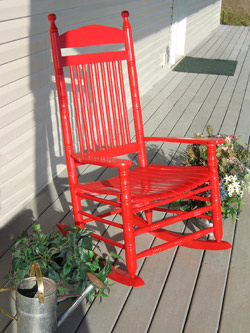
I got no use for the red rockin’ chair,
I’ve got no honey baby now
Got no sugar baby now

Who’ll rock the cradle, who’ll sing the song
Who’ll rock the cradle when I’m gone
Who’ll rock the cradle when I’m gone?
I’ll rock the cradle, I’ll sing the song
I’ll rock the cradle when you gone.

It’s all I can do
It’s all I can say,
I will send you to your mama next payday

Laid her in the shade, give her every dime I made
What more could a poor boy do
What more could a poor boy do?

Oh I’ve got no honey baby now
Got no sugar baby now

Said all I can say, I’ve done all I can do
And I can’t make a living with you
Can’t make a living with you

The Coo Coo

“The Coo Coo” is a “folk-lyric” style song, where verses are interchangeable with verses from other folk songs such as “The Wagoner’s Lad,” and “East Virginia,” which are otherwise unrelated. The first verse can also be heard in “Way Down The Old Plank Road” sung by Dave Macon. “The Coo Coo” was originally recorded by Clarence “Tom” Ashley in Johnson City TN November 23, 1929.
This song style possibly developed between 1850 – 1875 in Kentucky.

A British version can be found in Cecil Sharp’s collection: “Folk Songs From Somerset.”

Lyrics:
No chords are given because it’s all in A modal tuning.

The Coo Coo

Gonna build me – log cabin on a mountain so high
So I can – see Julie as she goes on by

Aw the Coo Coo is a pretty bird she warbles as she flies
She never hollers coo coo till the fourth day July

I’ve played cards in England I’ve played cards in Spain
I’ll bet you ten dollars that I’ll beat you next game

Jack of diamonds jack of diamonds I’ve known you from old
Now you’ve robbed my poor pockets of silver and gold

I wish I had a good horse and corn to feed him on
I wish I had Julie to feed him when I’m gone

I’ve played cards in England I’ve played cards in Spain
I’ll bet you ten dollars I’ll beat you this game

Aw the Coo Coo is a pretty bird she warbles as she flies
She never hollers coo coo till the fourth day July

King Kong Kitchie Kitchie Ki Me O

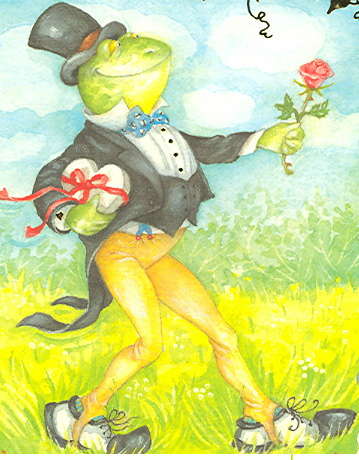
“King Kong Kitchie Kitchie Ki Me O” is a version of the old English song “Frog Went A-Courting.” Its first known appearance is in Wedderburn’s Complaynt of Scotland (1548) under the name “The frog came to the myl dur.” There is a reference in the London Company of Stationer’s Register of 1580 to “A Moste Strange Weddinge of the Frogge and the Mouse.” The oldest known musical version is in Thomas Ravenscroft’s Melismata in 1611.

Spaeth has a note claiming that the original version of this was supposed to refer to the Duke of Anjou’s wooing of Elizabeth I of England. If the second known version (1611, in Melismata, also reprinted in Chappell) were the oldest, this might be possible — there are seeming political references to “Gib, our cat” and “Dick, our Drake.” But the Wedderburn text, which at least anticipates the song, predates the reign of Queen Elizabeth by nine years, and Queen Mary by four. If it refers to any queen at all, it would seemingly have to be Mary Stuart; Evelyn K. Wells however, in the liner notes to the LP Brave Boys; New England traditions in folk music, (New World Records 239, 1977) suggests that the original may have been satirically altered in 1580 when it was recorded in the register of the London Company of Stationers, as this would have been at the height of the unpopular courtship.

I first heard this song on the Harry Smith Anthology:
Chubby Parker, “King Kong Kitchie Kitchie Ki-Me-O” (Columbia 15296D, 1928; on Anthology of American Folk Music, CrowTold01) (Supertone 9731, 1930) (Conqueror 7889, 1931)

Drawing by Iza Trapani

Source: Wikipedia.

Lyrics:
[G] Froggie went a courting and he did [D] ride
[G] King kong kitchie kitchie [D] ki-me-o
[G] With a sword and a pistol by his [D] side
[G] King kong kitchie kitchie [D] ki-me-o [G]

[G] Ki-mo-ke-mo ki-mo-ke
[C] Way down yonder in a hollow [D] tree
[G] An owl and a bat and a bumble [D] bee
[G] King kong kitchie kitchie [D] ki-me-o [G]

He rode ’til he came to miss mousie’s door
King kong kitchie kitchie ki-me-o
And there he knelt upon the floor
King kong kitchie kitchie ki-me-o

Ki-mo-ke-mo ki-mo-ke
Way down yonder in a hollow tree
An owl and a bat and a bumble bee
King kong kitchie kitchie ki-me-o

He took miss mouse upon his knee
King kong kitchie kitchie ki-me-o
And he said little mouse will you marry me
King kong kitchie kitchie ki-me-o

Ki-mo-ke-mo ki-mo-ke
Way down yonder in a hollow tree
An owl and a bat and a bumble bee
King kong kitchie kitchie ki-me-o

Miss mouse had suitors three or four
King kong kitchie kitchie ki-me-o
And there they came right in the door
King kong kitchie kitchie ki-me-o

Ki-mo-ke-mo ki-mo-ke
Way down yonder in a hollow tree
An owl and a bat and a bumble bee
King kong kitchie kitchie ki-me-o

They grabbed mr. frog and began to fight
King kong kitchie kitchie ki-me-o
In the hollowed tree it was a terrible night
King kong kitchie kitchie ki-me-o

Ki-mo-ke-mo ki-mo-ke
Way down yonder in a hollow tree
An owl and a bat and a bumble bee
King kong kitchie kitchie ki-me-o

Mr. frog brought the suitors to the floor
King kong kitchie kitchie ki-me-o
With the sword and the pistol he showed all four
King kong kitchie kitchie ki-me-o

Ki-mo-ke-mo ki-mo-ke
Way down yonder in a hollow tree
An owl and a bat and a bumble bee
King kong kitchie kitchie ki-me-o

They went to the park on the very next day
King kong kitchie kitchie ki-me-o
And left on their honeymoon right away
King kong kitchie kitchie ki-me-o

Ki-mo-ke-mo ki-mo-ke
Way down yonder in a hollow tree
An owl and a bat and a bumble bee
King kong kitchie kitchie ki-me-o

Now they live far off in a hollow tree
King kong kitchie kitchie ki-me-o
Where they now have wealth and children three
King kong kitchie kitchie ki-me-o

Ki-mo-ke-mo ki-mo-ke
Way down yonder in a hollow tree
An owl and a bat and a bumble bee
King kong kitchie kitchie ki-me-o

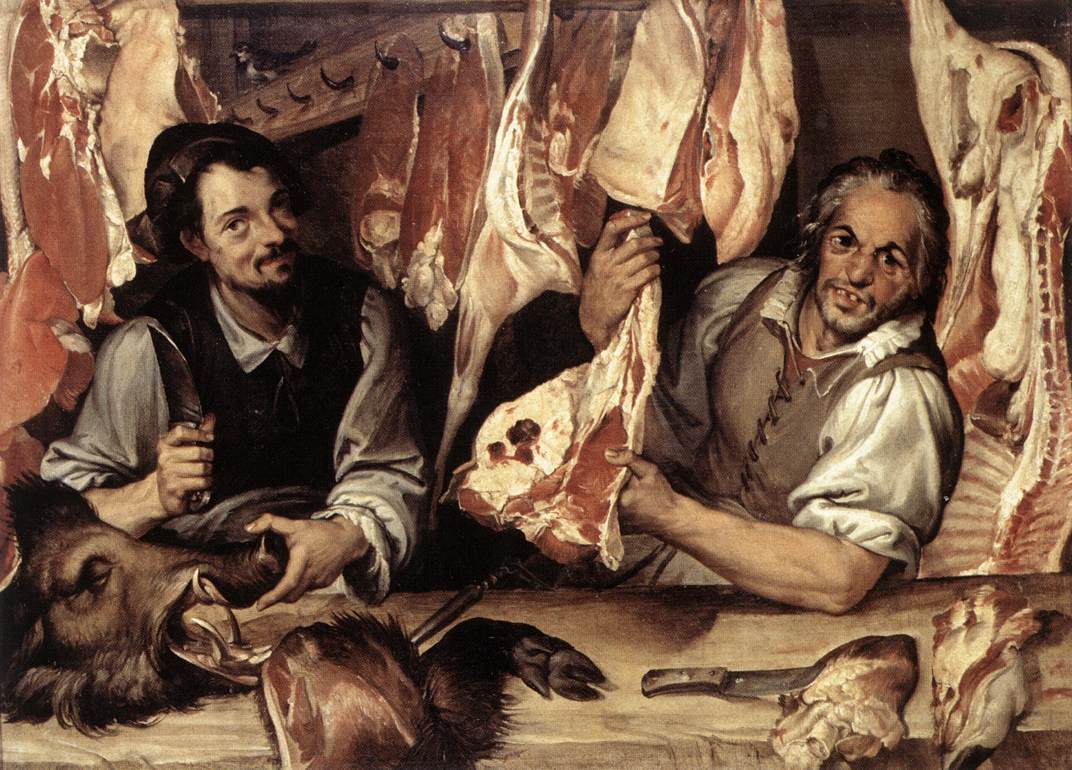
The Butcher’s Boy

The Butcher’s Boy
Buell Kazee recorded this on January 16, 1928 in New York City. The original recording was included on Harry Smith’s “Anthology of American Folk Music” Originally released in 1952 on a six LP set and again in 1997 on a six CD set. The “Harry Smith Anthology” was the cornerstone of the folk revival of the 50s and 60s. I didn’t own a copy but learned many of these songs second hand at places like the Gaslight in Greenwich Village. “The Butcher’s Boy” is another of the sad ending songs popular in Appalachian love ballads. I love the G modal banjo tuning on this.
Lyrics:
BUTCHER’S BOY

She went upstairs to make her bed
And not one word to her mother said

Her mother she went upstairs too
Saying, “Daughter, oh daughter, what troubles you?”

“Oh mother, oh mother, I cannot tell
That butcher’s boy I love so well

He courted me my life away
And now at home he will not stay”

“There is a place in London town
Where that butcher’s boy goes and sits down

He takes that strange girl on his knee
And tells to her what he won’t tell me”

Her father he came up from work
Saying, “Where is my daughter, she seems so hurt”

He went upstairs to give her hope
And found her hanging from a rope

He took his knife and cut her down
And in her bosom these words were found

“Go dig my grave both wide and deep
Place a marble slab at my head and feet

And over my coffin, place a snow white dove
To warn the world that I died of love

Glory Glory

“Glory Glory” appears on Harry Smith’s “Anthology of American Folk Music” as track No. 49 “Since I Laid My Burden Down.” It was originally recorded in Chicago on December 4, 1928 by The Elders McIntorsh and Edwards’ Sanctified Singers. It’s also a song that I recorded with the Byrds on our “Byrdmaniax” album in 1971.
Lyrics:
[G] Glory, glory, Halleluja [C] since I laid my burden [G] down
Glory, glory, [Em] Halleluja since I [D] laid my burden [G] down

Well I feel so much better, so much better
since I laid my burden down
I feel so so much better, so much better
since I laid my burden down

Glory, glory….

Thank you Jesus, thank you Jesus
Help me lay my burden down
I wanna thank you Jesus
Help me lay my burden down

Glory, glory…

The Great Silkie of Sule Skerry

This is Child Ballad No.113
“The Great Silkie of Sule Skerry” is one of numerous tales of
the Silkies, or seafolk, known to the inhabitants of the Orkney
Islands and the Hebrides. These enchanted creatures dwell in the
depth of the sea, occasionally doffing their seal skins to pass
on land as mortal men. Legend has it that they then accept human
partners, and some families on the islands actually trace their
ancestry to such marriages. In more complete versions of the
ballad, the Silkie’s forecast of the death of himself and his son
eventually come to pass.
Thanks to Mudcat Cafe for that information
Lyrics:
[G] An earthly [F] nurse sits and [G] sings,
And aye, she [C] sings by [D] lily [G] wean,
And [C] little ken [D] I my bairn’s [G] father,
Far [F] less the land where he [G] dwells in.

For he came on night to her bed feet,
And a grumbly guest, I’m sure was he,
Saying “Here am I, thy bairn’s father,
Although I be not comely.”

“I am a man upon the land,
I am a silkie on the sea,
And when I’m far and far frae land,
My home it is in Sule Skerrie.”

And he had ta’en a purse of gold
And he had placed it upon her knee,
Saying, “Give to me my little young son,
And take thee up thy nurse’s fee.”

“And it shall come to pass on a summer’s day,
When the sun shines bright on every stane,
I’ll come and fetch my little young son,
And teach him how to swim the faem.”

“And ye shall marry a gunner good,
And a right fine gunner I’m sure he’ll be,
And the very first shot that e’er he shoots
Will kill both my young son and me.”

The House Carpenter

“The House Carpenter” is a popular name for Child Ballad No. 243. The official names are “James Harris,” or “The Daemon Lover.” This ballad may have been partially inspired by an ancient myth that was a catalyst for Richard Wagner’s operatic masterpiece, “The Flying Dutchman.”
Lyrics:
[Em] “Well met, well met, my own true love,
well met, well met,” cried he.
“I’ve just returned from the salt, salt sea
[D] all for the love of [Em] thee.”

“I could have married the King’s daughter dear,
she would have married me.
But I have forsaken her crowns of gold
all for the love of thee.”

“Well, if you could have married the King’s daughter dear,
I’m sure you are to blame,
For I am married to a house carpenter,
and find him a nice young man.”

“Oh, will you forsake your house carpenter
and go along with me?
I’ll take you to where the grass grows green,
to the banks of the salt, salt sea.”

“Well, if I should forsake my house carpenter
and go along with thee,
What have you got to maintain me on
and keep me from poverty?”

“Six ships, six ships all out on the sea,
seven more upon dry land,
One hundred and ten all brave sailor men
will be at your command.”

She picked up her own wee babe,
kisses gave him three,
Said “Stay right here with my house carpenter
and keep him good company.

Then she putted on her rich attire,
so glorious to behold.
And as she trod along her way,
she shown like the glittering gold.

Well, they’d not been gone but about two weeks,
I know it was not three.
When this fair lady began to weep,
she wept most bitterly.

“I do not weep for my house carpenter
or for any golden store.
I do weep for my own wee babe,
who never I shall see anymore.”

Well, they’d not been gone but about three weeks,
I’m sure it was not four.
Our gallant ship sprang a leak and sank,
never to rise anymore.

One time around spun our gallant ship,
two times around spun she,
Three times around spun our gallant ship
and sank to the bottom of the sea.

This Little Light Of Mine

This is an old spiritual. I first heard it performed by Bob Gibson on the 5-string banjo at the Latin School of Chicago in 1957. His arrangement was more Dixieland style with a fast 2/4 beat. Bob inspired the Limeliters who took a number of his arrangements and made them more sophisticated. It was an honor to record with them on their first RCA album “Tonight In Person” in 1960. I decided to do “This Little Light” with a 12-string Rickenbacker “jingle jangle” feel. This is the first Folk Den song that I’ve recorded using Pro Tools on my new Mac Book Pro 2 Core Duo, and the first one that features my new Martin D-45 on rhythm.
Lyrics:
[G] This little light of mine
I’m going to let it shine
[C] Oh, this little light of mine
I’m going to let it [G] shine
Hallelujah
This little light of mine
I’m going to let it [C] shine
[G] Let it shine, [D] let it shine, [G] let it shine

Ev’ry where I go
I’m going to let it shine
Oh, ev’ry where I go
I’m going to let it shine
Hallelujah
Ev’ry where I go
I’m going to let it shine
Let it shine, let it shine, let it shine

All in my house
I’m going to let it shine
Oh, all in my house
I’m going to let it shine
Hallelujah
All in my house
I’m going to let it shine
Let it shine, let it shine, let it shine

I’m not going to make it shine
I’m just going to let it shine
I’m not going to make it shine
I’m just going to let it shine
Hallelujah
I’m not going to make it shine
I’m just going to let it shine
Let it shine, let it shine, let it shine

Out in the dark
I’m going to let it shine
Oh, out in the dark
I’m going to let it shine
Hallelujah
Out in the dark
I’m going to let it shine
Let it shine, let it shine, let it shine

Joy To The World

This is one of my favorite Christmas Carols. I decided to record it as an instrumental on my Rickenbacker 370/12/RM. Originally named “Antioch,” Mason’s original score said “from George Frederick Handel.”

The tune is named after the city of Antioch, Syria, where believers were first called “Christians”;
(Acts 11:26).

Words: Isaac Watts, 1719
Music: Lowell Mason, 1848

Lyrics:
Joy to the world, the Lord is come!
Let earth receive her King;
Let every heart prepare Him room,
And heaven and nature sing,
And heaven, and heaven, and nature sing.

Joy to the world, the Savior reigns!
Let men their songs employ;
While fields and floods, rocks, hills and plains
Repeat the sounding joy,
Repeat, repeat, the sounding joy.

No more let sins and sorrows grow,
Nor thorns infest the ground;
He comes to make His blessings flow
Far as the curse is found,
Far as, far as, the curse is found.

He rules the world with truth and grace,
And makes the nations prove
The glories of His righteousness,
And wonders of His love,
And wonders, wonders, of His love.

Housewife’s Lament

I learned “Housewife’s Lament” at the Old Town School of Folk Music in Chicago around 1958. It’s kind of a bitter portrayal of the lot of women in the not-so-distant past. There is a verse at the end where the poor housewife dies and gets covered with dirt, which is supposed to be funny, but I thought there was enough hardship in this song without adding insult to injury, so I left it out.
Lyrics:
[G] One day I was walking,
I heard [Am] a complaining,
I saw a [D] poor woman
The [C] picture of [G] gloom.
She gazed in the mud
On her [Am] doorstep (’twas raining),
And [D] this was her song
As she [C] wielded her [G] broom:

Chorus:

[G] O life is a trial,
[D] And love is a trouble,
[G] Beauty will fade
[D] And riches will flee,
[G] Wages will dwindle
And [Am] taxes will double
And [D] nothing is as I
Would [C] wish it to [G] be.”

In March it is mud,
It’s slush in December,
The midsummer breezes
Are loaded with dust.
In fall the leaves litter,
In muddy November
The wallpaper rots
And the candlesticks rust.

Chorus:

It’s sweeping at six
And i’s dusting at seven, ( I know I sang 11 but it should be 7 🙂
It’s victuals at eight
And it’s dishes at nine.
It’s potting and panning
From ten to eleven.
We scarce break our fast
Till we plan how to dine.

Chorus:

Last night in my dreams
I was stationed forever,
On a far distant rock
In the midst of the sea.
My one task of life
Was a ceaseless endeavor,
To brush off the waves
As they swept over me.

Chorus X2